

AIZAWL, April 30: The last remaining ethnic insurgent group of Mizoram laid down arms on Thursday, and the state became “insurgency-free”, Chief Minister Lalduhoma said.
Although it remained dormant for several years, a faction of the Hmar People’s Convention (Democratic) or HPC(D), headed by Lalhmingthanga Sanate, indulged in sporadic criminal activities at irregular intervals, officials said.
The Sanate faction was considered the last surviving insurgent group in the northeastern state.
Related Posts:




The HPC(D) had been demanding an autonomous district council for the Hmar community people under the Sixth Schedule of the Constitution.
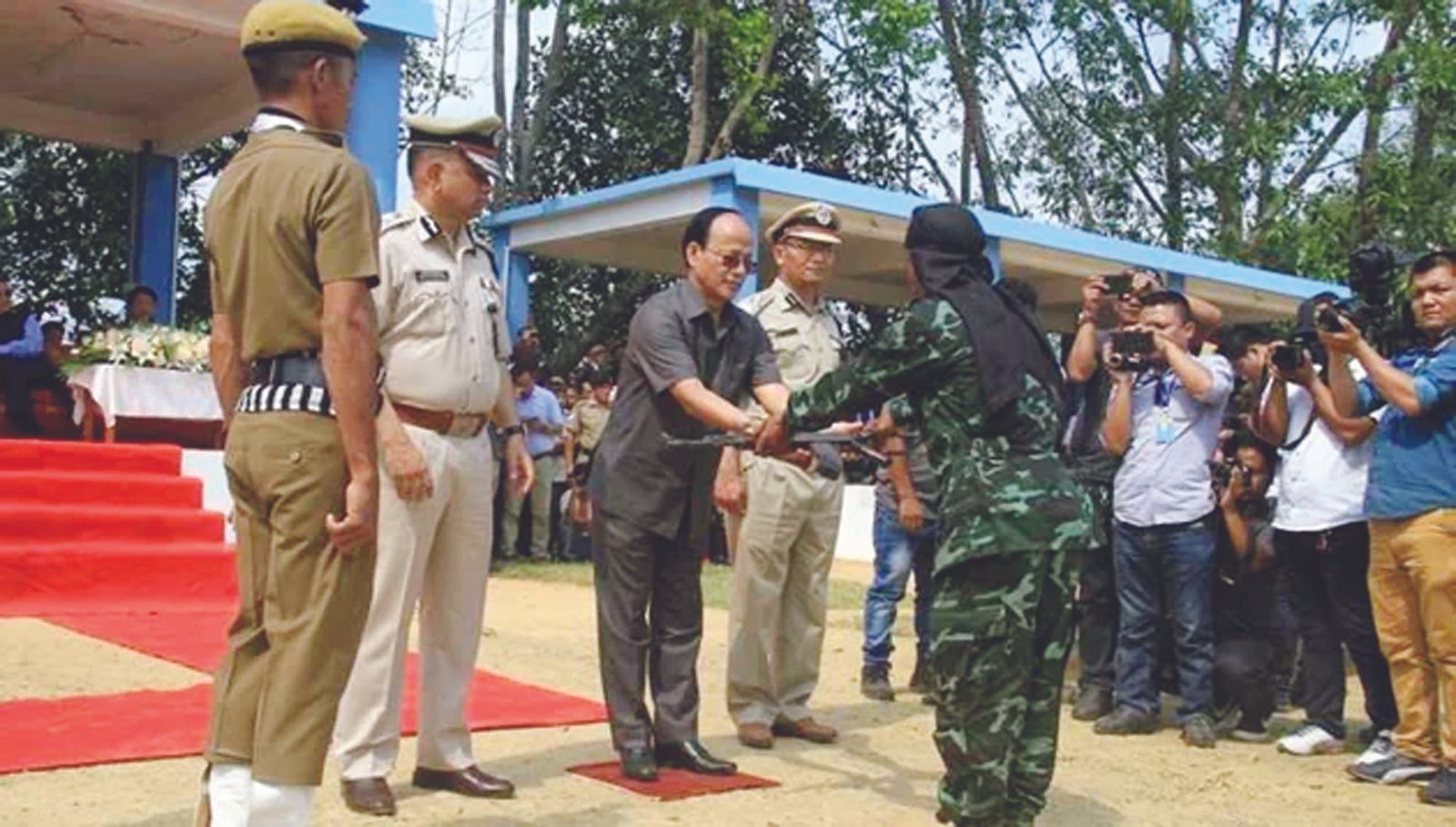
A total of 43 cadres of the group, including Sanate, surrendered their weapons to the government during a “homecoming and arms laying ceremony” at Sesawng near Aizawl during the day.
The ‘homecoming ceremony’ follows the peace accord signed between the Mizoram government and the HPC(D) on April 14, effectively marking the end of insurgency in the state.
Speaking at the event, Lalduhoma said that the shadow of HPC(D) insurgency remained in mind whenever peace was spoken of in Mizoram in the past.
“We approached negotiations with an open heart to reach an agreement. Our home minister and his colleagues worked tirelessly. Today, we have reached our goal. Now, with a peaceful heart, we can proudly say Mizoram is a truly peaceful state,” the Chief Minister said.
Urging various Mizo tribes to reunite, Lalduhoma emphasised that no single tribe stands above the identity of being Mizo.
“We are all Mizos. If sub-tribes within the Mizo community try to stand entirely on their own today, it is unlikely they would succeed. We must find contentment in our shared Mizo identity. We will thrive only through unity,” he said.
Stating that the price of peace is high, Lalduhoma, who resigned from the Indian Police Service (IPS) decades ago to mediate peace during the secessionist movement spearheaded by the Mizo National Front (MNF), recalled that he left behind and lost many things so that peace could prevail in the region.
He lauded the surrendering cadres for their bravery, asserting that only the truly courageous have the strength to lay down arms for the greater good of the community.
Lalduhoma reaffirmed that Mizoram no longer tolerates insurgency and called for collective commitment to safeguarding peace.
“The Mizo people will no longer permit insurgency to resurface in our land. Let us all abstain from anything that could trigger discord and unrest. Let us abandon policies and ideologies that incite conflict just for the sake of temporary gains and work together to sustain lasting peace and stability in our state,” he said.
Home Minister K Sapdanga described the day as “historic,” attributing the success of the agreement to Lalduhoma’s consistent commitment to peace and hailed him as a “Symbol of Peace”.
The home minister also said that the government will work hand-in-hand with the surrendered cadres to fulfil their aspirations through democratic and administrative means.
Assembly speaker Lalbiakzama, who was elected from Hmar-majority Chalfilh constituency, welcomed the development, noting that peace in Hmar-inhabited areas had long been a key priority.
Speaking on behalf of the group, Sanate acknowledged the changing political climate under the current Lalduhoma’s administration.
He stated that the construction of the “Unity Bridge” over Tuivai River linking Tipaimuk area in Manipur and the Tuirial-Mauchar road connecting Assam, as tangible signs that the government is committed to the development of Hmar-majority areas.
Officials said that the Hmar People’s Convention (HPC) spearheaded a political movement since 1986, demanding the creation of an autonomous district council (ADC) under the Sixth Schedule of the Constitution for Hmar-populated areas in northern and northeastern Mizoram.
Although initially functioning as a political platform, the HPC turned to armed insurgency in May 1987 when its leaders felt their peaceful protests yielded little or no results.
After seven years of insurgency, the HPC, then headed by Hmingchungnunga, signed a peace accord with the Mizoram government on 27 July 1994, leading to the establishment of Sinlung Hills Development Council (SHDC), officials said.
However, dissatisfied with the terms of the agreement, those HPC members who did not come overground in 1994, formed HPC(D) under the leadership of Sanate to resume the demand for ADC in Mizoram.
In 2011, the HPC(D) was split into two groups, one headed by H Zosangbera and the other by Sanate.
The Zosangbera-led faction signed a peace accord with the state government in April 2018, resulting in the creation of the Sinlung Hills Council (SHC), which replaced the SHDC with enhanced autonomy.
Sanate, who hailed from Khawlian village in Mizoram’s Saitual district bordering Manipur, then remained outside the peace process. Starting from 2024, the present Zoram People’s Movement (ZPM) administration held backchannel dialogues with the group that finally brought it to mainstream society. (PTI)