

HT Correspondent
Shillong, Feb 5: At least 16 labourers were killed, and several others feared trapped following an explosion at an “illegal” coal mine in Meghalaya’s East Jaintia Hills district on Thursday.
Confirming this, East Jaintia Hills district police chief Vikash Kumar said, “16 bodies have been recovered so far.”
Related Posts:



He said that one person was injured and referred to Shillong from Sutnga PHC.
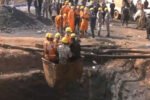
Rescue teams have been engaged in search operations, he said, adding that the incident occurred in the Thangsku area in the morning.
The incident occurred due to the dynamite blast.
“The exact number of labourers present inside the mine at the time of the explosion is yet to be ascertained. More people are feared trapped,” another senior police official said.
One person who sustained injuries in the blast was initially taken to Sutnga Primary Health Centre before being referred to a Shillong hospital for better treatment, Kumar said.
The explosion is suspected to have occurred during coal mining activities at the site, which is believed to be an illegal operation.
Asked whether the mine was operating illegally, Kumar said, “Yes, it seems like that.”
He said the cause of the explosion is yet to be ascertained, and an inquiry will be conducted.
Police said the identities of the deceased were yet to be confirmed. While there were reports suggesting that the victims could be residents of Assam, officials said no such claims had been verified at the time of filing this report.
The Meghalaya Human Rights Commission (MHRC) also took suo motu cognisance and called for a detailed report from the state government.
Earlier, on January 14, a worker from Assam, Mosaid Ali (48), a resident of Jamuna Moudanga in Assam’s Hojai district, was killed in an accident at an illegal coal mine in Umthe village in the district.
The National Green Tribunal (NGT) had imposed a ban on rat-hole coal mining and other unscientific mining practices in Meghalaya in 2014, citing environmental damage and safety risks, while also restricting illegal transportation of coal extracted through such methods.
Rat-hole mining involves digging of narrow tunnels, usually 3-4 feet high, for workers to enter and extract coal. The horizontal tunnels are often termed “rat-holes”, as each just about fits one person.
The Supreme Court later upheld the ban and allowed mining only under scientific and regulated procedures with environmental safeguards.