


By: Shashanka Das
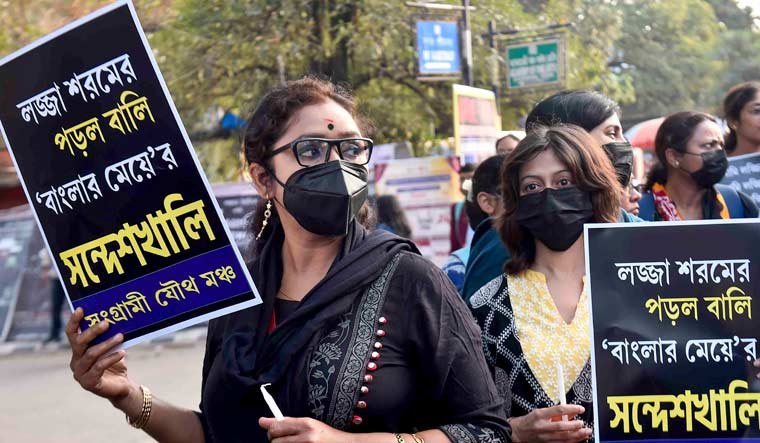
The serene landscape of West Bengal’s Sandeshkhali in the North 24 Parganas district has been marred by a harrowing saga of horror and despair, sending shockwaves across the nation. Hindu women, once the pillars of their community, now find themselves victims of unspeakable atrocities – rape, sexual exploitation, and threats – allegedly orchestrated by members of the Trinamool Congress (TMC).
In the face of mounting anguish and outcry, Chief Minister Mamata Banerjee’s resounding silence reverberated, a stark contrast to her professed commitment to justice and equality. Instead of standing with the victims, she chose to shield her party leader, Shahjahan Sheikh, and his associates, deflecting blame onto political rivals while dismissing the cries of the oppressed as mere propaganda.
Related Posts:



Banerjee’s defense of Sheikh, amidst a litany of accusations, underscores a troubling pattern of political expediency trumping moral obligation. By absolving Sheikh of any wrongdoing and brazenly implicating the BJP and RSS, Banerjee not only betrayed her own principles but also abandoned the very women whose voices she claims to champion.
The irony is glaring – Mamata Banerjee, hailed by many as a champion of democracy and secularism, stands accused of endorsing and empowering individuals with a history of anti-Hindu sentiments. Ahmed Hasan Imran, a Pakistani migrant with alleged ties to extremist groups, ascended to the Rajya Sabha, a testament to Banerjee’s willingness to prioritize political alliances over principles.
Imran’s shadow looms large over the Naliakhali massacre, where Hindu homes were razed to the ground in a frenzied display of communal violence. Reports suggest his orchestration of the atrocities, shedding light on the sinister nexus between politics and extremism that plagues West Bengal’s corridors of power.
The Saradha Chit Fund Scam further implicates Imran in a web of corruption and deceit, raising questions about his ties to the TMC leadership and their complicity in shielding individuals with dubious backgrounds.
The tragedy unfolding in Sandeshkhali is not an isolated incident but a symptom of a larger malaise – the erosion of justice and accountability in the pursuit of political gain. As the victims’ pleas for justice fall on deaf ears, the TMC’s policy of appeasement towards certain communities at the expense of others threatens to deepen the fault lines of communal discord.
In the face of such blatant disregard for the rule of law, the nation stands at a crossroads, confronted with the stark reality of injustice and betrayal. The time has come for a reckoning, for leaders to be held accountable for their actions and for justice to prevail, irrespective of political affiliations.
As the voices of the oppressed echo through the corridors of power, let us not forget the faces of those who have suffered, their stories a testament to the resilience of the human spirit. For in their struggle lies the hope for a brighter, more just future, where justice is not a privilege but a right for all.