


By: Kamal Baruah
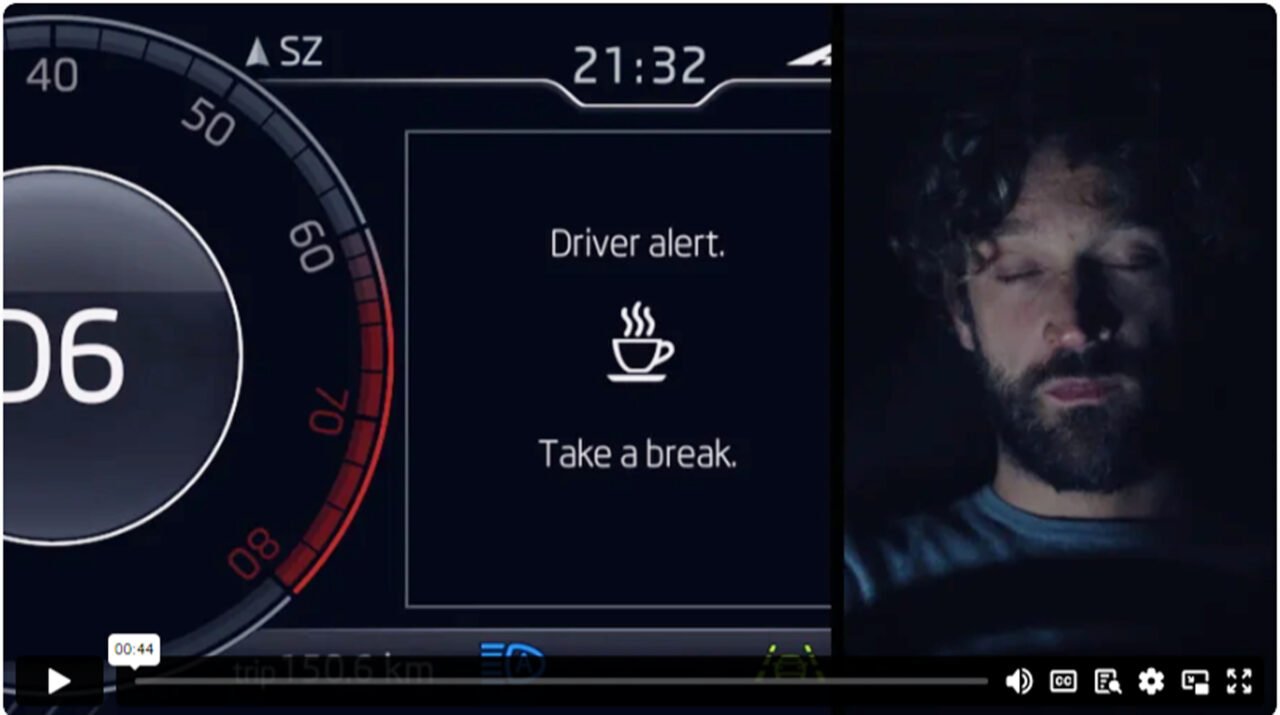
It was a month since a major accident had visibly shaken and upset when I returned in the driver’s seat again. Of late I was shocked to see while driver alert activated with a visual display on the digital cockpit. Soon I realized the system detected as I was starting to lose concentration. Fortunately, the German SUV never gets tired of keeping me awake all the time. It monitors driver’s behaviour closely – noting any erratic steering wheel movements and lane deviations, so it can judge the moment that one is starting to feel sleepy. It also continually evaluates traffic signals on the roads when one is driving at speeds of more than 65 kmph and works out when it’s time to take a break. It’s indeed a helpful aid to safer driving.
Unfortunately, India’s roads are never safe to drive and road safety is the worst on record. Driving on the wrong side is common and motorists even drive in the opposite direction on the National Highways. The pathetic excuses for localities are the maintenance, repair and never ending construction work off roads. The other day I witnessed terrifying moment when I saw a mini truck on the dedicated passing lane (fast lane/overtaking) all of a sudden after a curve and had to deviate left to stop head on collision. Luckily there was no vehicle on the cruise lane (middle lane). People should understand passing lane rules. It drives me crazy every time I see motorists cruising on slow-moving vehicle lane (left lane) when I head on the NH-37.
Related Posts:



They are extremely dangerous and can lead to incident. Sudden potholes in the middle of road, broken roads or a stretch filled with rubble raise serious safety concerns for commuters. Local authorities construct road humps to check the speed of vehicles despite policy of not providing speed breakers on the National Highways. This is undesirable, as the function of National Highway is to facilitate movement of through traffic and not to hinder it. Perilous state of speed breakers can be a source of serious hazards to the fast-moving vehicles.
The devastating condition of NH-31 that passes through TMC&H is getting bad to worse every day. It’s a single-lane road with one lane of traffic in each direction. Vehicles on such roads need to be driven carefully as there is no scope for overtaking. There is virtually no road other than a stretch filled with rubble and giant potholes. With monsoon set to be active now, how dangerous is one to drive on such roads during night. The road never maintains for road-widening projects in the future.
The general public is of the opinion that highway engineers intentionally construct bad roads so that they can get a ‘fat’ road budget year after year. Ironically most of the Indian roads are bituminous mixes. Water is enemy number 1 of bitumen and highway engineers ignore it and use the semi dense or open graded bituminous mixes in road construction. Despite the knowledge and technical research that dissuades the use of outdated technologies; highway engineers are silent on the subject. Engineering experts opine that only dense graded bituminous mixes should be used for all types of roads. To quote John F. Kennedy, “American roads are good not because America is rich, but America is rich because American roads are good.”
My NRI medico friend has recently failed a driving test at DTO Kamrup (M) while he drives all through the United State quite a long time. It’s no secret that India’s roads are mayhem. Drivers ignore lane markings; traffic lights are considered merely advisory and the main safety measure is the unremitting blasting of the horn. City streets vendors eat up half the road space and people drive on the wrong side on some older highways however safety measures take time to catch up.
It was the morning rush hour. I could hear crashing in the windshield before I could see anything through my eye lead while I still gripped the steering wheel so tight. All of a sudden it jerked to a halt. I violently hit rear end collision as the front car stopped suddenly to pedestrians weave through GS Road. Yes I experienced an accident in car crash causing damage of three cars. Fortunately nobody was seriously injured. Thank God I wasn’t hurt as the safety belt was active at my old car and miraculously emerged like after a Formula 1 crash.
Car crashes are terrifying, inconvenient, costly and painful. Often people walk away injured without usable transportation and in financial peril. Experiencing an auto accident is almost always an extremely traumatic event and it is relatively easy to make mistakes following a crash. From road lines to yellow lines on road, each symbol inscribed on the tarmac holds a distinct significance, dictating the ebb and flow of traffic and ensuring the safety. So fasten your seat belts and remember safe driving starts with you! So did my new Skoda alert with a warning – “Taking your eyes off the road too long or too often could cause a crash. Focus your attention on driving”.