

HT Correspondent
TEZPUR, Feb 12: Renowned environmentalist and globally acclaimed “Forest Man of India” Jadav Payeng on Wednesday said children are the strongest hope for building a sustainable future and called for practical, experience-based environmental education from the earliest stages of life.
Addressing a programme held to mark the 10th anniversary of the Asomiya Suraksha Mancha, Assam, at the Tezpur Sahitya Sabha Bhawan, Payeng stressed that every child should plant a sapling on the day of school admission and nurture it while growing up. “This practice will instil a deep love for trees and for birds and animals that find shelter in them. These children will one day become the protectors who rebuild our natural environment,” he said.
Related Posts:



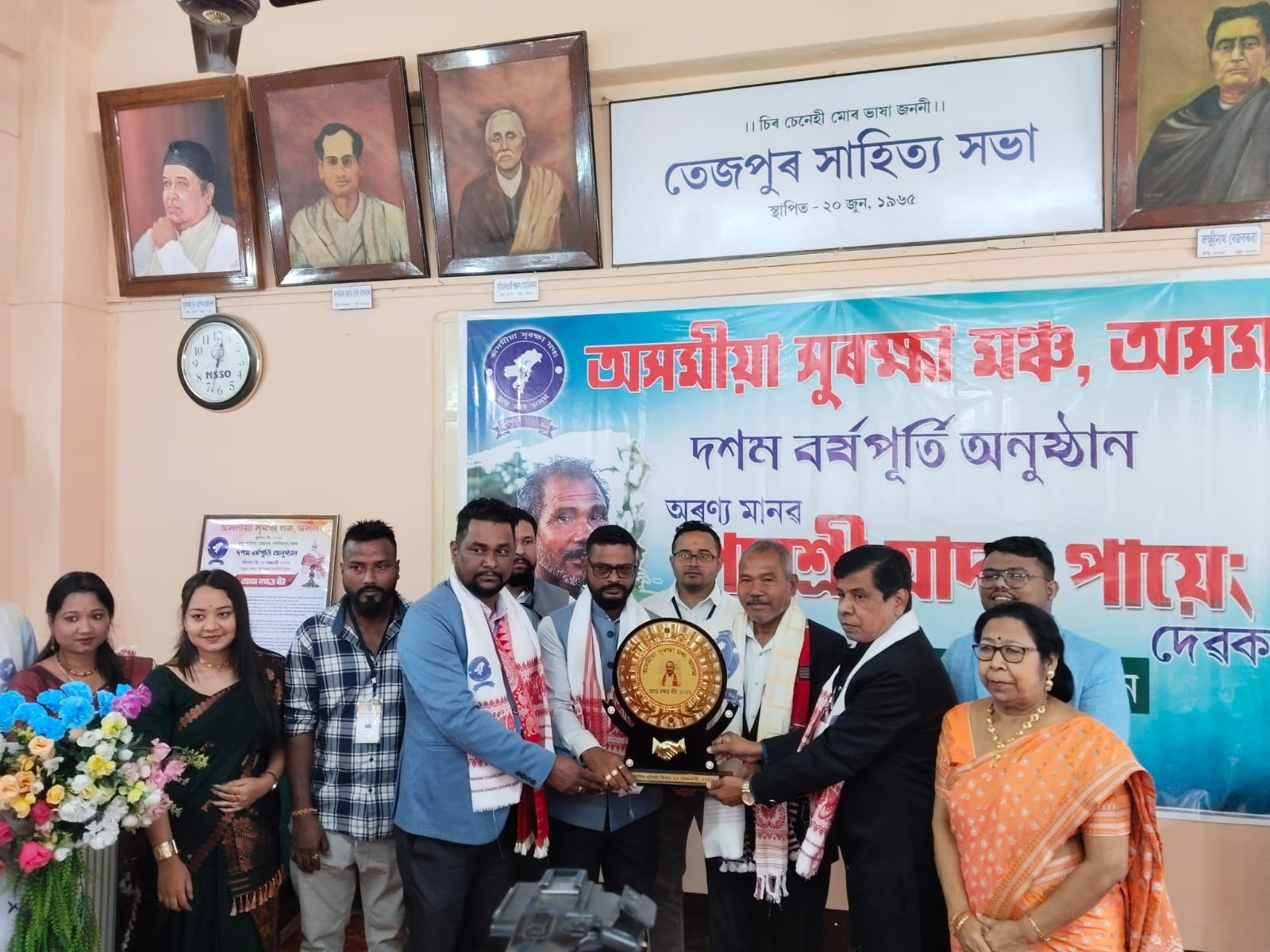
On the occasion, the Asomiya Suraksha Mancha conferred its newly instituted Asom Nakshatra Award on Payeng in recognition of his lifelong contribution to environmental conservation. The award included a traditional gamosa, chelang, jaapi, a citation, a memento and a cash prize of Rs 10,000.
Receiving the honour, Payeng said children across all 195 countries were like his own family. “From the land of the rising sun to where it sets, wherever I go, I urge children to plant and protect trees and to worship nature as God,” he said, adding that environmental values must be taught through practice rather than theory.
Referring to Assam’s cultural and spiritual legacy, Payeng said the British decision to preserve Srimanta Sankardeva’s Vrindavani Vastra in a museum reflected his stature as a world guru. “Srimanta Sankardeva imparted knowledge under the Silikha tree and the Simolu tree planted by Madhavdeva still survives today,” he noted. He added that spiritual leaders such as Buddha, Jesus Christ and Prophet Muhammad preached harmony with nature.
Highlighting ecological themes in Assamese music, from Bhupen Hazarika to Zubeen Garg, Payeng warned against the growing menace of plastic pollution and called for a complete ban on plastic use in Assam and the Northeast. He said plastic was rendering soil infertile and harming aquatic life, citing instances where up to five kilograms of plastic were found in the stomachs of dead cattle.
“I worship nature as God and humanity and love for nature is my religion,” he said, adding that the COVID-19 pandemic exposed humanity’s dependence on nature. He also proposed developing small forests on both sides of newly constructed bridges in the state, dedicated to singer Zubeen Garg, with his songs used to promote environmental awareness among youth.
Payeng underscored the importance of education in the mother tongue, stating that nations prioritising native languages progress faster. “In our obsession with English, we are forgetting Assamese,” he said. Citing climate change concerns, he suggested that district administrations declare heat holidays based on local temperature conditions rather than uniform summer vacations, warning that the coming summer could be hotter than previous years.
The daylong programme began with a traditional welcome accompanied by khol and taal, followed by flag hoisting and lighting of lamps before portraits of Jyoti Prasad Agarwala, Bishnu Prasad Rabha and Zubeen Garg. Adviser Dr Parashmoni Sinha garlanded Zubeen Garg’s portrait and said it was a privilege for the organisation to honour Payeng with the Asom Nakshatra Award.
Asomiya Suraksha Mancha president Pranjal Bora outlined the organisation’s objectives, while secretary Pallabjyoti Nath conducted the proceedings. Cultural performances included Borgeet, Sattriya dance and folk dances by various ethnic groups. Child artist Padmaja Kashyap performed songs of Bhupen Hazarika and Zubeen Garg. Several artists, media persons and social workers, including Bhola Bora, Tripti Bordoloi, Rajen Bora and Gopal Koch, were felicitated during the event.