


HT Bureau
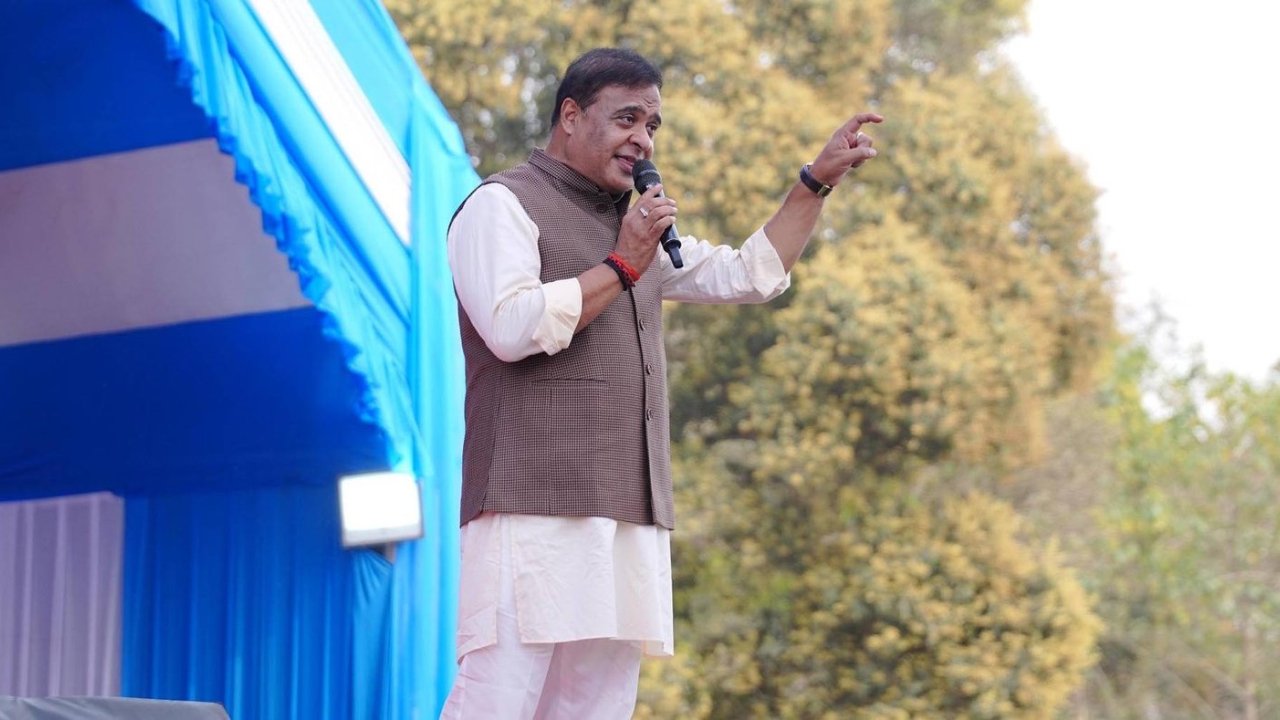
DIPHU, Feb 24: Chief Minister Himanta Biswa Sarma on Tuesday stated that the All Party Hill Leaders Conference (APHLC) brand of politics threatens to drag Karbi Anglong back into an era of instability and unrest.
Speaking on the sidelines of a large distribution ceremony at the Hanjanglangso Sports Association stadium, the chief minister asserted that the APHLC lacks public support and poses a risk to the region’s present development momentum.
Related Posts:



“Whoever aligns with the APHLC, they will go down with it. The people are not with the APHLC,” he said.
“The way their politics is, Karbi Anglong will go back to the old days of dharna, agitation and strikes. These things will return if they gain ground.”
The chief minister was in Hanjanglangso to distribute ₹10,000 cheques to women beneficiaries under the Mukhyamantri Mahila Udyamita Abhiyan (MMUA).
The initiative covers members of Self-Help Groups (SHGs) under the State Rural Livelihoods Mission (SRLM) and National Urban Livelihoods Mission (NULM).
The seed capital is intended to help women start or expand small-scale enterprises, including traditional weaving and handloom units, animal husbandry and poultry farming, and small-scale retail and local trade activities.
Turning to the political landscape ahead of the Assembly elections, Sarma spoke about candidate selection and the impact of delimitation, which has increased the number of Assembly seats in West Karbi Anglong.
He confirmed that the candidate for the Bokajan constituency has already been finalised, though the name has not yet been made public.
“The name will be clear by March 15 or 16,” he said.
With the increase in seats in West Karbi Anglong, the chief minister added that “obviously there will be a new face” representing the region.
Commenting on former Congress state president Bhupen Bora, who recently joined the BJP, Sarma said Bora would seek a ticket from Ranganadi and Bihpuria and would be allotted one.
The chief minister’s visit highlighted the government’s emphasis on grassroots economic empowerment through women-centric schemes, while also signalling a firm political stance against regional rivals as the election cycle approaches.