


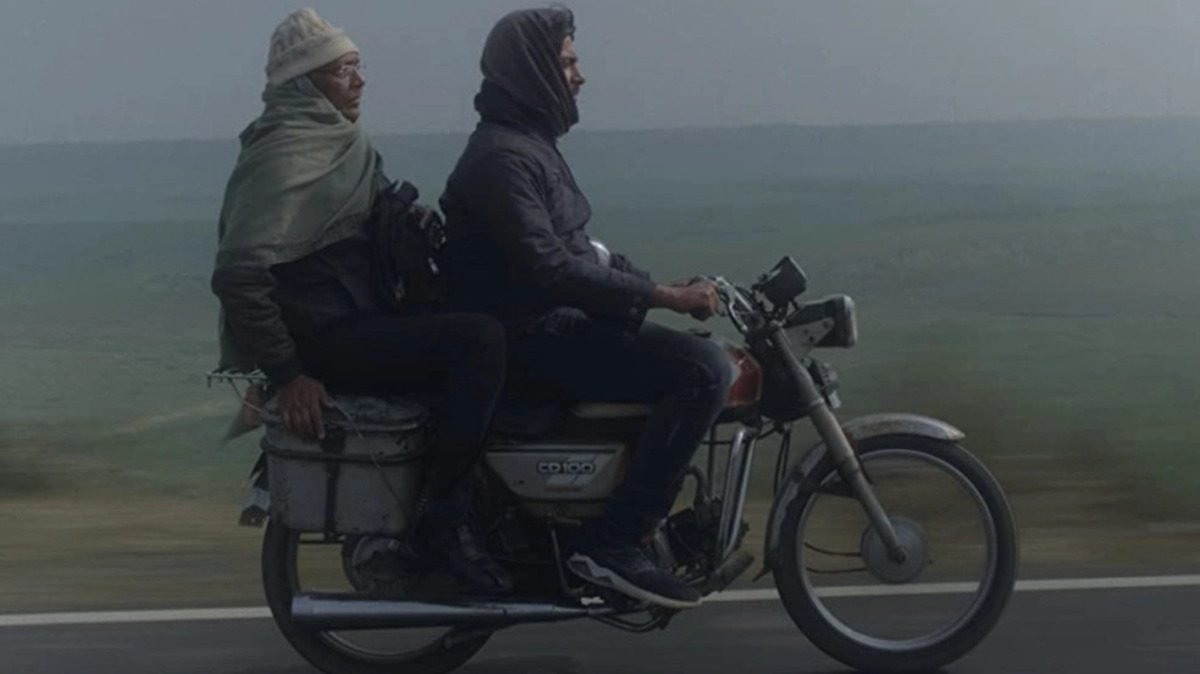
New Delhi, March 3 (PTI): After the success of his debut feature film “Gamak Ghar”, director Achal Mishra says he was at crossroads about his next when he came across “Dhuin”, an idea that kept playing in his mind in the form of an image of a father-son riding a bike on a winter morning.
“Dhuin”, currently streaming in India on MUBI, is a Hindi and Maithili-language film that has been praised for its depiction of small-town youth and the distance between their dreams and reality. Mishra, however, doesn’t want to slot his stories.
“It started with an image of a father and son riding a bike on a winter morning. That image kept playing in my mind. But, I don’t want to define my films, I want to keep things open. I shoot intuitively and the thinking comes later, meaning comes later,” the 26-year-old filmmaker told PTI in an interview.
Spread across 50 minutes, the film revolves around Pankaj (played by Abhinav Jha), a small-town theatre actor who hopes to make it big in Mumbai. In the midst of financial hardship post-lockdown, he is forced to weigh his dreams against his family’s obligations.
The idea for “Dhuin” took shape after a conversation that Mishra had with his “Gamak Ghar” actor Prashant Rana. During the promotions of the film, Rana confided in Mishra that he had to take his father for a job interview.
Related Posts:



“One day he told me that he won’t be able to come the next day because he has to take his father for a job interview. He felt very strongly about it… I could see that he wanted to do something about it, maybe write about it. I asked him to note down whatever he was feeling,” Mishra recalled.
The filmmaker said he and Rana, who also stars in “Dhuin”, initially wrote a five-page “skeletal” script that traced the journey of two days leading to that bike ride.
“I called Abhinav and I called Anand Bansal (cinematographer). The two of them landed in Darbhanga and we immediately started working on it. It just happened out of the blue and we were sort of happy to have done it that way.
“It was just the three-four of us driving around in my car, trying to make this film. We were learning as we went along. We tried something one day and if it did not work out, then we would go back the next day. The whole process felt liberating.”
But all the credit for “Dhuin” goes to Rana, Mishra pointed out.
“I was completely relying on Prashant for everything because I didn’t want to just make things up while writing. I knew economically this is something slightly distant from me. This reality is not mine. I was completely dependent on Prashant.”