

HT Correspondent
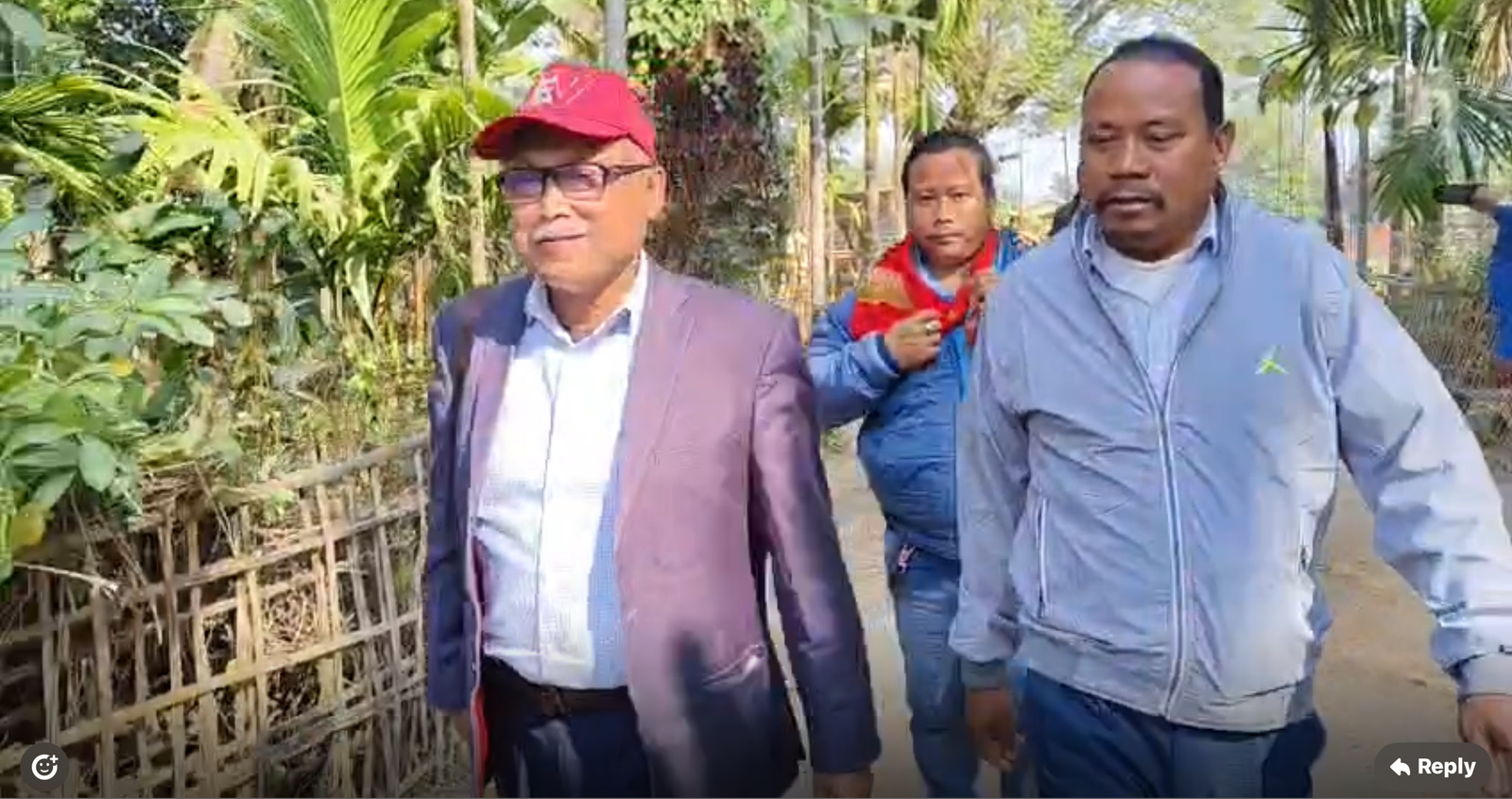
KHERONI, Jan 10: A high-level delegation from the Asom Khilonjia Mancha (Assam Indigenous Forum), led by pro-talk ULFA leader and forum president Mrinal Hazarika, visited West Karbi Anglong on Saturday to address issues concerning the protection of indigenous communities.
The delegation included several prominent figures, including State General Secretary Pranjal Deuri, active member Bikash Baruah and other key officials of the forum.
Related Posts:

Upon arriving in the district, the team visited the residence of prominent Karbi youth leader Litsong Rongphar. The delegation inquired about his health and wished him a speedy recovery.
Following the personal visit, a crucial meeting was held at Rongphar’s residence. The discussions centred on the current socio-political landscape and the safety of the “sons of the soil” (indigenous inhabitants) in the region.
Speaking on behalf of the forum, Mrinal Hazarika reaffirmed their unwavering support for the indigenous people. He emphasised that the Asom Khilonjia Mancha would always stand at the forefront to protect the rights and land of the native population.
“Our primary objective is to ensure that the rights of the indigenous people are never compromised. We are committed to standing by the local communities of West Karbi Anglong in their struggle for security and identity,” Hazarika stated.
The visit is seen as a significant move toward building a unified front among various indigenous groups in Assam to safeguard their collective interests.
It may be mentioned here that Rongphar led the agitation in form of “indefinite hunger strike” at Phelangpi in West Karbi Anglong demanding eviction of illegal settlers from protected Professional Grazing Reserve and Village Grazing Reserve in late 2025. The demand led to the alleged raid on the hunger strikers by the authorities at dawn of December 22, 2025 that triggered a mob into vandalising and burning the ancestral home of Tuliram Ronghang, Chief Executive Member of Karbi Anglong Autonomous Council at Dongkamukam.
However, it forced the state government to negotiate with the strikers that has been stalled by legal hurdles.