

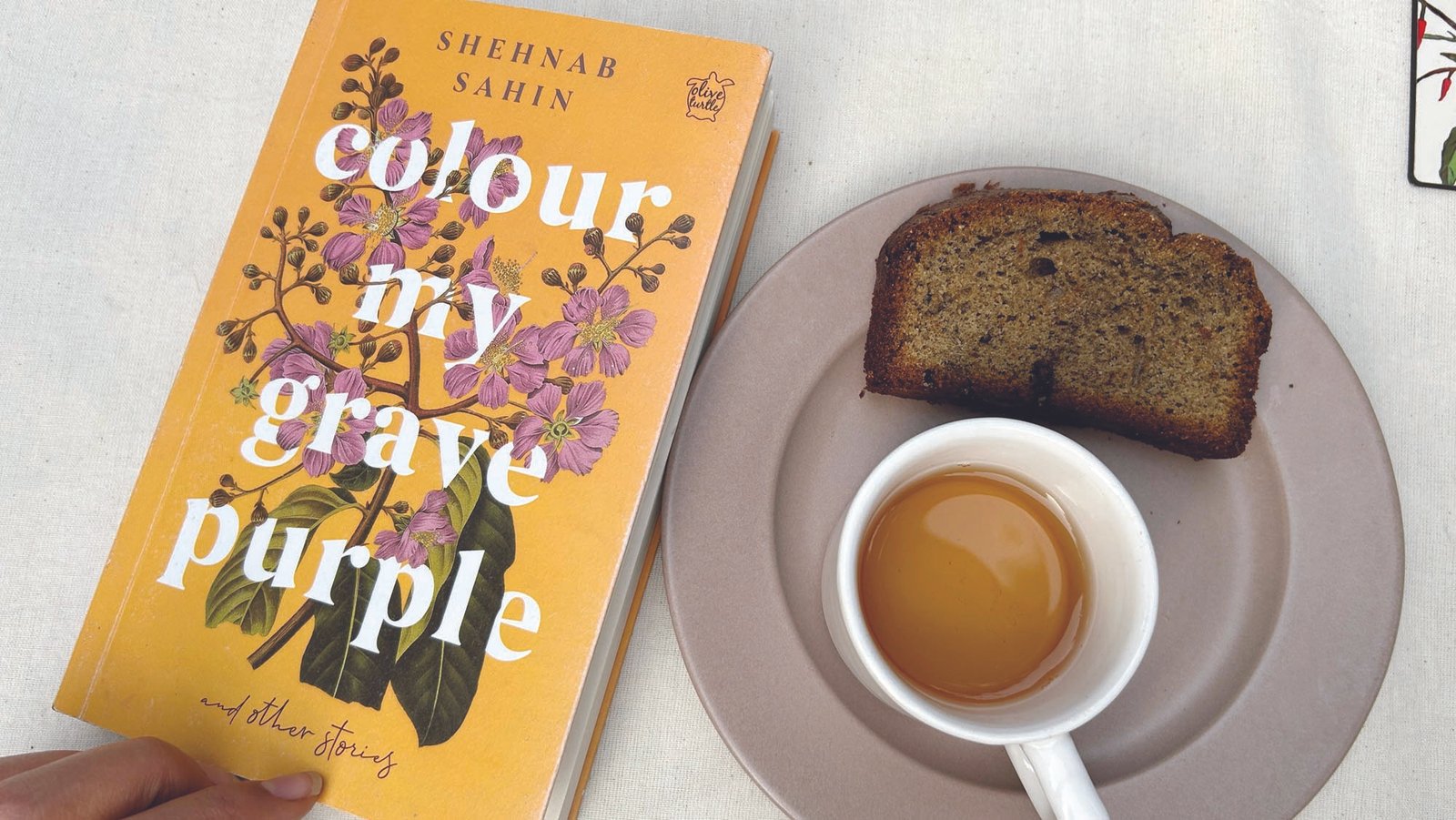
NEW DELHI, Feb 7: A new collection of stories, spanning from 1855 to 2019, takes the well-worn terrain of historical fiction, especially from Assam, and excavates from it the sedimented lives that can often be left neglected.
The 10 stories in “Colour My Grave Purple” by Shehnab Sahin are not simply episodes in Assam’s long, restless march toward modernity but serve as acts of reclamation.
Sahin’s project is clear – to recenter Assamese experiences within the nation’s literary imagination and to contest the reductive narratives of insurgency and exoticism that have long shadowed it.
Related Posts:


The author is a former civil services officer who now works in the international humanitarian sector, implementing programmes for people displaced by wars and conflicts.
What distinguishes Sahin’s debut collection, published by Niyogi Books, is its refusal to treat the Northeast as a “problem” to be solved.
In the author’s note, which is a lucid self-critique of regional representation, Sahin declares her intent to “diffuse the stronghold of insurgency as a dominant theme” and to present instead the “broad spectrum of experiences” that have shaped Assamese life.
The stories deliver on that promise, moving across centuries with a historian’s eye and a storyteller’s empathy.
From the tea plantations of colonial Assam in “Two Leaves and a Bud” to the queer awakening of a young man in the 1970s in “Devotional Defiance”, each narrative becomes a window into the layered negotiations of identity, memory, and belonging.
The opening story, “Two Leaves and a Bud (1855)”, sets the tone for the entire collection. It revisits the history of the plantation economy through the eyes of a British manager whose fascination with Assam’s tea industry slowly curdles into an encounter with the spiritual and the uncanny.
The story’s gothic undertones are more than stylistic flourishes and signify a deeper haunting of the Empire and its perception of local customs.
Sahin turns the tools of colonial realism against itself, allowing the reader to witness the violence of possession of land, people and narratives.
If the above example examines Assam as a site of imperial exploitation, “Bellows of a Wilted Poppy (1860)” turns inward, probing the collision between indigenous medical knowledge and colonial modernity.
Through Rebo, the traditional healer experimenting with opium, Sahin explores how epistemologies are colonized long before territories are.
The story’s attention to language and its use of untranslated Assamese embodies the tension between the oral and the written, the local and the imperial. In doing so, Sahin positions her fiction as counter-history by speaking out in her own voice.
Throughout the collection, Sahin’s characters, from tea workers, soldiers, missionaries to lovers and bureaucrats, are full of cultural intrigue and depth. In “Ursula (1943)”, the real-life anthropologist Ursula Graham Bower is reimagined through the eyes of the Naga people she once studied and ends up as a sort of meditation on the ethics of empathy.
Similarly, in “Freedom in My Blood (1920)”, the story of a young woman’s encounter with nationalist fervour doubles as a commentary on gender and the limited emancipations available to women in revolutionary times.
The title story “Colour My Grave Purple” brings the collection full circle and crescendos with an emotional fervour few can manage to create. It situates grief and the death of a father as both personal and political inheritance.
Here, Sahin’s prose achieves its most lyrical register and the purple of the grave becomes both elegy and assertion where she refuses to let the dead remain uncoloured, unnamed, or unremembered. It’s a gesture toward beauty as resistance against those who seek to keep her from her father, even in his death. (PTI)