

HT Bureau
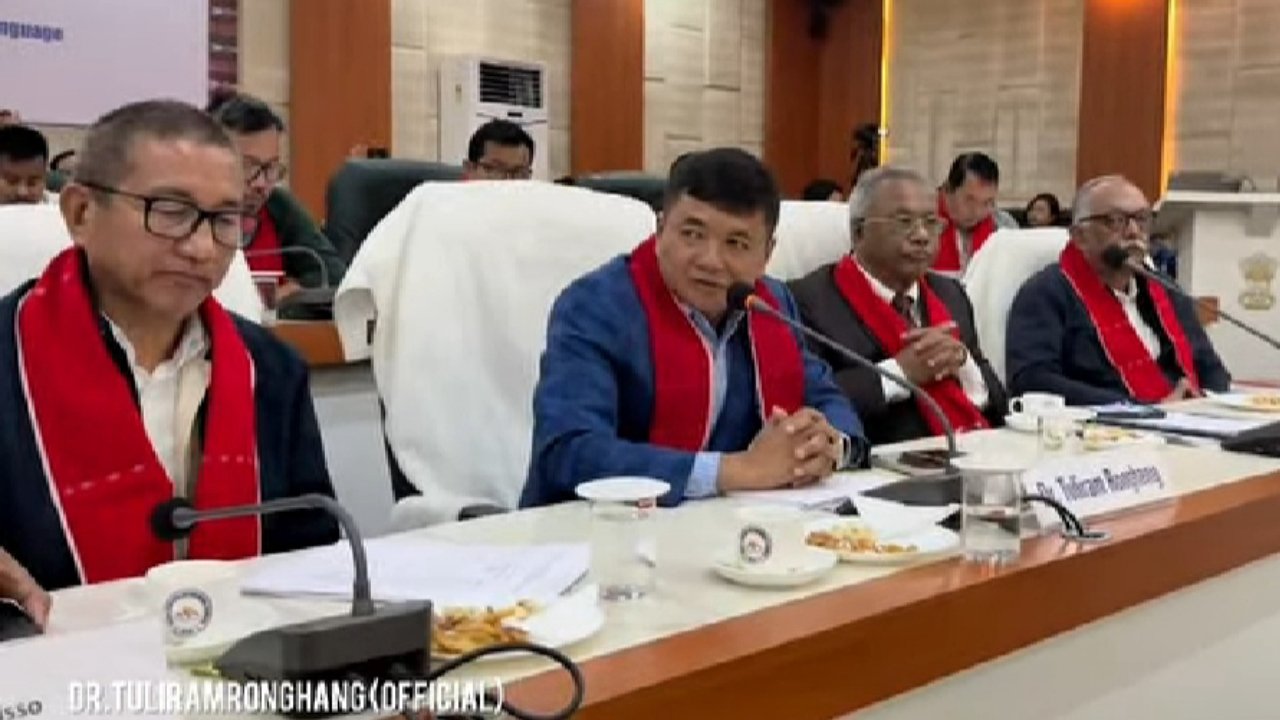
DIPHU, Feb 9: In a major initiative to promote and strengthen the Karbi language, the Karbi Anglong Autonomous Council (KAAC), in collaboration with the Centre for Karbi Studies (CKS) and the Standardisation Committee for Karbi Language (SCKL), on Monday launched a three-day International Workshop on Standardisation of Karbi Language at the Arboretum-cum-Craft Centre, Matipung.
Linguists, researchers, Karbi writers, representatives of literary and socio-cultural bodies, Karbi language teachers and Karbi medium teachers are participating in the workshop to deliberate on evolving a definitive and uniform standard for the written form of the Karbi language.
Related Posts:
Karbi priests, pastors and church leaders engaged in literary activities have also been invited, cutting across religious and political affiliations, to ensure a broad-based and inclusive discussion.
The inaugural session was attended by KAAC Chief Executive Member Tuliram Ronghang, MP Amarsing Tisso, MLA Bidyasing Engleng, executive members of KAAC Surjya Ronghar and Richard Tokbi, along with other dignitaries.
Inaugurating the workshop, Ronghang said language is not merely a medium of communication but the living soul of a people, carrying their history, traditions and identity.
He described the effort to standardise the Karbi language as a historic step towards unity, preservation and progress.
He also noted that the Karbi Language Implementation Technical Committee under the KAAC Art and Culture Department has been working extensively on standardisation.
“At present, different spellings are used for the same words. Once standardisation is achieved, there will be uniformity in writing,” he said.
Delivering the keynote address, Dr Amalesh Gope, assistant professor at Tezpur University, said the Karbis are among the major indigenous communities of the Northeast with a distinct language and culture.
He said the initiative taken by KAAC would significantly strengthen the Karbi language and emphasised that standardisation should emerge through mutual agreement, based on careful understanding of the language’s sound system.
He also urged the council to organise training programmes for school teachers and suggested developing linguistic tools, including software, for writing and translation in Karbi.
Dr Linda A Konnerth, assistant professor of historical linguistics at the University of Bern, Switzerland, who conducted her doctoral research on the Karbi language and authored “A Grammar of Karbi”, also addressed the workshop.
She stressed the importance of proper documentation, including dictionaries, grammar and textual records, for language standardisation.
The workshop, she said, would play a vital role in improving the written form of Karbi through a unified standard.
Deputy Director of the Centre for Karbi Studies Maggie Katharpi said the objective of the workshop is to achieve uniformity in writing, even though spoken forms may vary across regions.
She added that participants would discuss and chart out a systematic process for standardisation.
She later proposed the vote of thanks.
The workshop also featured plenary and technical sessions.
Dr Konnerth spoke on “Documentation of the Karbi Language as a Prerequisite for Standardisation”, while Dr Gope presented on “Writing Karbi for the Future: Scientific Evidence, Community Choice and Educational Responsibility”.
In subsequent sessions, Director of the Centre for Karbi Studies Dharamsing Teron discussed “Insights into Karbi Philosophy – A Linguistic Detour”, while deputy director Elwin Teron spoke on “Roman Script: A Script of Convenience?”.
The first day concluded with a presentation by Dr Robindra Teron of Assam University, Diphu Campus, on “Ethnobotany and Documentation of Karbi Language: Exploring the Language–Plant Connection”.
The workshop is expected to lay the groundwork for a widely accepted standardised written form of the Karbi language, aiding its preservation, teaching and wider use in the years ahead.