


HT Bureau
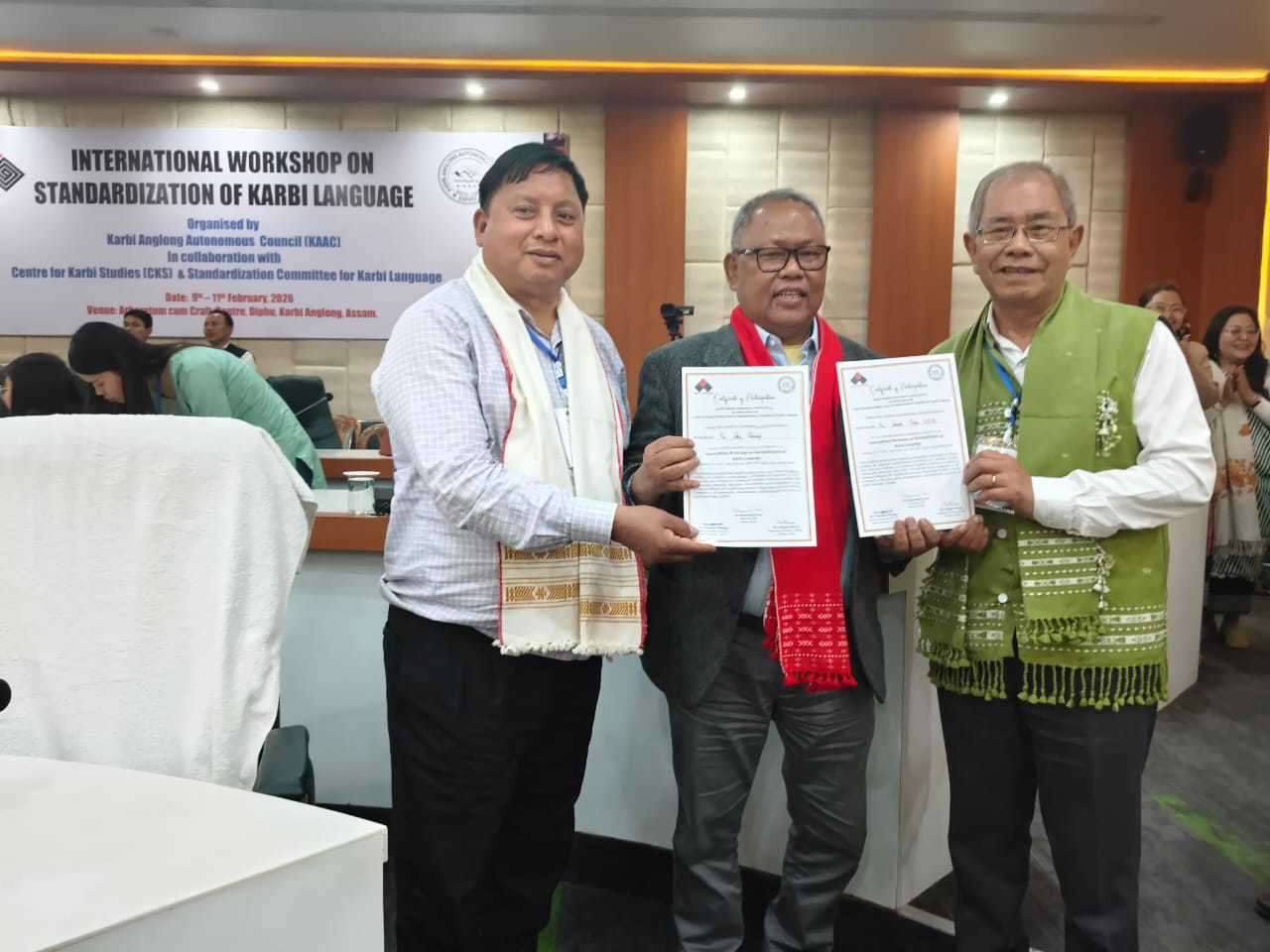
DIPHU, Feb 11: A three-day International Workshop on the Standardisation of the Karbi Language concluded on Wednesday at the Arboretum-cum-Craft Centre in Matipung. Organised by the Karbi Anglong Autonomous Council (KAAC) in collaboration with the Centre for Karbi Studies (CKS) and the Standardisation Committee, the event focused on creating a definitive framework for the written form of Karbi.
The workshop brought together academics, writers, linguists, student leaders and religious figures to discuss phonetics, tones and the use of vowels and consonants to preserve the linguistic integrity of Karbi.
Related Posts:


On the final day, speaker Khorsing Teron highlighted a major finding: while Karbi was previously thought to have five vowels, experts identified seven distinct vowels— a, e, ê, i, o, ô, u. Teron also noted that spoken Karbi uses three tones (high, mid, and low), which can be represented in writing using diacritical marks.
Speaker Khoyasing Hanse examined grammatical structure, noting that Karbi relies heavily on affixation. He identified five primary types: possessive prefix, nominaliser prefix, plural suffix, collective suffix and causative prefix.
Scholars presented papers on topics ranging from “Active vs. Passive Priming Patterns” (Anna Timungpi, Imtesal Arif Khan and Veena Ravindran) to the “Revitalisation of the Karbi Language” (Dr Kareng Ronghangpi). Other presenters, including Welsing Hanse, Bonsam Kathar and Kaveso I. Kathar, explored semantics and language contact.
The workshop concluded with a valedictory function, where Dr Dharamsing Teron, Director of CKS, delivered the vote of thanks. Certificates were distributed to all participants for their contribution to this landmark linguistic initiative.