


By: Bedanga Chutia
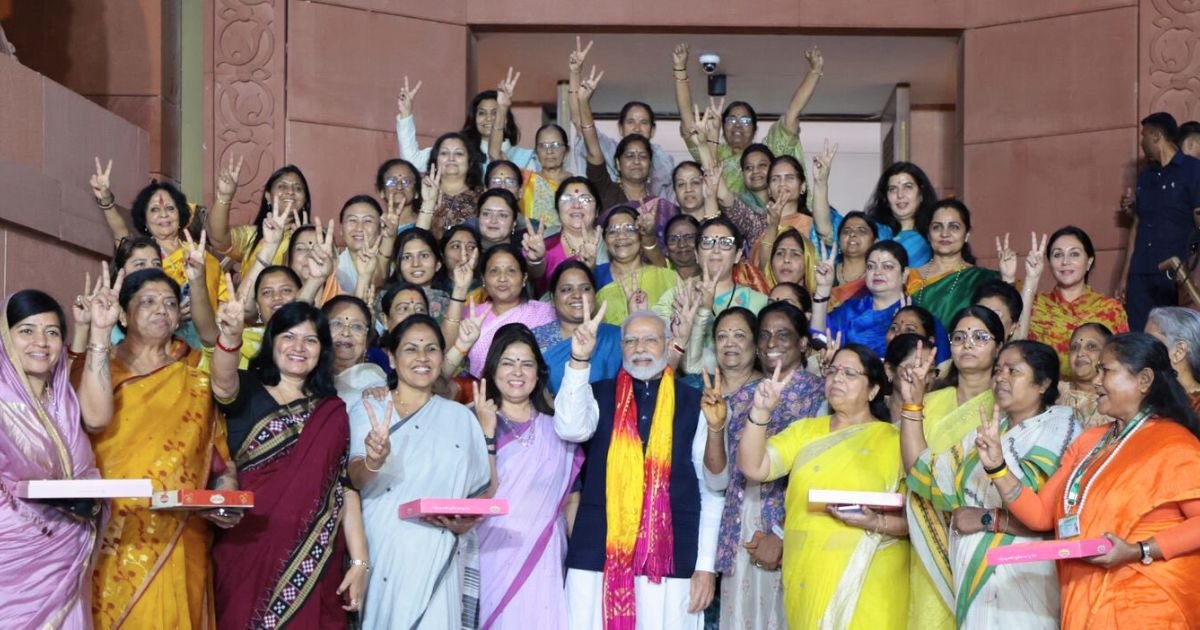
In India’s political realm, the Nari Shakti Vandan Adhiniyam looms large, heralding a transformative legislative era. Pledging a formidable 33% reservation for women in Parliament and state Assemblies, it represents a monumental stride towards gender parity. Yet, navigating this constitutional avenue reveals a static needle of progress in gender representation. Despite its ambition, the legislation encounters pitfalls and paradoxes, casting doubt on the efficacy of the quota system.
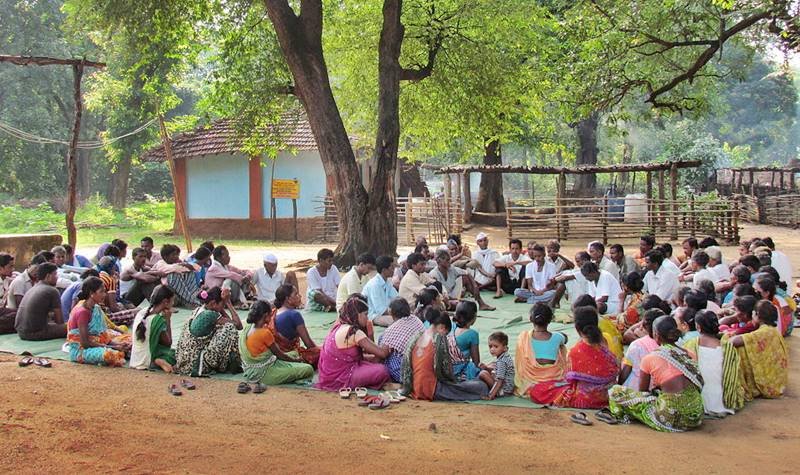
Beneath the veneer of legislative triumph lies a disconcerting truth: a paradoxical regression from a 50% reservation for women in panchayati raj institutions and municipalities since 2010. While the grassroots experienced a surge in female representation, the recent amendment appears to backtrack, inadvertently perpetuating a status quo where male dominance in power endures. The emergence of the term “Panchayat Pati” underscores society’s struggle against deeply entrenched patriarchal norms, resilient despite legal strides.
Related Posts:
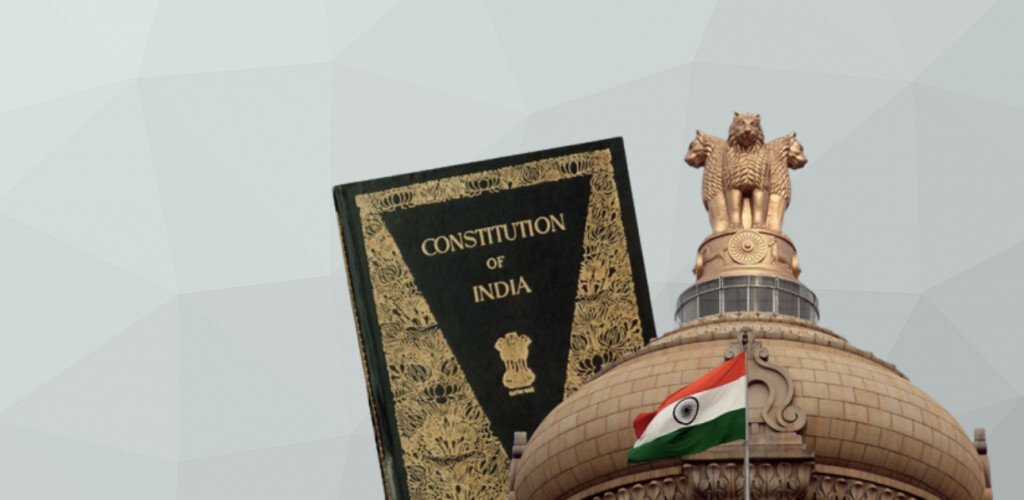


In the noble pursuit of democratic ideals, our constitutional fabric, ostensibly designed to champion egalitarian values, appears frayed, particularly in the realm of gender equality implementation. The lamentable phenomenon of ‘Panchayat Patis’ assuming official roles underscores systemic shortcomings, elucidating that legislation alone cannot dismantle entrenched patriarchal structures. As elucidated by the sagacious Amartya Sen, women’s preferences often mirror distortions stemming from unjust background conditions, epitomizing a passive acceptance of their subordinate roles.
The erosion in governance extends beyond legislative chambers, permeating administrative echelons. Instances in Madhya Pradesh lay bare a crisis where male officials covertly colluded to marginalize elected female representatives, consigning them to the shadows of their spouses. These episodes underscore a failure to extirpate deeply ingrained values, privileging familial customs over democratic principles and equitable representation.
Prime Minister Narendra Modi’s assertion of empowering women via reserved parliamentary seats, while politically astute, falls short of recognizing women as distinct individuals. Women transcend mere archetypes; they are autonomous beings deserving parity within the societal tableau. The allocation of parliamentary and legislative seats for women, though commendable, risks being perceived as mere tokenism without the concomitant implementation of comprehensive policies fostering women’s participation and empowerment across all sectors.
In recognizing the discernible surge in women’s engagement, evidenced by an uptick in female voters across various states, the commitment to earmark 33% of parliamentary and state Assembly seats for women underscores their elevation to a pivotal demographic. Yet, the Modi government’s reliance on future commitments to secure the women’s vote raises questions about potentially underestimating the autonomy of women in shaping electoral choices.
Beneath the veneer of political rhetoric lies the crux of the matter: addressing the foundational causes of gender disparity. An introspective governmental approach, emphasizing incentivizing policies to augment women’s participation in the workforce and their holistic empowerment, would truly epitomize a dedication to social justice and gender parity.
To fathom the intricacy of the challenge, one must confront the stark realities laid bare by the 50% reservation for women in panchayats and municipalities, stemming from the 73rd Constitutional Amendment in 1992. This initiative, taking a resolute stance on mandating parity at the grassroots level, has, however, exposed social and structural issues that transcend mere seat allocation.
In numerous regions, the influence of women in policy formulation and execution has been uneven, with authority persistently concentrated in male hands despite the reservation for women. The emergence of the term “Panchayat Pati” signifies a disconcerting trend wherein the husbands of elected women representatives assume influential roles, diluting the intended empowerment. This phenomenon accentuates the enduring prevalence of deep-seated patriarchal norms, subverting the essence of gender equality.
The persistent deficiency in constitutional education and training compounds the issue, epitomized by the routine induction of “Panchayat Patis” by senior state bureaucrats – an intentional breach of foundational values of equality and universal rights. Lingering habits, paternalism, and the obstinate grip of patriarchal norms sustain an unsettling status quo.
Madhya Pradesh’s governance debacle, where seasoned civil servants subtly endorsed sidelining elected women representatives, spotlights a crisis. Oath-taking ceremonies, effectively sidelining women, underscore a systemic inability to transform legal provisions into substantive change. This not only perpetuates injustice but fosters an environment where adherence to democratic principles becomes selectively applied.
Amartya Sen’s insights, echoed by Martha Nussbaum, resonate here. The perpetuation of women’s subservient roles as “adaptive preferences” stems from societal conditioning, necessitating a broader societal shift. Respecting individual equality, irrespective of gender, must transcend a constitutional ideal – it should be ingrained in governance and societal norms.
While the Constitution itself doesn’t render India inhospitable, it is the political class’s failure that mars it with cruelty, corruption, immorality, injustice, intolerance, and irrationality. The pledge to reserve 33 % of seats for women in Parliament and state Assemblies is laudable, but it should be viewed as part of a comprehensive strategy, not a standalone achievement.
Prime Minister Narendra Modi’s avowed commitment to empowerment must transcend mere political theatrics. If genuine dedication to social justice and gender equality exists, the past nine and a half years should have focused on formulating policies incentivizing increased female workforce participation and ensuring comprehensive empowerment. The metamorphosis of women’s circumstances over 75 years, especially in education and electoral involvement, should not be eclipsed by symbolic overtures.
In 2019, 21 lakh more women exercised their vote than men across 10 states, including Bihar and Uttarakhand, and three Union territories. This shift designates women as a pivotal constituency in 118 Lok Sabha seats. While the promise of reserved parliamentary and state Assembly seats acknowledges their emerging role, it necessitates tangible actions reflecting a bona fide commitment to women’s empowerment.
As pivotal elections loom in states like Madhya Pradesh, Rajasthan, Chhattisgarh, and Telangana, the Modi government’s assumption that a future promise alone secures the women’s vote may prove myopic. Women are a diverse group with varying concerns and aspirations. To genuinely secure trust and votes, policies resonating with their diverse needs should take precedence.
Reserved seats for women in legislative bodies are laudable but hinge on a broader societal shift. Symbolic gestures, while politically convenient, inadequately address deep-seated patriarchal norms permeating various governance levels. India’s democracy demands more than legislative triumphs; it necessitates dismantling age-old structures obstructing true gender equality. Empowerment’s journey mandates a holistic approach, aligning legal provisions with societal values to foster an environment where women can genuinely exercise agency, contributing meaningfully to the nation’s progress. (The columnist pens pieces concerning matters of global significance and the pursuit of justice. He can be reached at bedanga987@gmail.com)