
HT Correspondent
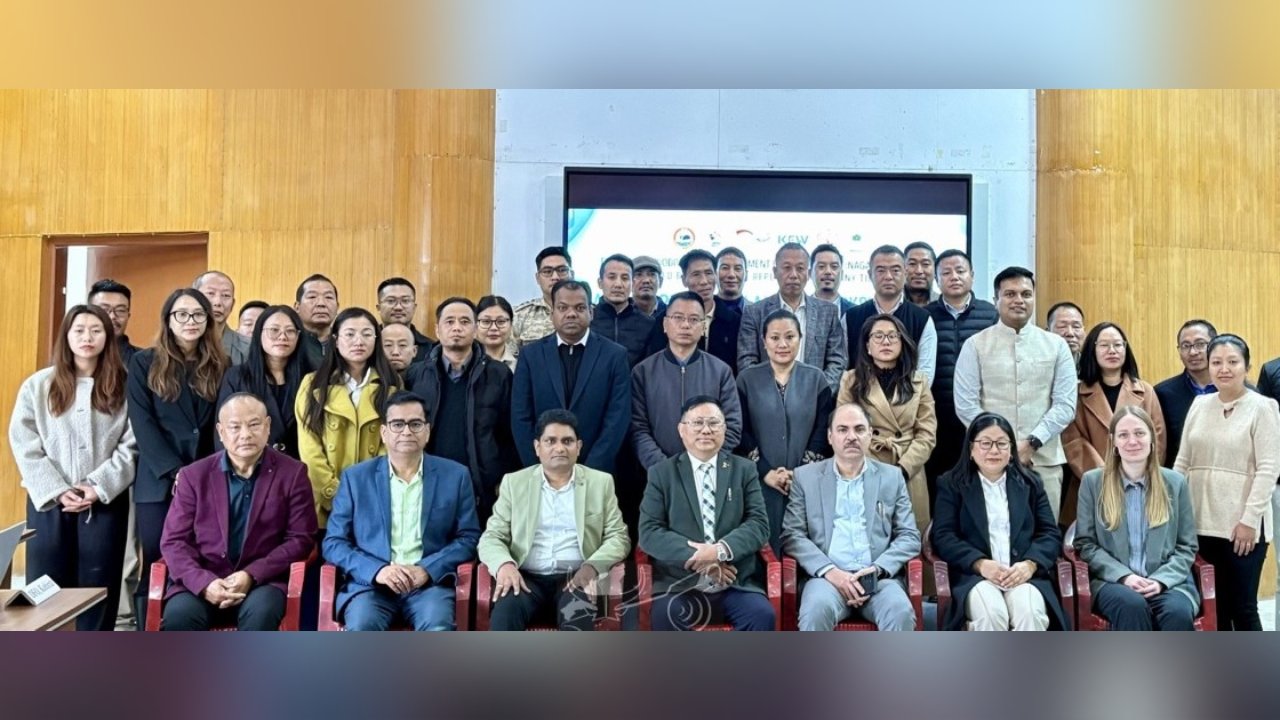
DIMAPUR, Feb 26: Nagaland forest department stressed the need for focused and intensive conservation of forests at the annual review-cum-planning workshop of the Forest and Biodiversity Management in the Himalaya (Nagaland) Project (FBMP) at the forest office complex in Kohima on Thursday.
The two-day workshop, co-financed by the Federal Republic of Germany through KfW, is aimed at reviewing progress and charting the roadmap for the next phase of implementation.
Related Posts:



FBMP is part of the Government of Germany’s financial cooperation with India, signed in 2016, focusing on sustainable and effective management of forests and biodiversity in Nagaland.
Addressing the inaugural programme of the workshop, Vedpal Singh, principal chief conservator of forests and head of forest force, Nagaland, emphasised the need to institutionalise all interventions under the project to ensure sustainability beyond individuals.
He stressed that review meetings must result in measurable and implementable decisions. He also cautioned against spreading resources too thinly and suggested intensive interventions in selected locations to create demonstrative and replicable models.
Highlighting the importance of visible and relatable issues, Singh called for strengthening components such as human-wildlife conflict mitigation to enhance public engagement and institutional support.
Y Kikheto Sema, principal secretary, environment, forest and climate change and chairman, Nagaland State Biodiversity Board in his address, stated that the project presents a significant opportunity for the state.
He observed that Nagaland, though financially constrained is rich in biodiversity and must leverage such grant-based projects effectively.
Sema pointed out that with most forest lands under community ownership, grassroots awareness and participation are essential for meaningful conservation outcomes.
He expressed concern over the decline in forest cover in recent years and underscored the need to address the root causes, including unsustainable practices.
He advocated intensive engagement with communities, prioritisation of ecologically sensitive areas and focused interventions rather than thin dispersal of resources.
Emphasising that conservation must become a people’s movement, he called for the involvement of schools, churches and community institutions in spreading awareness and protecting biodiversity for future generations.