


NEW DELHI, March 2: Scientists and policymakers have voiced concern over the layoffs at the US climate agency, National Oceanic and Atmospheric Administration (NOAA), saying any reduction in observation data could affect monsoon forecasts and cyclone tracking in India.
Hundreds of weather forecasters and other federal NOAA employees on probationary status were fired last week. These included meteorologists who do crucial local forecasts in the national weather service offices.
“We are worried. If NOAA reduces observations, there will be implications on weather forecasts. When ocean observations reduce, there is less data to assimilate. Hence predictability will reduce,” M Ravichandran, Secretary, Ministry of Earth Sciences, told PTI.
Related Posts:

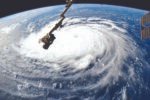


Climate scientist at the Indian Institute for Tropical Meteorology Roxy Mathew Koll termed the NOAA layoffs as a global crisis that could impact climate science.
NOAA provides data and models that support weather-climate monitoring, forecasting and disaster preparedness worldwide.
“For India, the monsoon forecasts, cyclone tracking, and climate projections rely on NOAA’s models,” Koll, who is also among the authors of reports of the Intergovernmental Panel on Climate Change, said.
He said the NOAA layoffs were not just a US issue, but a blow to climate science and action worldwide.
“Half of the Indian Ocean’s observational network is backed by NOAA. Without this backbone, early warnings for floods, heatwaves, and storms will weaken, putting millions at risk,” Koll said.
Another meteorologist said he has been receiving emails from his interlocutors at NOAA informing them about the layoffs and inability to continue work as before.
“This is more than a budget cut. It is a direct threat to climate resilience, research, and preparedness worldwide. The world cannot afford to lose NOAA,” Koll, a Rashtriya Vigyan Puraskar awardee, said.
India has deployed a number of argo floats, moored buoys and drifting buoys for ocean observations for various weather forecasting models. While most of the instruments deployed by the Ministry of Earth Sciences are in the Indian Ocean, NOAA also has deployed similar instruments in the Indian Ocean as well as in other seas across the world.
“Collaboration is key to science – and particularly climate research and action. Take this example -monitoring across global oceans is essential to predict India’s weather and climate, but no single country can do it alone,” Koll said. (PTI)