

HT Correspondent
MARGHERITA, Feb 2: The four-day 21st Adivasi Mahasabha–2026 concluded on Sunday at the Dehing Sports Complex Samannay Khetra in Borgolai under the 83rd Margherita Legislative Assembly constituency in Tinsukia district, emerging as a powerful platform for asserting Adivasi rights, identity and political unity.
Organised under the hospitality of the All Adivasi Student Association of Assam (AASAA) Tinsukia district committee in collaboration with the Adivasi Jani Shakti Sangati, the Mahasabha culminated in a historic public assembly attended by an estimated crowd of over two lakh people.
Related Posts:



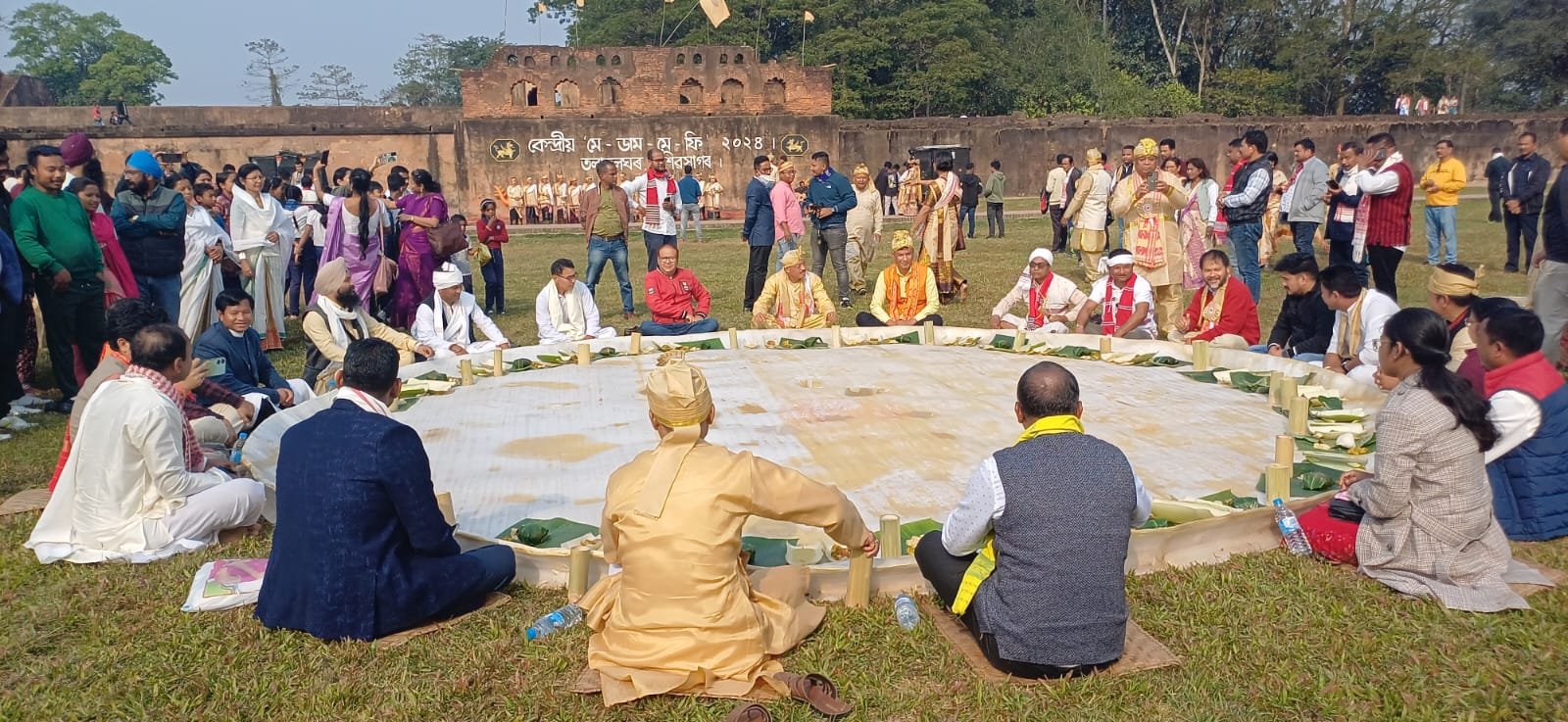
Hemant Soren, chief minister of Jharkhand, attended the closing session as chief guest, drawing widespread enthusiasm from the gathering.
In his address, Soren began by paying tribute to Assam’s popular cultural icon Zubeen Garg, linking cultural expression with the struggles and resilience of the Adivasi community.
Raising issues central to Adivasi life, Soren emphasised rights over water, forests and land, stating that protecting these resources is the fundamental duty of any responsible government.
He pointed out that while the tea industry in Assam is heavily dependent on Adivasi labour, the community continues to face exploitation and deprivation.
Criticising the Centre, Soren mockingly termed it a “bepari sarkar” (trader government), remarking that “when the king is a trader, the subjects become beggars.”
He accused the central government of misusing constitutional institutions such as the ED, CBI, Income Tax department and the Election Commission for political purposes, alleging that this undermines democracy and denies equitable development to Adivasi communities.
Calling for political consolidation, the Jharkhand chief minister noted that Adivasis constitute a significant portion of Assam’s electorate and said that if they unite and take collective political decisions, they could decisively influence the 2026 Assam Assembly elections.
He assured that welfare measures similar to those implemented in Jharkhand could be ensured for Adivasis in Assam through sustained political will.
Earlier, reception committee president Rana Jyoti Neog delivered the welcome address, while AASAA central executive committee president Rejan Horo and general secretary Deben Uraon spoke on the need for unity and continued struggle for constitutional and social justice.
The dais featured several prominent personalities, including Jharkhand Tribal Affairs minister Chamra Linda, MP Bijoy Kumar Hazda, MLA M Tajuddin Raja, former Assam minister Etuwa Munda, Jai Bharat Party state president Tiwari Gorh, and Prity Rekha Barla Nag, among others.
Speakers repeatedly highlighted wage disparities faced by tea garden workers, pointing out that while daily wages in other states range between ₹400 and ₹500, workers in Assam receive around ₹250.
The demand for wage parity, dignity and justice formed a key theme of the deliberations.
Over the four days, the Mahasabha featured cultural processions, delegate meetings, discussions, sports and cultural programmes, reflecting the heritage, traditions and growing political consciousness of Adivasi society.
On the second day, the AASAA flag was hoisted by Rejan Horo, while the Mahasabha flag was unfurled by Rana Jyoti Neog. The martyr tribute programme was inaugurated by Deben Orang.
Three delegate sessions held on the second day discussed the historical origins and settlement of Adivasi communities in Assam and the Northeast, land rights and identity, and constitutional justice including Scheduled Tribe status. Retired Jorhat College principal Dr Debabrata Sharma addressed one of the key sessions.
The Mahasabha venue, spread across nearly 87 bighas of the Dehing Sports Project area, showcased traditional houses, arts, crafts and social customs of various Adivasi sub-tribes.
Special attractions included a Birsa Munda Park, a Martyrs’ Park, exhibitions and trade fairs.
Organisers and participants said the 21st Adivasi Mahasabha at Borgolai transcended the character of a routine gathering and took the form of a mass movement for rights, dignity and self-respect, one that is expected to leave a lasting imprint on the political and social discourse surrounding Adivasi communities in Assam.