


HT Correspondent
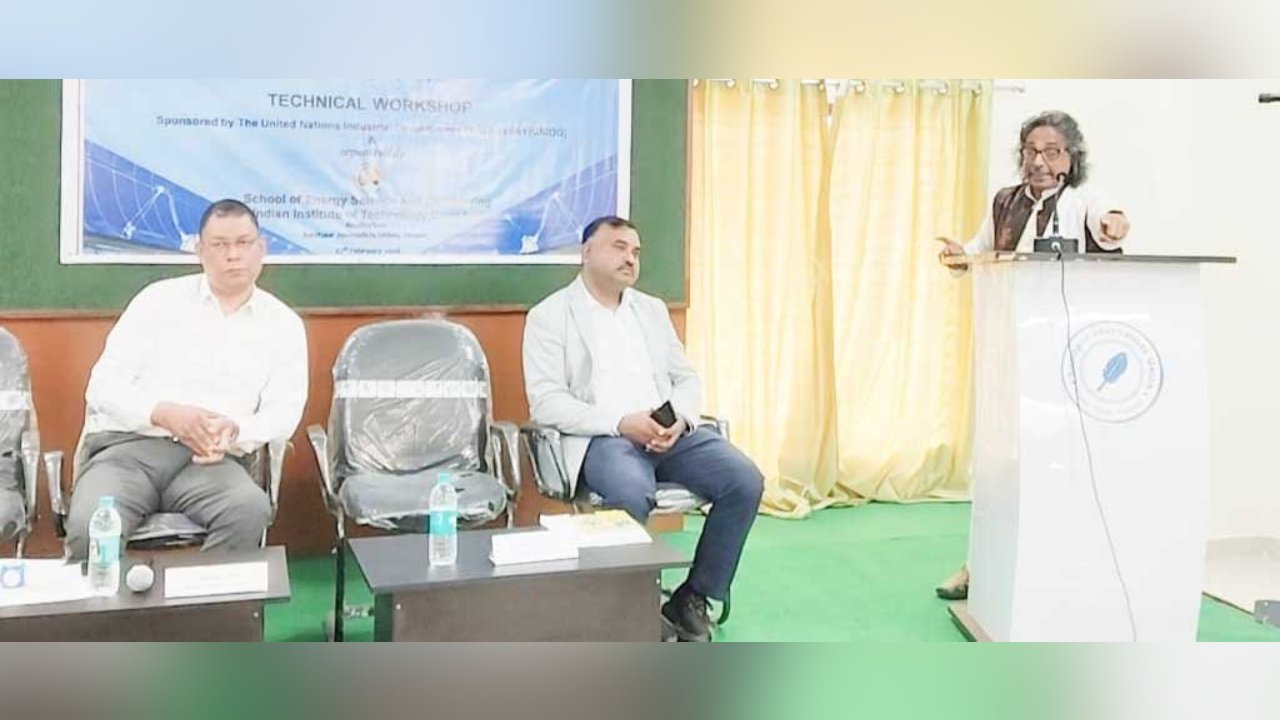
TEZPUR, Feb 28: With rising temperatures forcing the use of fans and air-conditioners as early as February, global warming has emerged as a serious threat to humans, wildlife and nature, said United Nations Industrial Development Organisation (UNIDO) National Coordinator Debajit Das at a workshop held here on Friday.
“While air-conditioners cool indoor spaces, they contribute to higher temperatures outdoors. The extraction and use of fossil fuels, along with coal and other inputs in industrial processes are significantly accelerating global warming,” Das said, warning that the planet is steadily moving towards destruction if urgent corrective measures are not taken. The workshop was organised at the Sonitpur Journalists’ Union hall in Tezpur by the School of Engineering under Indian Institute of Technology, under the aegis of the Union Ministry of Micro, Small and Medium Enterprises, UNIDO, the Global Environment Facility (GEF) and CST.
Related Posts:


Highlighting the need to reduce industrial dependence on coal and other combustible materials, Das stressed that the adoption of solar thermal technology is crucial to curb atmospheric warming, protect biodiversity and counter greenhouse gas emissions. He noted that although solar energy is widely discussed, public awareness about solar thermal technology remains limited despite its efficiency, cost-effectiveness and suitability for industrial applications.
“Temperatures are already touching 42–44 degrees Celsius during summer. One can only imagine how severe the situation could become by 2050. Preventive action must begin now and solar thermal technology can play a decisive role,” he said. Das further announced that to encourage entrepreneurs, UNIDO would provide up to 50% financial assistance for approved projects, with a maximum subsidy of ₹2.5 crore. In this initiative, the Department of Energy of Indian Institute of Technology Guwahati will act as the principal technical partner.
Inaugurating the workshop, Prof DC Baruah of Tezpur University, said that public awareness on the issue was essential and described the workshop as a significant step in that direction. Prof Pankaj Kalita of Guwahati University participated as a resource person. A total of 18 entrepreneurs took part in the workshop.