
HT Bureau
GUWAHATI, May 19: The Centre on Tuesday unveiled an ambitious roadmap to transform the Brahmaputra River into a major economic and connectivity corridor for the Northeast, with plans to invest nearly ₹4,800 crore in inland waterways infrastructure over the next five years.
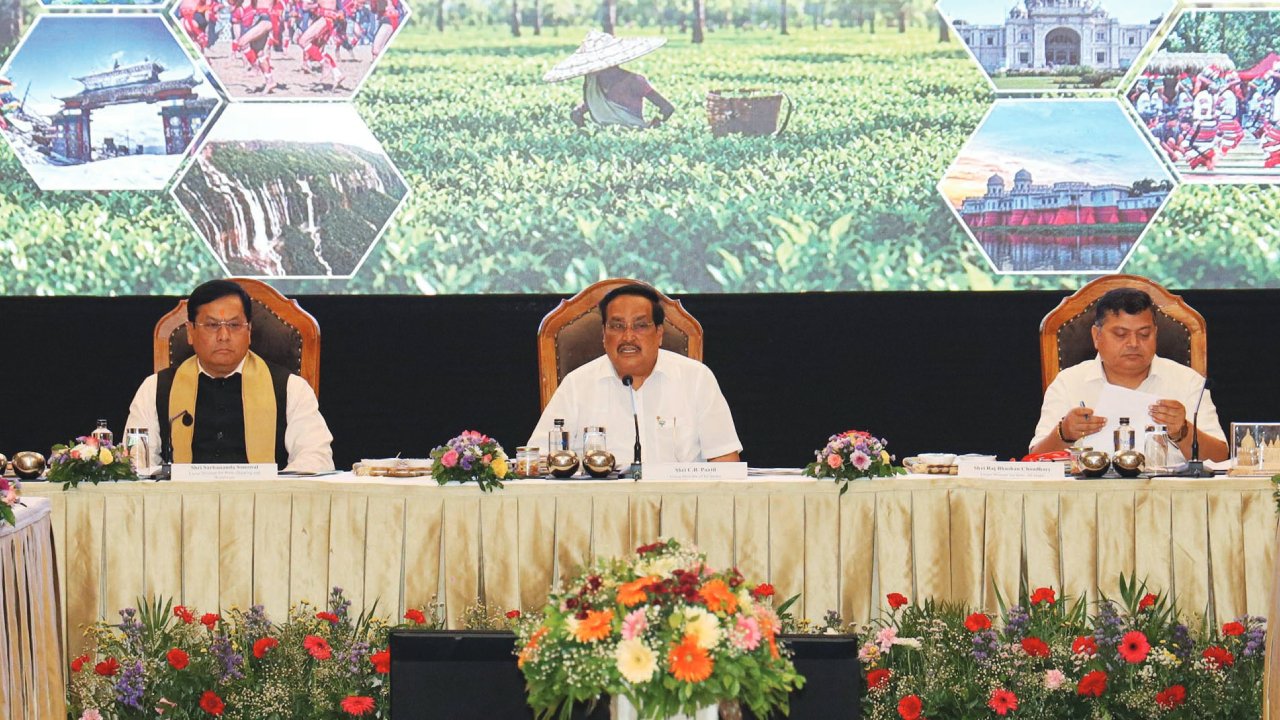
The roadmap was discussed during the 14th meeting of the High-Powered Review Board (HPRB) of the Brahmaputra Board held in Guwahati under the chairmanship of Union Jal Shakti Minister C R Patil.
Related Posts:




The meeting was attended by Union Minister for Shipping and Waterways Sarbananda Sonowal, Minister of State for Jal Shakti Raj Bhushan Choudhary, ministers from northeastern states, technical experts and senior officials.
Addressing the gathering, Sonowal described the Brahmaputra as a “critical national asset” and said the river was emerging as an economic lifeline for the Northeast through sustainable inland water transport and enhanced regional connectivity.
He said the Inland Waterways Authority of India has been actively developing the Brahmaputra, designated as National Waterway-2, to improve cargo and passenger movement via the Indo-Bangladesh Protocol Route connecting the Northeast with Kolkata and Haldia ports.
According to officials, projects worth nearly ₹751 crore have already been completed in Assam, including terminals at Pandu, Dhubri and Jogighopa, floating jetties and improved shore infrastructure.
Works worth more than ₹1,100 crore are currently underway, including fairway development, ship repair facilities, tourist jetties and a Regional Centre of Excellence in Dibrugarh.
The proposed ₹4,800 crore investment plan includes construction of community jetties, cruise terminals, dredgers, cargo vessels and urban water transport systems aimed at improving logistics efficiency and last-mile connectivity across riverine areas of the Northeast.
The meeting also witnessed the launch of the State Water Reforms Framework (SWRF), a national initiative aimed at strengthening water governance reforms across states and Union Territories.
Patil said water security remains central to India’s development vision and stressed the need for robust governance systems, institutional reforms, technological innovation and community participation in sustainable water management.
The SWRF framework includes 75 indicators across five dimensions covering policy and regulation, infrastructure, digitalisation, project monitoring and community engagement.
The initiative is intended to encourage states and Union Territories to undertake measurable reforms in areas such as groundwater regulation, floodplain zoning, wastewater reuse, river basin planning and institutional strengthening.
During the HPRB meeting, officials reviewed ongoing river basin management initiatives, flood and erosion control projects, drainage development, springshed rejuvenation and digital transformation measures across the Northeast and West Bengal.
The Board noted that 76 river basins and sub-basins covering the Brahmaputra and Barak systems have been identified for preparation and updating of master plans using technologies such as GIS, remote sensing, LiDAR and hydrological modelling. The meeting also discussed plans to transform the Brahmaputra Board into a technology-driven River Basin Organisation and reviewed proposals for revitalisation of the North Eastern Hydraulic and Allied Research Institute (NEHARI) and redevelopment of the Brahmaputra Board office complex at Basistha in Guwahati. (With inputs from PTI)