

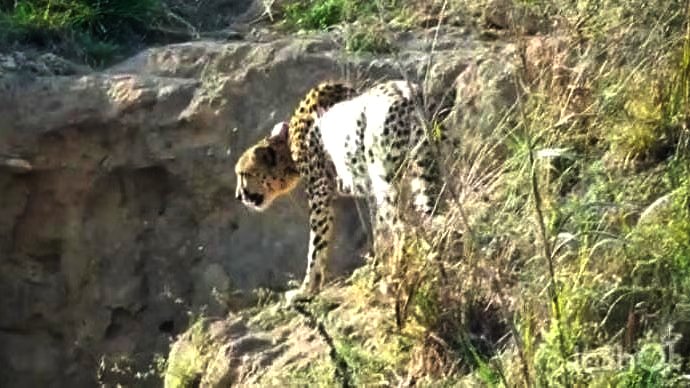
NEW DELHI, April 7 (PTI): Cheetahs released into the wild are exploring their habitat and it’s a very good sign, a senior environment ministry official has said after a spotted feline strayed out of Madhya Pradesh’s Kuno National Park recently.
Oban, one of the eight cheetahs brought from Namibia in September last year, strayed out of the Kuno National Park on April 2.
State forest officials on Friday said it was rescued from a forest area in a neighbouring Shivpuri district on Thursday evening and released into the national park again.
Related Posts:

Additional director general of forests S P Yadav told PTI that such movement of cheetahs is a natural phenomenon and there is nothing to worry about.
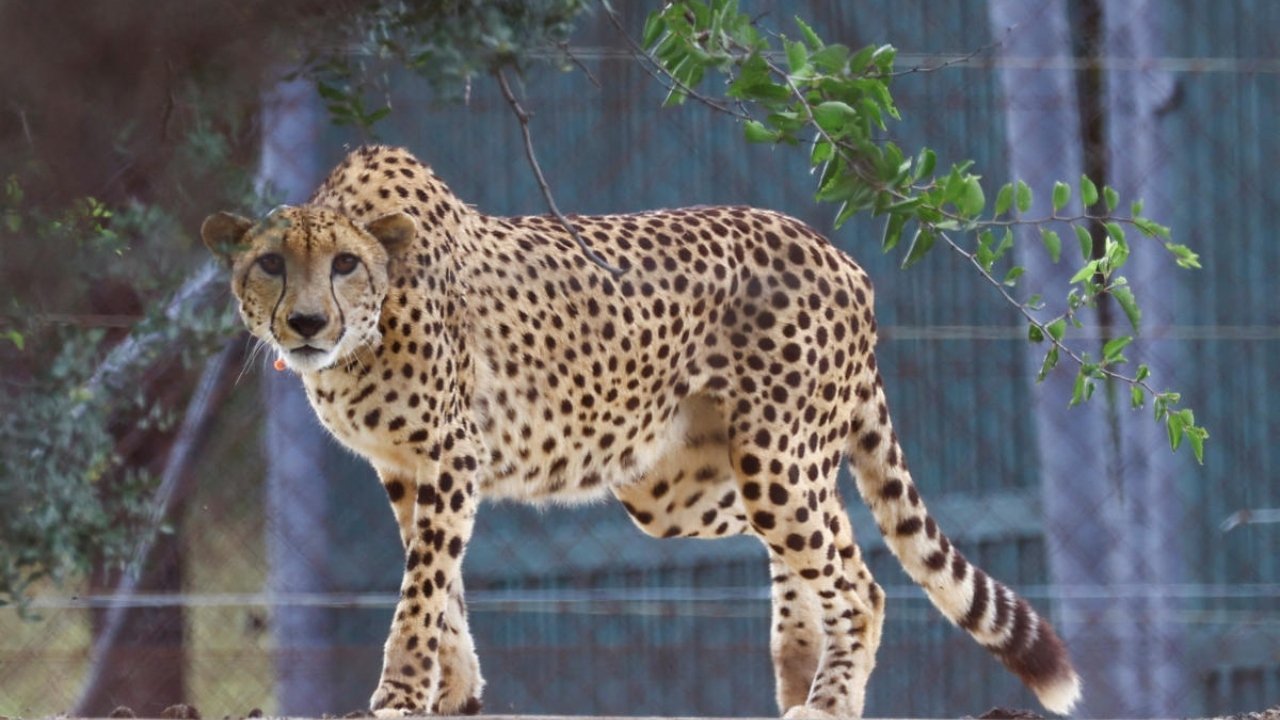
“Four cheetahs have been released completely. They are free ranging in the wild. Their movement is natural. We are happy that cheetahs are moving and exploring the areas and based on the exploration they identify their suitable habitat,” Yadav, who is also the head of Project Tiger, said in an interview with PTI.
“It is a very good sign that they are exploring other areas. It’s a natural phenomenon and there is nothing to worry about. But I must tell you that every cheetah which has been released in Kuno is monitored round the clock,” he said.
The senior official said the government has appointed “Cheetah mitras” to familiarise the local populations with the felines and minimise potential conflicts.
Forest officials in Madhya Pradesh have trained around 400 “cheetah mitras” from 51 villages. Those trained include school teachers, village headmen and patwaris.
“And if at all any conflict takes place with small animals like sheep, goats etc, our compensation plan is ready. They (owners) will be adequately compensated,” Yadav said.
Under the ambitious Cheetah reintroduction programme, Prime Minister Narendra Modi released the first batch of eight spotted felines — five females and three males — from Namibia into a quarantine enclosure at Kuno in Madhya Pradesh on his 72nd birthday on September 17 last year.
One of the Namibian cheetahs, Sasha, died due to a kidney-related ailment on Monday, forest and wildlife officials in Madhya Pradesh said. Another cheetah, Siyaya, gave birth to four cubs and they were first spotted on March 29.
In a second such translocation, 12 cheetahs were flown in from South Africa and released into Kuno on February 18.
Kuno, spread over 750 kilometres in the state’s Chambal region, has a good prey base for cheetahs, comprising the four-horned antelope, chinkara, nilgai, wild pig, spotted deer and sambar, according to wildlife officials.
Cheetah is the only large carnivore that got completely wiped out from India due to overhunting and habitat loss. The last cheetah died in the Koriya district of present-day Chhattisgarh in 1947 and the species was declared extinct in 1952.