

HT Bureau
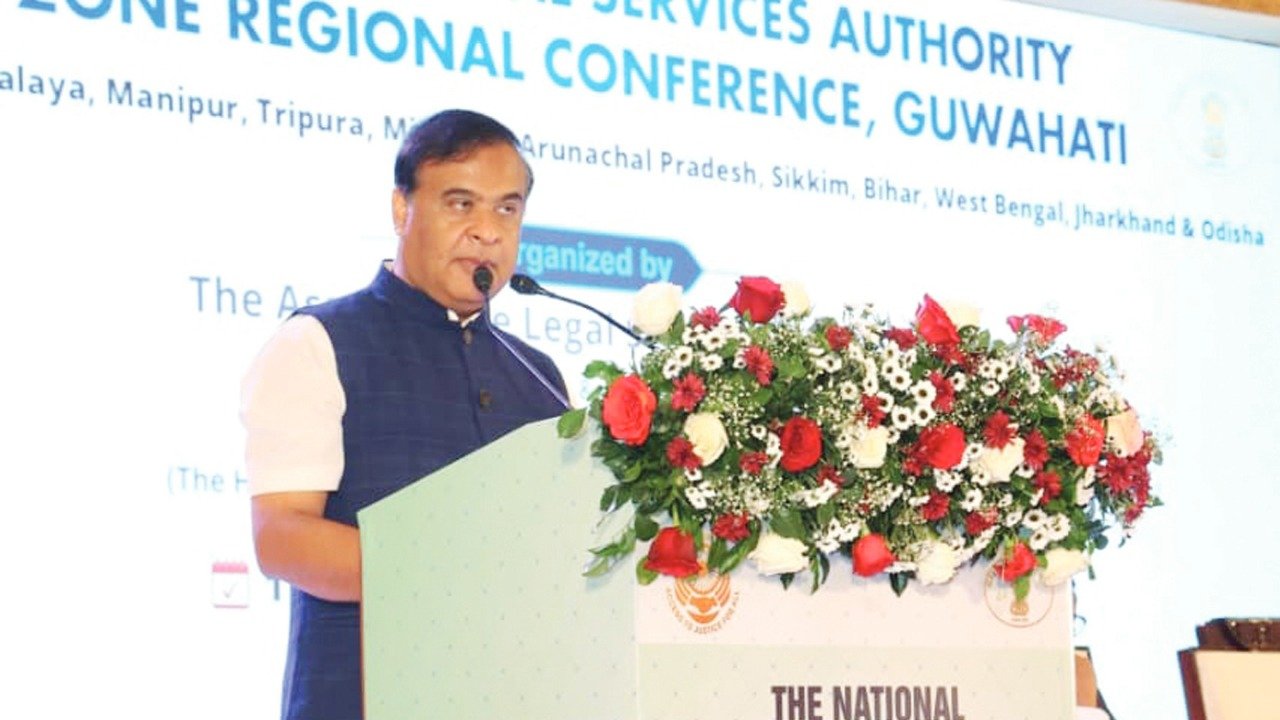
GUWAHATI, Oct 11: Chief Minister Himanta Biswa Sarma highlighted the pivotal role of justice delivery in shaping a Viksit Bharat, stating that law is not merely a set of rules but a bridge of trust between the State and its people.
He made these observations while addressing the two-day East-Zone Regional Conference, bringing together judicial and legal service institutions from the seven North Eastern states along with Sikkim, Bihar, West Bengal, Jharkhand, and Odisha at Sonapur.
Related Posts:


Sarma emphasised that the conference, which assembles the collective experience and wisdom of the judiciary from twelve states, is an important platform to strengthen institutional mechanisms and ensure greater access to justice, particularly for poor and marginalised communities.
He remarked that the participation of eminent legal luminaries reflects not only the strength of the justice system but also the shared belief that law serves as a bridge of trust between citizens and the state.
Commending the Assam State Legal Services Authority and the Gauhati High Court for organising the conference under the aegis of the National Legal Services Authority (NALSA), Sarma underscored that the event provides a meeting ground for minds committed to making justice accessible, simple, and meaningful for every citizen.
He praised NALSA’s nationwide initiatives, which have grown under the leadership of Supreme Court and High Court judges, providing legal aid, raising awareness, and enabling underprivileged citizens to understand and exercise their legal rights.
NALSA’s work inside prisons ensures that no individual is deprived of justice due to lack of representation, and its campaigns in schools, colleges, and villages have helped citizens comprehend their rights and responsibilities.
Recognising the unique socio-cultural diversity of the North East, Sarma observed that the region’s languages, customs, and terrain present both challenges and opportunities for justice delivery.
He noted that integrating traditional practices with modern legal frameworks can make justice more participatory and responsive.
The Legal Services Authorities, he added, have a critical role in spreading awareness, resolving disputes through Lok Adalats, and strengthening access to justice at the grassroots level.
He reaffirmed Assam Government’s commitment to working closely with NALSA and State Legal Services Authorities to make justice delivery simple, swift, and inclusive.
Sarma also addressed pressing socio-legal challenges, particularly the persistence of child marriage in several eastern and north-eastern states.
He highlighted conflicts between the POCSO Act and child marriage laws, advocating for a harmonized legal framework to safeguard children while considering social realities.
Education, awareness, and empowerment of girls, he emphasized, remain the most effective tools for prevention.
Further, the chief minister highlighted the region’s vulnerability to drug trafficking due to proximity to international borders.
He noted that Assam has been relentless in combating drug-related crimes, registering over 3,000 NDPS cases annually and seizing large quantities of narcotics.
Sarma expressed optimism that the conference would provide a platform to deliberate on stronger enforcement, witness protection, rehabilitation, and youth awareness programs aimed at building a drug-free, healthy, and secure North East.
Sarma also stressed the importance of protecting tribal communities, who are guardians of forests, culture, and tradition yet continue to face marginalisation.
He pointed to NALSA’s new SAMVAD Scheme, designed to raise awareness about laws such as the Fifth and Sixth Schedules, the PESA Act, and the Forest Rights Act, 2006, thereby ensuring legal aid to tribal communities.
He appreciated the Assam State Legal Services Authority for establishing Legal Aid Clinics in 46 tea estates across the state, which empower tea garden workers to confront challenges related to poverty, healthcare, education, and access to justice.
Speaking on the vision of Viksit Bharat as articulated by Prime Minister Narendra Modi, Sarma said that every sector—governance, economy, education, and justice—must function in tandem to achieve a strong, equitable, and self-reliant India.
He emphasised that justice delivery will play a defining role in this transformative journey and stressed the need to make justice accessible, affordable, and timely for all.
The chief minister outlined several key priorities, including promoting digital access to justice, raising legal awareness in every village, ensuring gender-sensitive justice, engaging students, law graduates, and social workers as messengers of justice, and giving equal importance to environmental and climate justice.
He expressed confidence that the East Zone Regional Conference would strengthen networks among legal service institutions, enhance access to justice for vulnerable communities, and promote awareness on critical social issues.
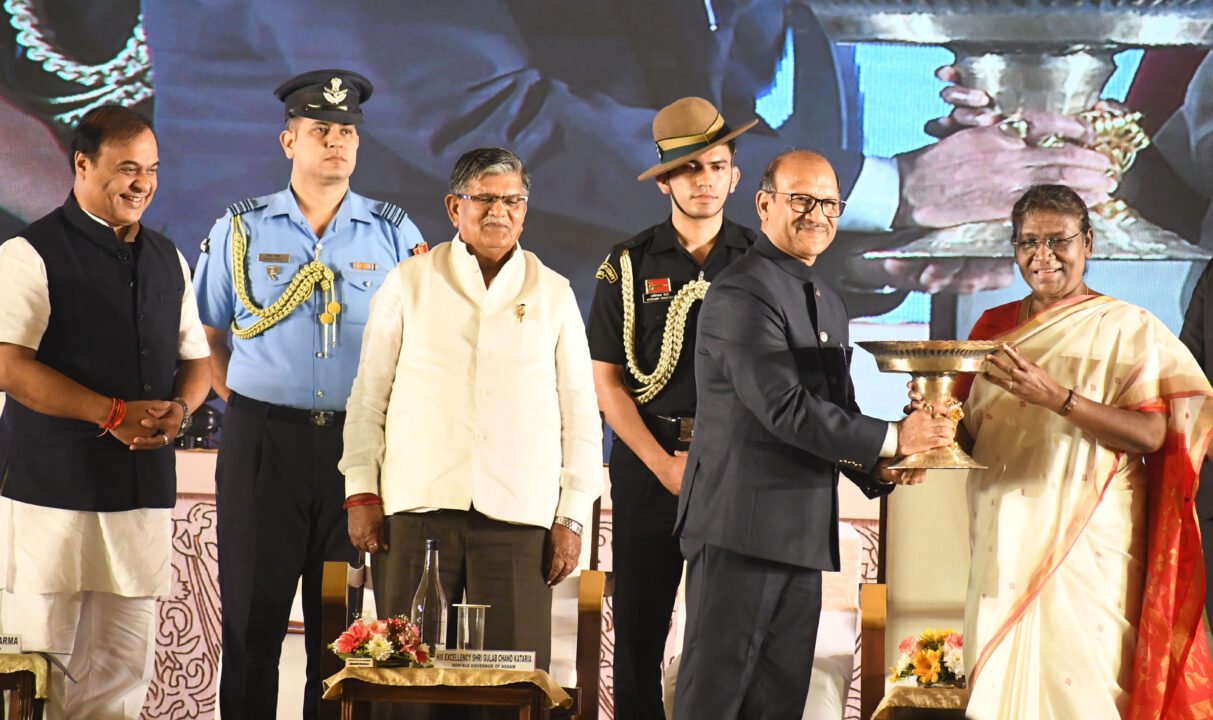
The programme was presided over by Justice Surya Kant, Supreme Court of India, in the presence of Union Minister of State for Law and Justice Arjun Ram Meghwal, Chief Justice of Gauhati High Court Justice Ashutosh Kumar, and judges from the Supreme Court and High Courts of Gauhati, Sikkim, Patna, Calcutta, Jharkhand, Tripura, Manipur, Meghalaya, and Odisha. The conference underscored the collective commitment of legal institutions to ensuring justice reaches every citizen, fostering social equity, and reinforcing the rule of law as a cornerstone of a Viksit Bharat.