


HT Bureau
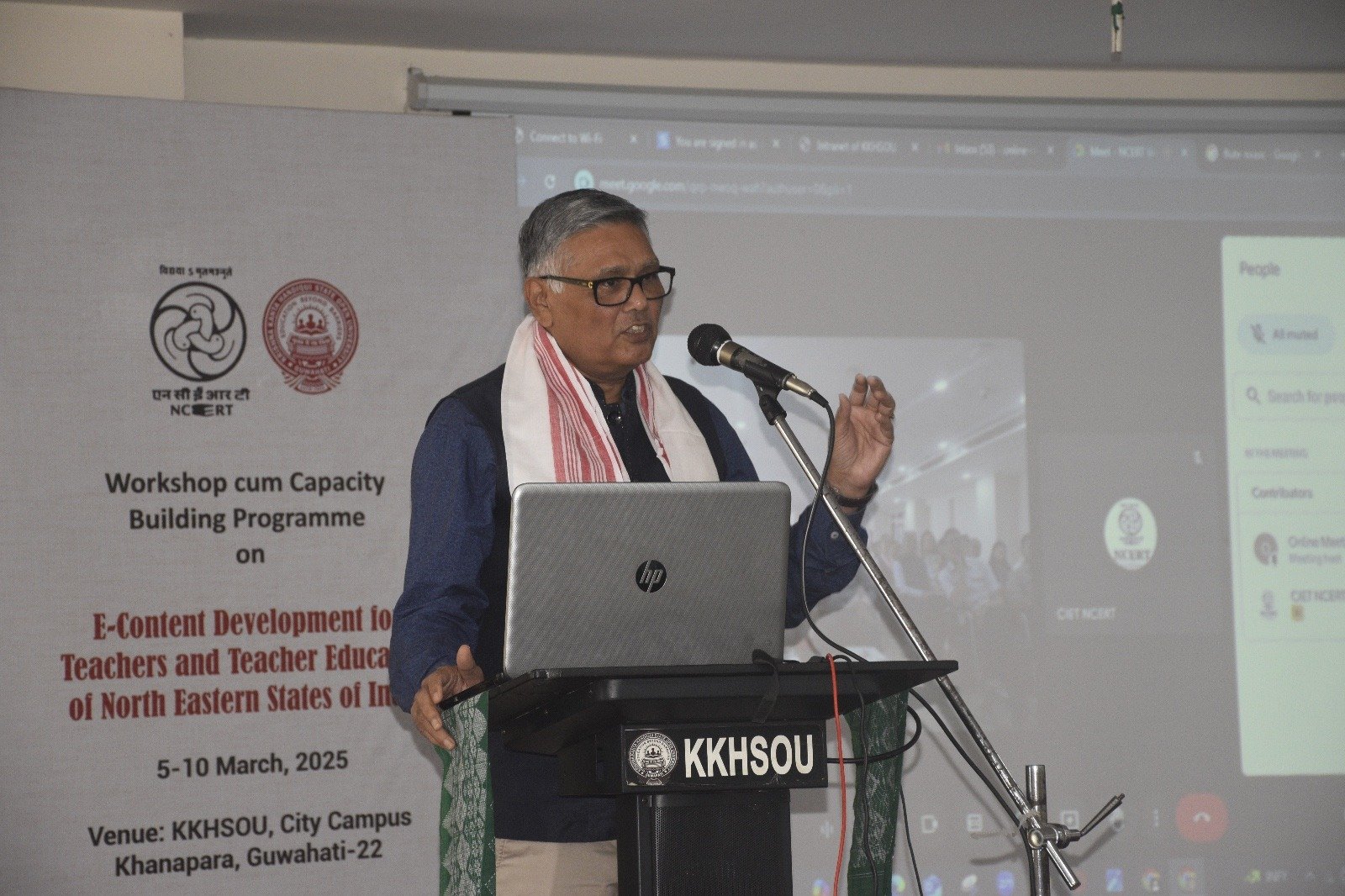
GUWAHATI, March 5: A 6- day workshop cum capacity building program on ‘E-content Development for Teachers and Teacher Educators of North Eastern States of India’ got underway today at Krishna Kanta Handiqui State Open University (KKHSOU). The workshop, which is scheduled to take place from March 5 to 10 has been jointly organised by KKHSOU and Central Institute of Educational Technology, NCERT.
In his welcome address, Professor Pranjit Bora, Registrar (i/c) of Krishna Kanta Handiqui State Open University spoke at length on importance of holding such a workshop in the light of NEP 2020. He said that the purpose of the workshop is manifold – enhancing digital teaching skills, bridging the digital divide, empowering educators for online and blended learning, encouraging localized and inclusive content and enhancing student engagement and learning outcomes.
Related Posts:

Pranita Gopal, assistant professor, CIET-NCERT, New Delhi highlighted the key objectives of holding the workshop. She said that the workshop has been organized to discuss the principles of digital pedagogy and instructional design; to apply technology-driven teaching methods to effectively implement and deliver e-learning content and ; finally to develop digital learning materials that can be used as e-learning content for DIKSHA and PM e-Vidya channels by the north eastern states.
She was of the opinion that the workshop will significantly contribute to the professional growth of teachers and teacher educators in the North Eastern states. In fact, it will help them harness digital technology to create high-quality educational content, ensuring that learners receive a richer and more engaging learning experience. Sri R.C. Jain, IAS (Retd.), Chairman, Assam State School Education Board (ASSEB) delivered the inaugural address in which he said that in today’s education system, there is an increasing tendency to measure a student’s abilities based solely on their marks rather than their actual understanding and knowledge.
This has led to a system where students are more focused on rote learning, memorizing information to score well in exams rather than developing critical thinking, problem-solving skills, and a deep understanding of subjects.