

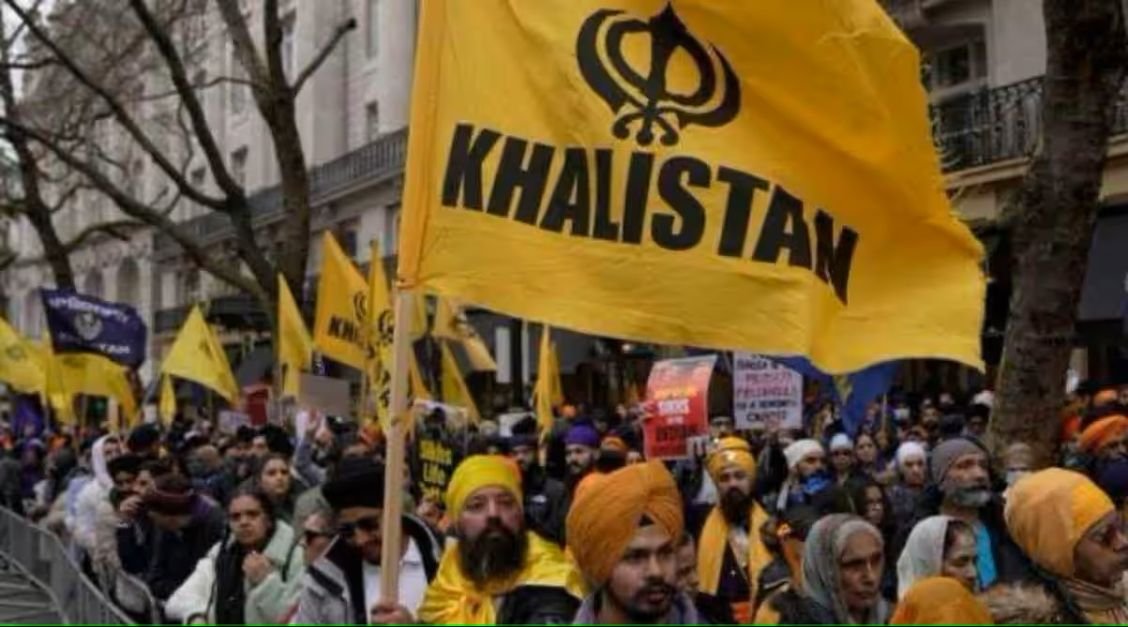
Toronto, Oct 10: A prominent Indo-Canadian community member has voiced deep concern over the
”ecosystem” in Canada that has enabled Khalistan extremists to use violence, threaten and bully
those opposing their ”nefarious agendas”.
”It is very concerning for us as a country,” National Convener, Canada India Foundation, Ritesh
Malik, told PTI in an exclusive interview here, amidst the diplomatic standoff between Canada and
India over the killing of a pro-Khalistan separatist in Surrey in British Columbia province in June.
Malik cautioned that political appeasement for short-term gains is not in the interest of Canada’s
future.
”It is very concerning for us as a country, as Canadians… the direction which we as a country are
taking in the sense of giving freedom of expression, which is our charter right, to people who don’t
believe in that same,” he said.
”Peace-loving Canadians do not believe in (a) certain ideology which is very extreme, which does not
belong to Canada,” he said.
Referring to Khalistan extremists in Canada, Malik said these people ”create differences in society
and disturb communal harmony. They work with a nefarious agenda and are derailing relationships
between the two countries,” he said.
”Freedom of expression should be for everyone. We have unfortunately created that kind of
ecosystem in Canada where these people are very vocal, very violent, very aggressive, and they
don’t let anybody…. come out against them,” Malik said.
”They will bully, they will threaten, they will use every possible illegal means… to counter any
sanity,” he said, adding that Sikhs across the US, Canada and the UK have come out and said that
they don’t believe or endorse the Khalistan ideology.
”These (are big issues) that worry us as Canadians, in the long-term interest of Canada. We feel
worried about the future of our children, about the rifts between communities,” he said, adding that
leaders in government and officials in policy and advocacy should take up those issues for the larger
interest of Canada.
India and Canada are embroiled in a diplomatic standoff following allegations by Prime Minister
Justin Trudeau in the Canadian Parliament last month that ”Canadian security agencies have been
actively pursuing credible allegations of a potential link between agents of the government of India
and the killing” of Khalistani extremist Hardeep Singh Nijjar on Canadian soil on June 18. India has
rejected the charge as ”absurd” and ”motivated”.
Malik referred to the bombing of Air India Flight 182 in 1985 and said people and families of victims
to date feel they have not got justice.
The Montreal-Delhi Air India ”Kanishka” Flight 182 exploded 45 minutes before it was to have landed
at London’s Heathrow Airport on June 23, 1985, killing all 329 people on board, most of them
Canadians of Indian descent.
The bombing was blamed on Sikh militants in retaliation to the ”Operation Blue Star” to flush out
militants from the Golden Temple in 1984.
”As a Canadian, I have no hesitation in admitting that we haven’t been able to call out the ideology
and people who were responsible for that. People have suffered. Within (the) Sikh community also,
there are people who’ve suffered because of this ideology. They have not got justice for over 40
years now,” he said.
”This ideology has been flourishing and growing, with whatever patronage or whatever support.
That is not Sikh ideology. That is not what Sikh people believe in,” he said.
He questioned what prompted Prime Minister Trudeau to conclude within four months in Nijjar’s
case and noted that there are diplomatic ways for countries to deal with issues behind closed doors.
”It looks to us, as Canadians, it’s more like appeasement politics or a political move than anything
else,” he said, adding that the issue should have been dealt with in a different way to ensure the
already strained relationship between the two countries due to the matters left unresolved for
decades now, is not further spoilt.
Malik added that Canada has been facing challenges, including economic recovery after the Covid-19
pandemic and cost of living. ”We need countries like India, partners like India,” whose economies
are growing, he said.
”It is in our interest as Canada, and as Canadians, to work closely with countries like India, and if
there are issues, they need to be resolved in a way that it does not hamper Canadians’ chances to
get economic benefit from opportunities which India presents today,” he added.
Malik underscored the importance of resolving issues between the two countries sincerely, ”leaving
aside short-term gains for votes, appeasement”.
”Both these countries have a great future. People on both sides are very progressive. They want the
relationship to flourish, they want exchanges to take place, students to come here, people come
here to set up businesses, people to go (to India) to explore opportunities,” he said.
He added that it is important to resolve the issues, not let them escalate and to ”nip them in the
bud”. (PTI)