


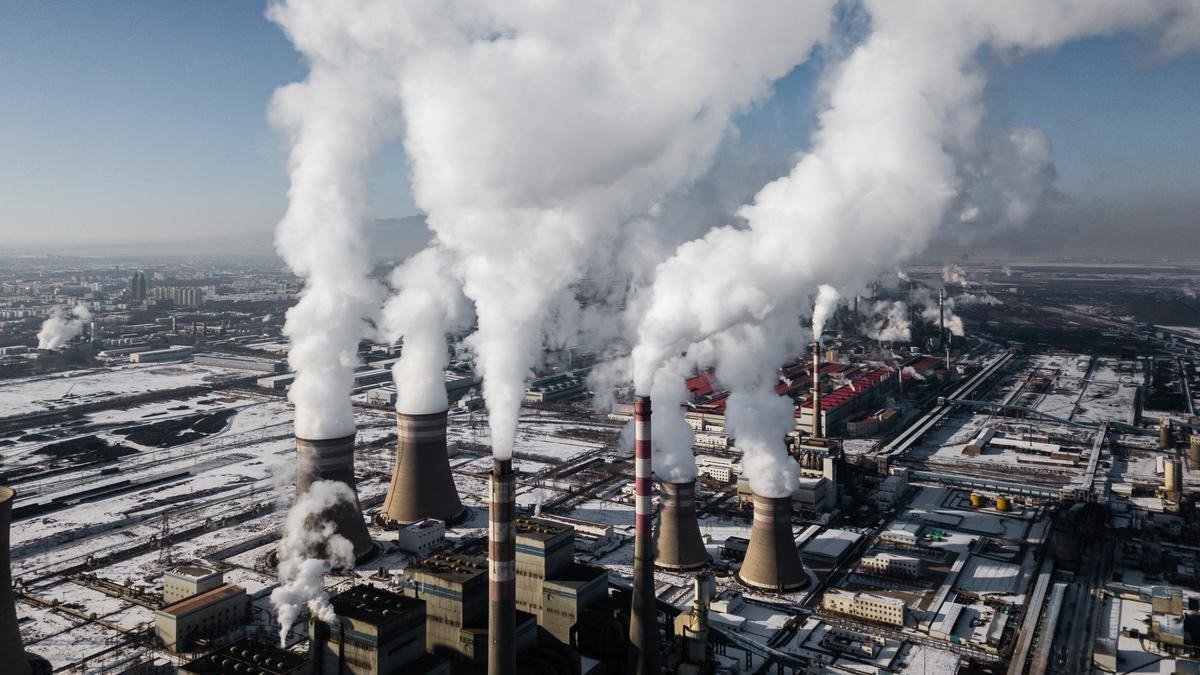
NEW DELHI, Oct 28: Greenhouse gas levels surged to a new record in 2023, rising by more than 10 per cent in just two decades, according to a new report by the World Meteorological Organisation (WMO).
In the course of 2023, large vegetation fire CO2 emissions and a possible reduction in carbon absorption by forests combined with stubbornly high fossil fuel CO2 emissions from human and industrial activities to drive the increase, according to the WMO’s annual Greenhouse Gas Bulletin.
The globally averaged surface concentration of carbon dioxide reached 420 parts per million (ppm), methane 1934 parts per billion and nitrous oxide 336.9 parts per billion (ppb) in 2023.
Related Posts:



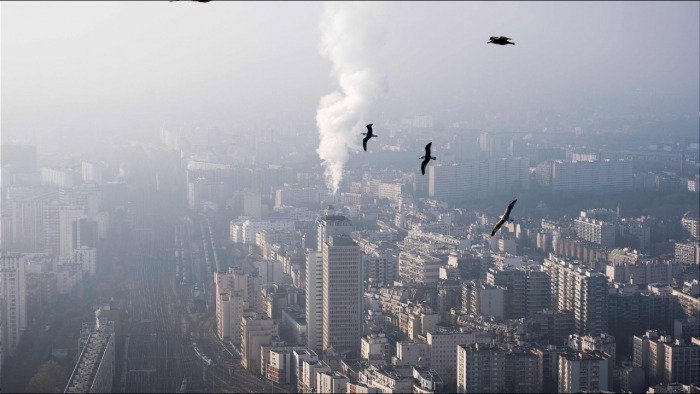
These values are 151 per cent, 265 per cent, and 125 per cent of pre-industrial (before 1750) levels, it said. These are calculated on the basis of the long-term observations within the Global Atmosphere Watch network of monitoring stations.
“Another year. Another record. This should set alarm bells ringing among decision-makers. We are clearly off track to meet the Paris Agreement goal of limiting global warming to well below 2 degrees Celsius and aiming for 1.5 degrees Celsius above pre-industrial levels. These are more than just statistics. Every part per million and every fraction of a degree temperature increase has a real impact on our lives and our planet,” said WMO Secretary-General Celeste Saulo.
The 2023 increase of CO2 in the atmosphere was higher than that of 2022, although lower than that of the three years before that. The annual increase of 2.3 ppm marked the 12th consecutive year with an increase greater than 2 ppm.
In the last 20 years, the CO2 level has increased by 11.4 per cent (42.9 ppm) above the level of 377.1 ppm recorded in 2004 by WMO’s Global Atmosphere Watch network of monitoring stations.
From 1990 to 2023, radiative forcing — the warming effect on our climate — by long-lived greenhouse gases increased by 51.5 per cent, with CO2 accounting for about 81 per cent of this increase, according to the National Oceanic and Atmospheric Administration Annual Greenhouse Gas Index cited in the WMO Bulletin.
As long as emissions continue, greenhouse gases will continue accumulating in the atmosphere leading to global temperature rise. Given the extremely long life of CO2 in the atmosphere, the temperature level already observed will persist for several decades even if emissions are rapidly reduced to net zero.
The last time the Earth experienced a comparable concentration of CO2 was 3-5 million years ago, when the temperature was 2-3 degrees Celsius warmer and the sea level was 10-20 metres higher than now. (PTI)