

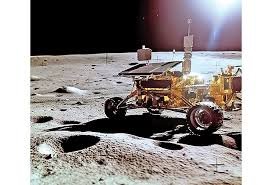
NEW DELHI, Sept 6: Seismic activity in the Moon’s soil could be due to impact from meteorites in the past or local heat-related effects, according to ISRO’s preliminary analysis of data received from Chandrayaan-3’s quake-detecting instrument.
However, detailed studies are needed to get more insights from the data, they said.
Their research paper, published in the journal Icarus, is a summary of observations made on 190 hours of data recorded by the Instrument for Lunar Seismic Activity (ILSA).
Related Posts:


ILSA is one of the five major major scientific instruments, all of them carried by Chandrayaan-3’s Vikram lander and Pragyaan rover together. Chandrayaan-3 made a soft-landing on the Moon’s south pole on August 23, 2023.
The quake-detecting ILSA was operated continuously until September 2, 2023, after which it was switched off and was packed back up, before the lander was relocated to a new point roughly 50 centimetres away from the initial one, the researchers from the Indian Space Research Organisation (ISRO) explained.
ILSA operated on the lunar surface for about 218 hours, of which 190 hours of data are available, they said.
“We have identified more than 250 distinct signals of which about 200 signals are correlated to known activities involving the physical movements of the rover or the operation of science instruments,” the study authors wrote.
The 50 signals, which could not be linked to movements of either the lander or the rover, were deemed “uncorrelated events” by the authors.
“The uncorrelated signals recorded by ILSA might be due to impact of micrometeorites at near ranges of the instrument, local thermal effects on the soil, or thermal adjustments within the lander subsystems,” they wrote.
A micrometeorite is a very small meteorite, or a remnant of a meteoroid, with diameter usually less than a millimetre.
The researchers also found that during its course of operation, ILSA also recorded a wide-range of changes in temperature — from (minus) 20 degrees Celsius to (plus) 60 degrees Celsius.
ILSA was operated during a lunar day where the sun elevation angle had changed steadily. After the initial five hours of operation, the temperature started to decrease, which was noted by shadows cast by the lander’s parts on the instrument, the authors said.
They said detailed studies are required to understand potential sources of ILSA’s data.
“Even though the possible causes of signals due to uncorrelated events are presented, detailed analysis has to be conducted to get more insights from the records,” the authors wrote.
ILSA is the first instrument ever to have recorded seismic data from the Moon’s polar region and the second one to record ground movements on the Moon after NASA’s Apollo mission about four decades back. (PTI)