

PORT BLAIR, Oct 19: The samples collected from India’s only active mud volcano at Baratang in the Andaman and Nicobar Islands belong to the Oligocene age, which was around 23 million years ago, a Geological Survey of India (GSI) official said.
The lithoclasts ejected from the crater were found to be composed of sandstone and shale of the Mithakari Group, belonging to this geological period, he said.
The Oligocene is a geological epoch that lasted from around 33.9 to 23 million years ago, marked by the expansion of grasslands, global cooling, and the evolution of several modern mammal species, including the first elephants, cats, and dogs.
Related Posts:



“We visited the site on October 8-9 to assess the mud eruption reported on October 2. We had collected the mud sample and found that it belonged to the Oligocene age,” GSI’s Deputy Director General Santanu Bhattacharjee told PTI.
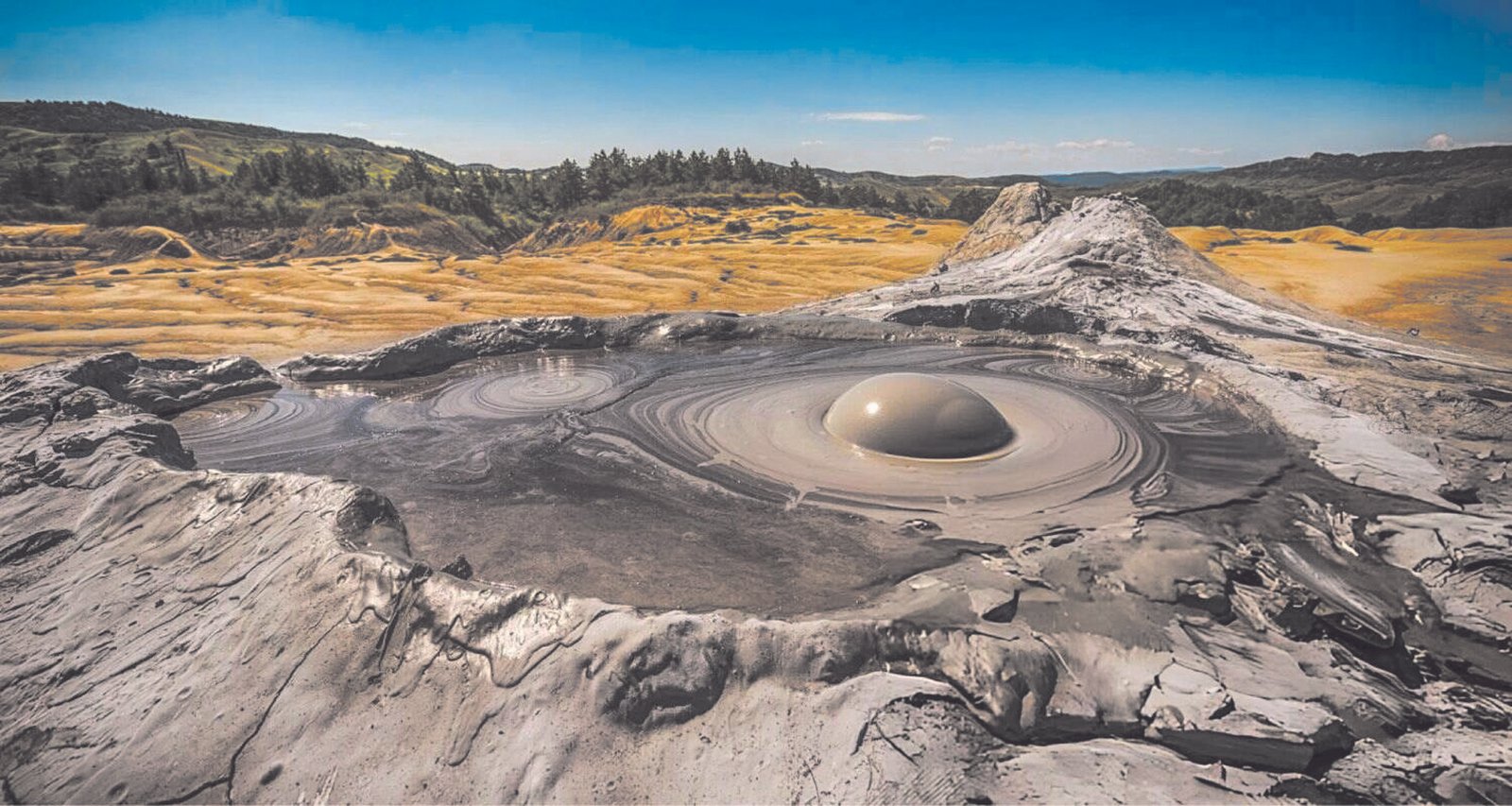
“A total of four clusters of mud volcanoes consisting of several small vents have been observed, spread over an area of about 500 sqm with a height of about 2 metre at the centre. This marks a significant increase in the area of the eruption site from the earlier record of 100 sqm and height of one metre. All clusters of vents were continuously emanating liquid mud and gases,” he said.
Bhattacharjee said the surface temperature of the mud volcanoes ranged from 29.3 degrees to 30.07 degrees Celsius, with a pH between 8.0 and 8.3, indicating the weakly alkaline nature of the mud fluid.
“An oily blackish sheen was also observed at a few vents as thin layers on the surface of the muddy material,” he said.
When asked about the origin of the eruption, Bhattacharjee said that it could be attributed to several processes.
“This includes diapiric movement of over-pressured surface shale layers due to loading of terrigenous sediments, rapid subsidence or lateral tectonic compression, hydrocarbon generation in deep subsurface and expulsion of fluid from depth along deep-seated fracture/fault,” he said.
The GSI has asked the Andaman and Nicobar administration to restrict public access and construct a viewpoint at the end of the approach way to maintain a safe distance between the vent clusters and visitors.
“We have asked them to reinforce fencing and hazard signage for sensitising the public regarding the unpredictability of violent mud eruptions, and maintain closure of all other approaches other than the viewpoint,” Bhattacharjee said. (PTI)