
SHILLONG/HYDERABAD, Nov 25: The Governments of Meghalaya and Telangana have signed a tripartite Memorandum of Understanding (MoU) to strengthen state-to-state collaboration in human development and government innovation.
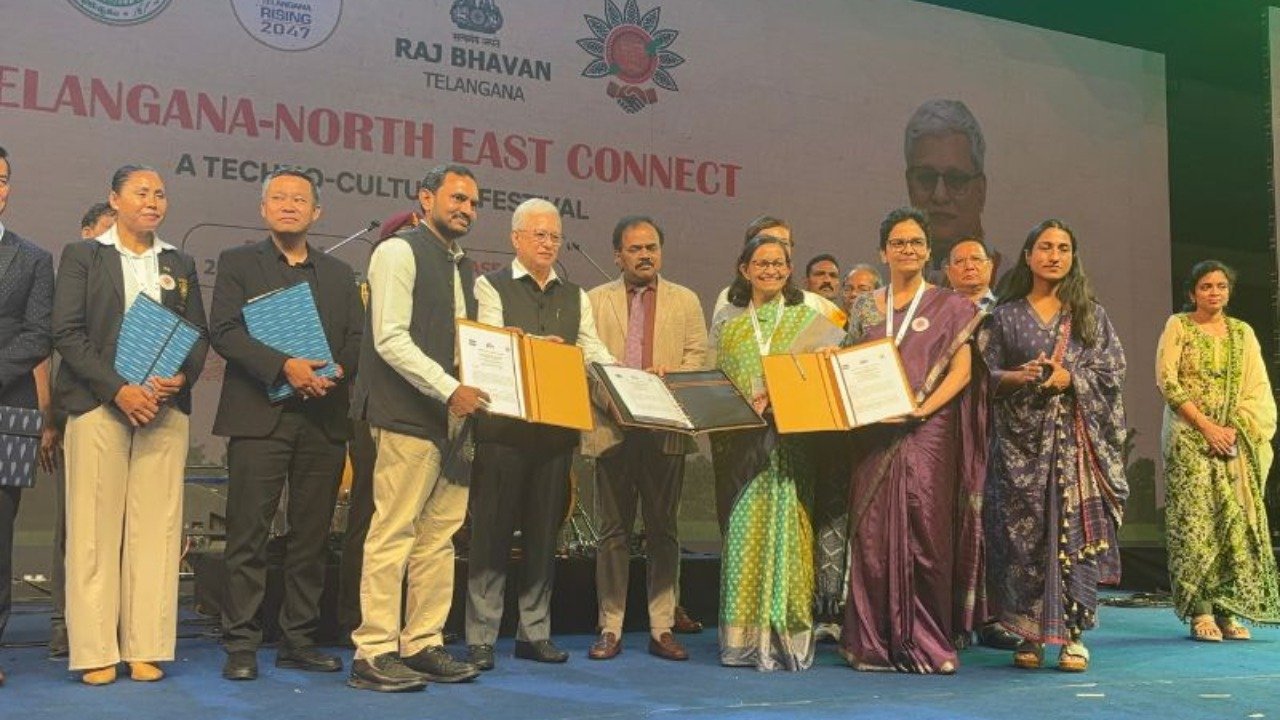
The agreement was signed on the sidelines of the Telangana–NorthEast Connect Festival in Hyderabad on November 22.
The MoU brings together the State Capability Enhancement Project – Government Innovation Lab (SCEP–GIL), Government of Meghalaya; the Society for Elimination of Rural Poverty (SERP), Government of Telangana; and the Department of Women Development & Child Welfare (WDCW), Telangana.
Related Posts:
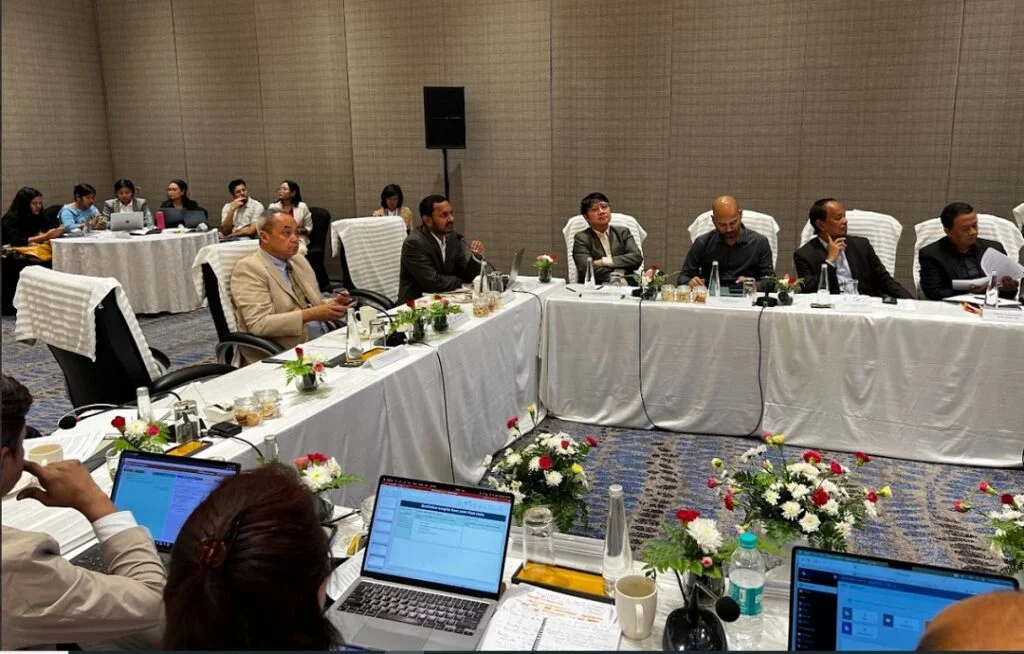

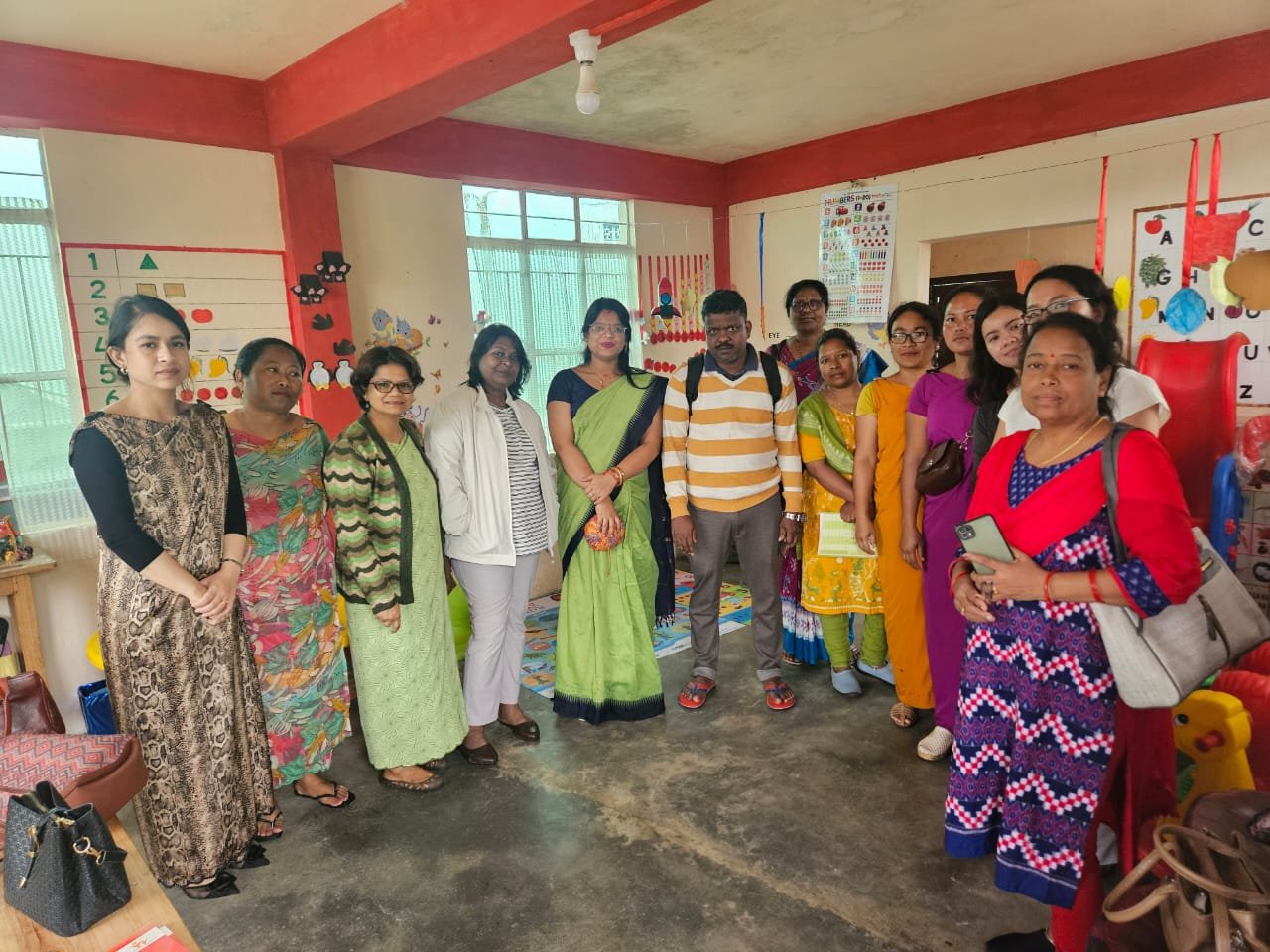
The agreement was signed by Dr Sampath Kumar, IAS, principal secretary and development commissioner, Government of Meghalaya; Anita Ramachandran, IAS, secretary, WCD&SC Department, Telangana; and Divya Devarajan, IAS, CEO-SERP, in the presence of Telangana Governor Jishnu Dev Varma.
The partnership establishes a Human Development Exchange between the two states to facilitate the sharing of field-tested innovations, data-driven tools and facilitation processes aimed at strengthening the citizen–state relationship.
It will include exposure visits for government officials and community leaders, joint learning labs on maternal and child health, social protection, early childhood and adolescent development, and women’s livelihoods, as well as co-created guidelines for frontline teams working with vulnerable households.
The collaboration builds on Meghalaya’s Human Development Leadership Programme (HDLP), launched in 2024 under the State Human Development Council chaired by chief minister Conrad K Sangma.
HDLP brings together multidisciplinary block teams and community leaders to conduct joint field visits to vulnerable households and address gaps in access to public services.
Under the MoU, insights from HDLP’s field work—covering issues such as undernutrition, school dropout, early pregnancy and lack of social security—will be shared with Telangana. In turn, Meghalaya will draw from Telangana’s long-standing experience in women’s self-help group mobilisation and women and child welfare programmes.
Officials said the partnership reflects a shared vision of making governance more responsive, accountable and people-centric by fostering knowledge exchange and collaborative problem-solving across states.