

KOHIMA, JAN 16: The Naga Students’ Federation (NSF) on Tuesday vehemently condemned the recent move by the Union government to abolish the Free Movement Regime (FMR) and propose the fencing of the India-Myanmar border.
“This decision, fraught with historical implications and disregard to the rights of the Naga people, is a regressive step that will exacerbate conflicts in the Northeast,” the NSF said in a statement today.
The proposed fencing of the boundary-line, as suggested by the authorities in Delhi, raises serious concerns about the historical context and the impact it will have on the Naga people, the student body also said. The lands and hills between the Chindwin River and the Saramati mountain range, presently on the Burma-side, are an integral part of the Naga heritage, it also said. It is crucial for India to acknowledge the historical truth that these territories belong to the Nagas, the apex Naga student body added.
Related Posts:



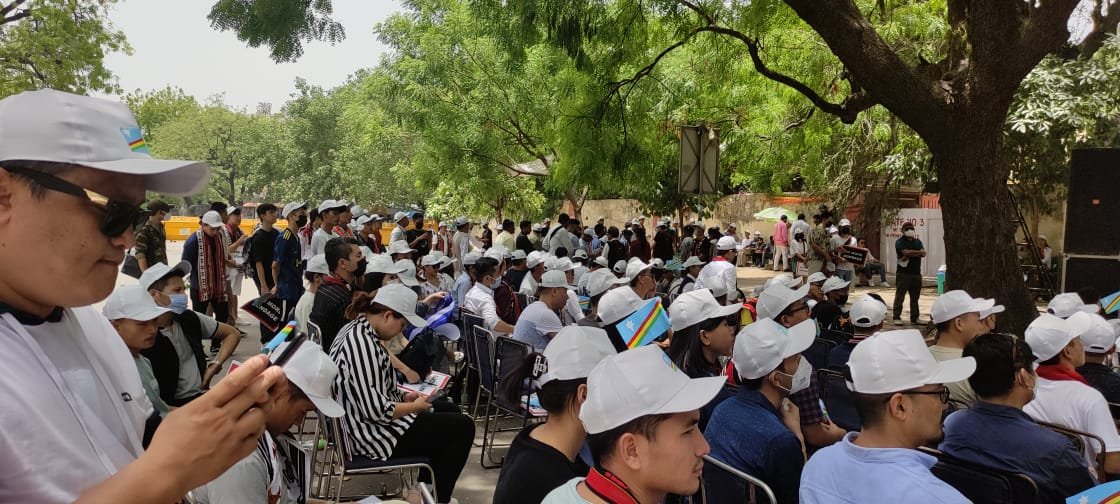
“The duplicity separation line, which has persisted for over 80 years, has been a root cause of conflicts and insurgencies in the Northeast. This cycle of conflict will persist until a just and equitable resolution is achieved,” the NSF stated.
The Naga people, on both sides of the Saramati mountain range, have suffered the consequences of arbitrary divisions imposed by external forces, the Naga student body further said. The Nagas on the Burma-side were forced into conflicts with the Burmese government, while those on the Indian side were embroiled in struggles with the Indian government, it further added.
The student body said in a statement, “The attempt to arbitrarily divide and fence the Nagas is an affront to our rights and autonomy. Such attempts to disrupt our unity will only sow the seeds of discord and unrest. India must recognize that it has no right to unilaterally decide the fate of the Naga people through fencing.
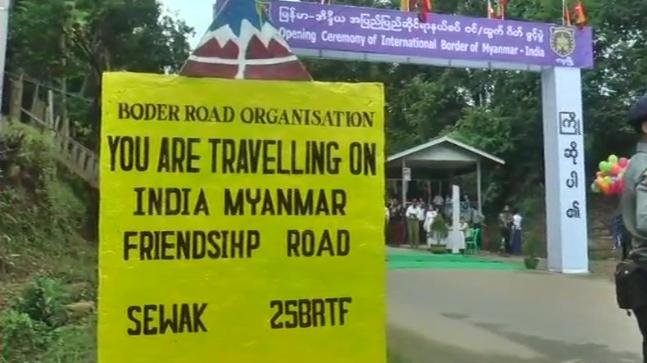
The recent decision by the central government to abolish the Free Movement Regime (FMR) is deeply troubling, the NSF expressed concern. The FMR has played a crucial role in facilitating interactions between people residing close to the India-Myanmar border, it further said. Abolishing this regime will not only restrict the cultural and social exchange between communities, but will also add a layer of tension to an already delicate situation, the NSF also stated.
According to the NSF, the 1,643 km long India-Myanmar border traversing through Mizoram, Manipur, Nagaland, and Arunachal Pradesh is a complex landscape with diverse communities and histories. As such, the NSF urged the Union government to reconsider its decision and engage in a meaningful dialogue with the Naga community to find a solution that respects our historical rights and aspirations.
“We call for a just and inclusive resolution that respects the historical realities and aspirations of the Naga people. The NSF remains committed to fostering peace, unity, and understanding in the region,” it added. (NNN)