


HT Bureau
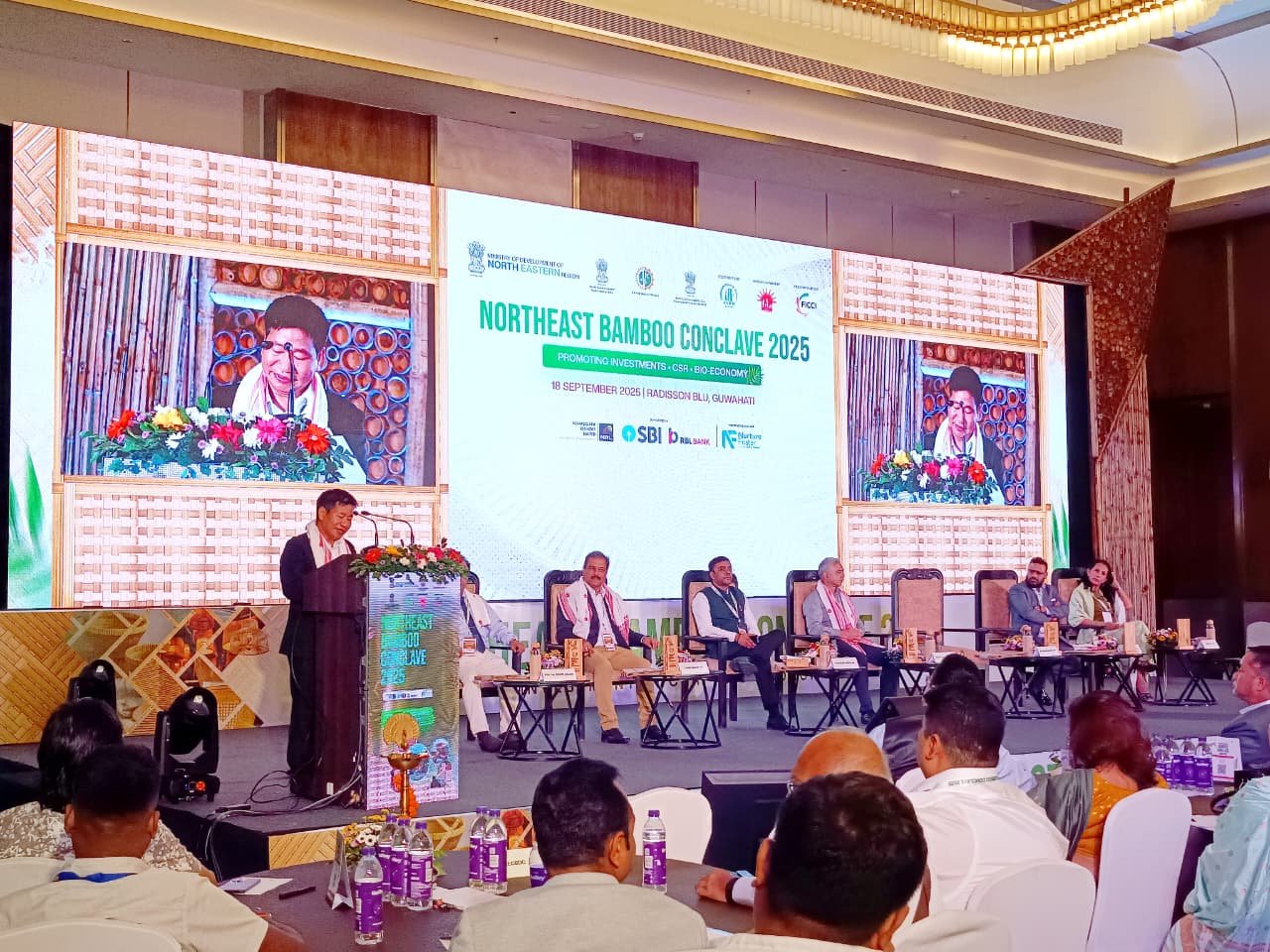
GUWAHATI, Sept 18: Policymakers, industry leaders, entrepreneurs, and innovators from India and abroad converged in Guwahati on Thursday for the Northeast Bamboo Conclave 2025, setting a strategic agenda for positioning bamboo as a driver of sustainable development and economic growth in the region.
The event, organised by the North East Cane and Bamboo Development Council (NECBDC) with support from the North Eastern Council (NEC), the Ministry of Development of North Eastern Region (MDoNER), and the National Bamboo Mission (NBM), marked an important milestone in efforts to build a resilient bamboo economy.
Related Posts:


Hosted at Radisson Blu, Guwahati, the conclave was organised in collaboration with the SELCO Foundation as Innovation Partner, FICCI as Industry Partner, and the Assam State Bamboo Mission as State Partner.
Numaligarh Refinery Limited (NRL) extended support as CSR Partner, while Nurture and Foster acted as Knowledge Partner.
The conclave coincided with World Bamboo Day 2025 and was themed Promoting Investments, CSR and Bio-Economy.
It featured an inaugural session, technical deliberations, and a high-level panel discussion charting the roadmap for a “Viksit Bamboo Sector for a Viksit Northeast by 2047.”
In his address, MC Omi Ningshen, IRS, Managing Director of NECBDC, said the conclave was “not just a discussion platform but a movement towards realising the immense potential of bamboo for Northeast India’s green growth and livelihood generation.”
He emphasised that while government policies and missions would provide momentum, active participation from the private sector and PSUs would be essential to unlock investments, introduce advanced technologies, and build scalable market linkages.
Integrating traditional knowledge with modern technology, he noted, would be key to making bamboo a cornerstone of India’s bio-economy.
The inaugural session underscored India’s bamboo value chain opportunities, highlighted the role of the National Bamboo Mission, and showcased global demand for bamboo-based products.
Success stories from local entrepreneurs illustrated how innovation and resilience were driving sustainable growth in the sector.
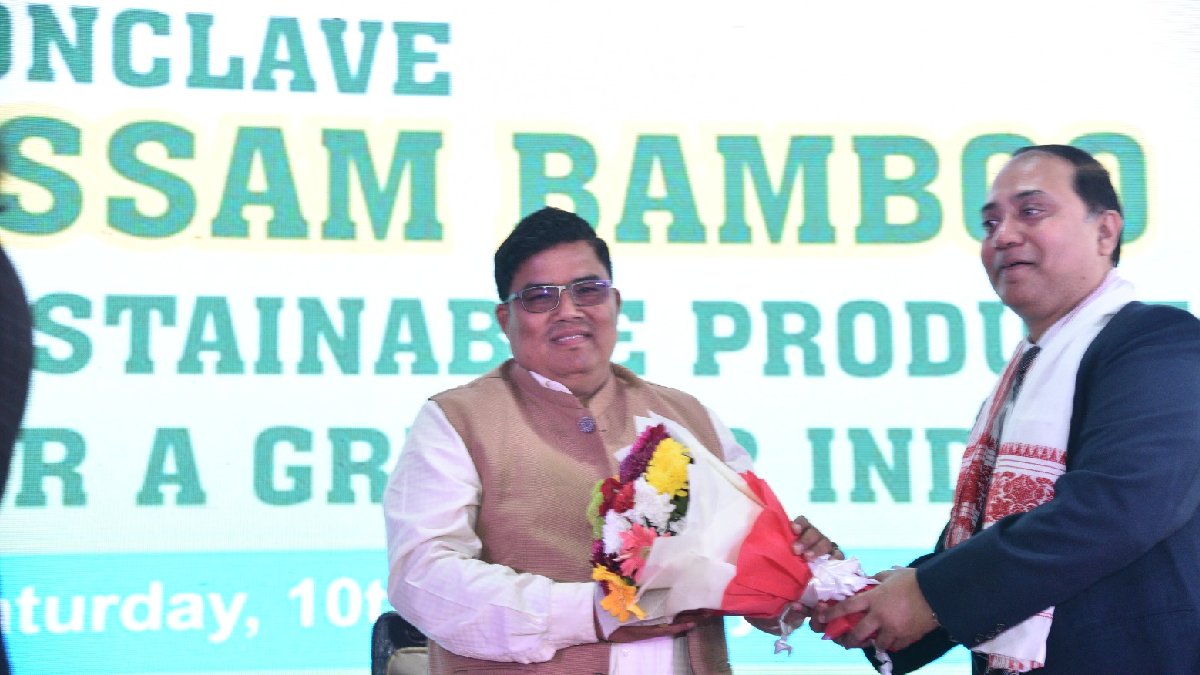
A major highlight of the conclave was the exchange of Memorandums of Understanding (MoUs) aimed at strengthening the bamboo ecosystem. Agreements were signed with NRL and SELCO Foundation for CSR-driven development initiatives, and with IIT Guwahati and NID Ahmedabad to foster research, design, and innovation.
Participants also recalled NECBDC’s recent MoU with the Central Manufacturing Technology Institute (CMTI) to jointly develop indigenous bamboo processing machinery, a move expected to boost self-reliance and cost-effective innovation.
The technical session featured discussions on MSME promotion, export linkages, and sustainable value chains, with contributions from organisations such as Amazon, Bamboostan, and the Assam State Bamboo Mission.
Experts stressed that scaling bamboo-based enterprises would require convergence between industry, research institutions, and government initiatives.
The concluding panel brought together representatives from NEC, NEHHDC, FICCI, SIDBI, NID, and other institutions, who deliberated on investment opportunities, innovation pathways, and strategies for building a vibrant bamboo economy.
Participants also noted recent transformative steps, including the inauguration of Assam Bio Ethanol Private Limited (ABEPL) — the region’s first bio-refinery producing fuel-grade ethanol from bamboo biomass — by Prime Minister Narendra Modi. Strategic investment intent has also been expressed by All Time Plastics, a partner of IKEA, to establish a manufacturing unit for engineered bamboo wood, which would strengthen bamboo-based alternatives to timber and sustainable packaging solutions.
The conclave reaffirmed that the Northeast holds a critical role in India’s bamboo strategy, with its vast natural resources, traditional knowledge, and emerging industrial ecosystem.
By aligning policies, promoting innovation, and ensuring active participation from both government and private sectors, stakeholders collectively envisioned a bamboo-driven economy that supports environmental sustainability, livelihood generation, and regional development, paving the way for Viksit Bharat through Viksit Bamboo.