

HT Bureau
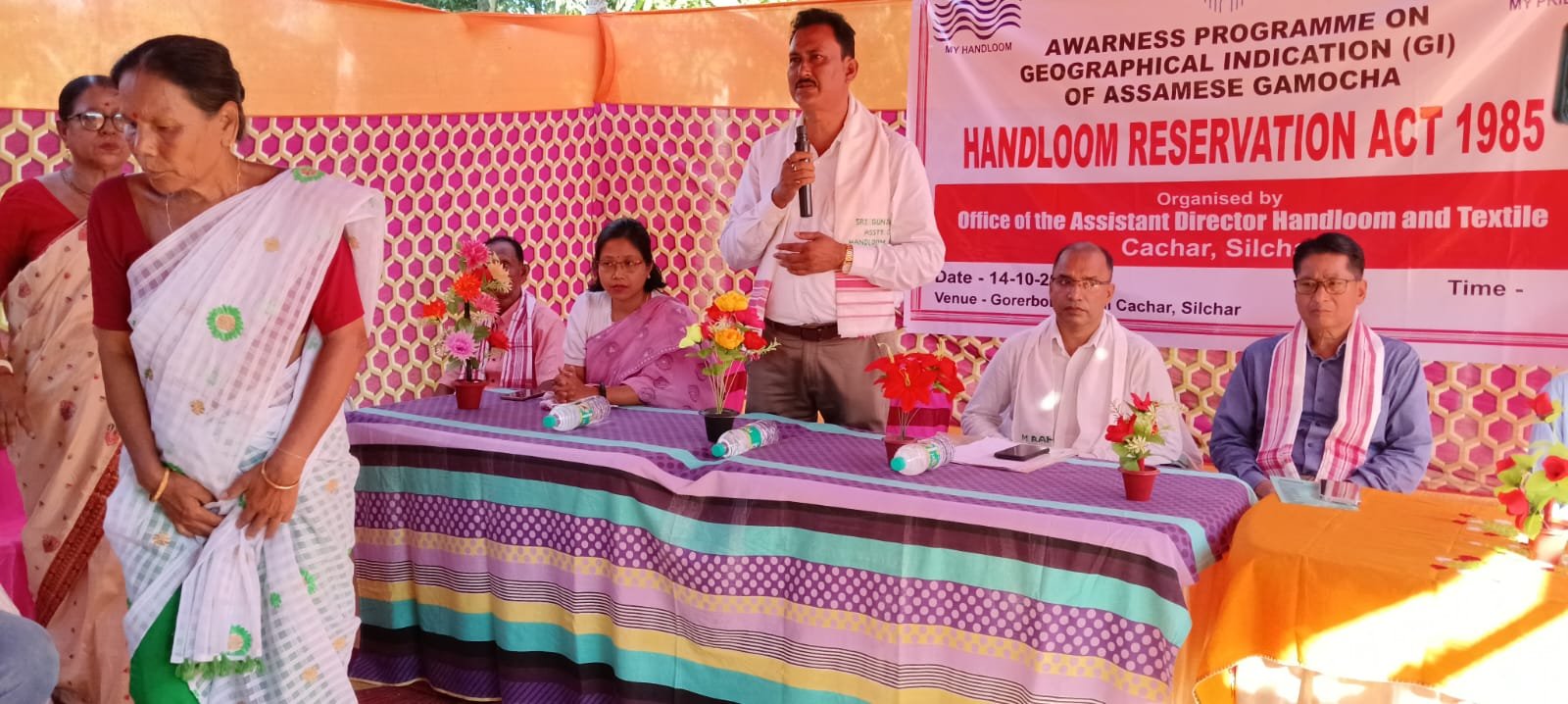
GUWAHATi, Oct 16: An awareness programme on the Geographical Indication (GI) registration of the Assamese Gamocha and issues related to the handloom and textile sector was held on Tuesday at Garerband village under Hatichera Gaon Panchayat in the Borkhola constituency of Cachar district.
Organised by the Handloom and Textile Department, the event witnessed active participation from local women weavers and community members. The programme was chaired by Gunjan Kalita Deve, Assistant Director of the department in Cachar, and aimed at sensitising weavers about GI registration and various welfare schemes.
Related Posts:


In his address, Assistant Director Gunjan Kalita Deve spoke about the department’s future plans to ensure economic security for weavers and enhance their livelihoods. He urged women weavers to participate in government programmes aimed at strengthening Assam’s traditional handloom sector.
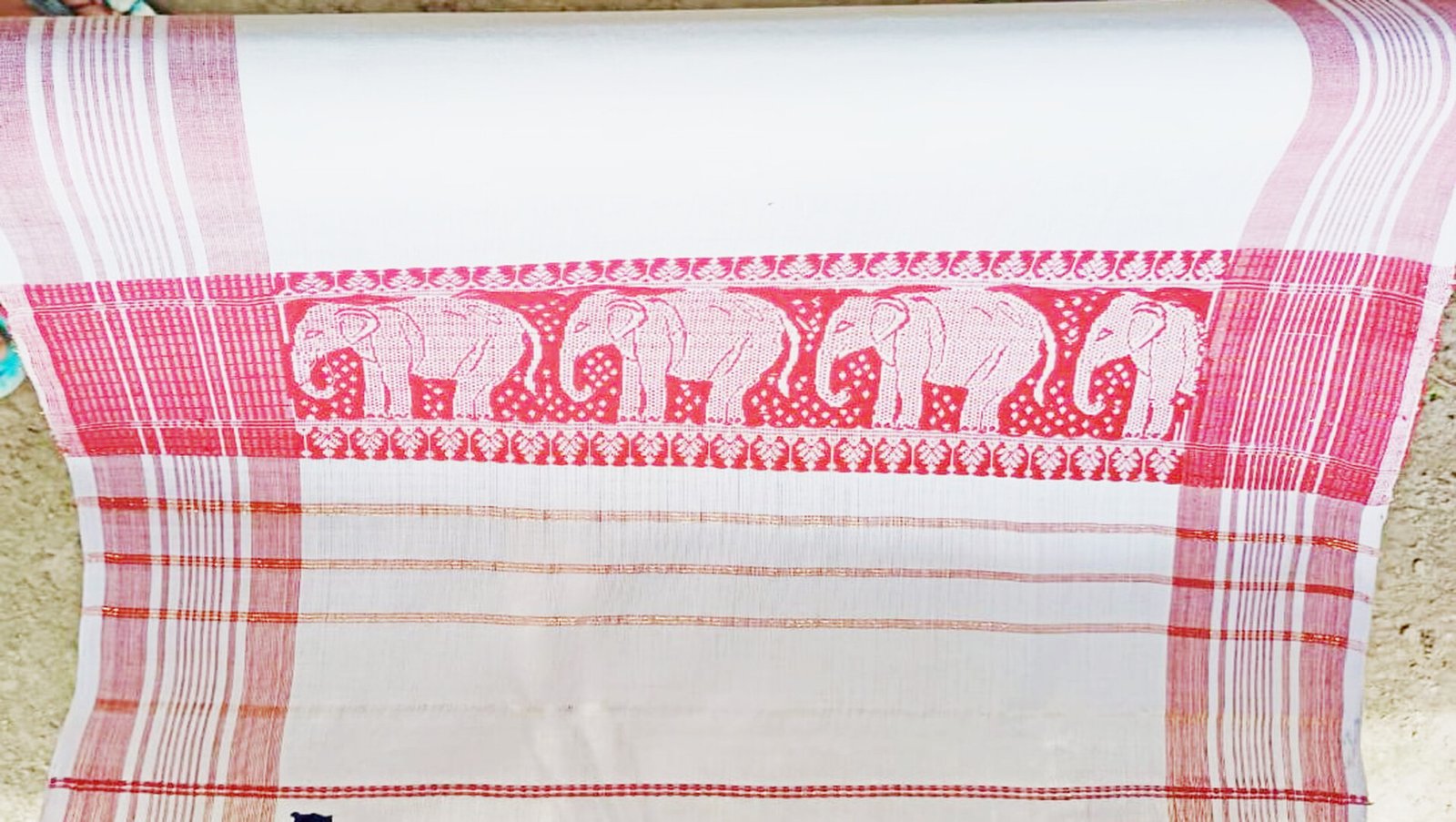
Mizanur Rahman, Deputy Director of the Handloom and Textile Department from Guwahati and the key resource person at the event, explained the importance of GI registration for the Assamese Gamocha, a symbol of Assam’s cultural identity and craftsmanship. He announced that around 100 women weavers from Garerband would be included in the GI registration process, enabling them to access various government benefits. He also encouraged weavers to explore modern markets while continuing to preserve their traditional weaving practices.
L Harilal Singh retired Assistant Director of the department, provided insights into the Handloom Reservation Act, 1985, and other welfare measures available for handloom artisans. He underlined the government’s commitment to supporting rural weavers through financial aid, skill development, and social security schemes.
The vote of thanks was delivered by Circle Inspector N G Elina Devi, who appreciated the enthusiastic participation of officials, artisans, and villagers in making the event successful.
Approximately 150 women weavers, senior citizens, and members of local social organisations attended the programme. Participants expressed gratitude for the valuable information shared and welcomed the government’s initiative to bring such awareness to the grassroots level.
The programme played a key role in encouraging rural women artisans to take pride in their heritage and continue their weaving traditions with greater confidence and purpose.