

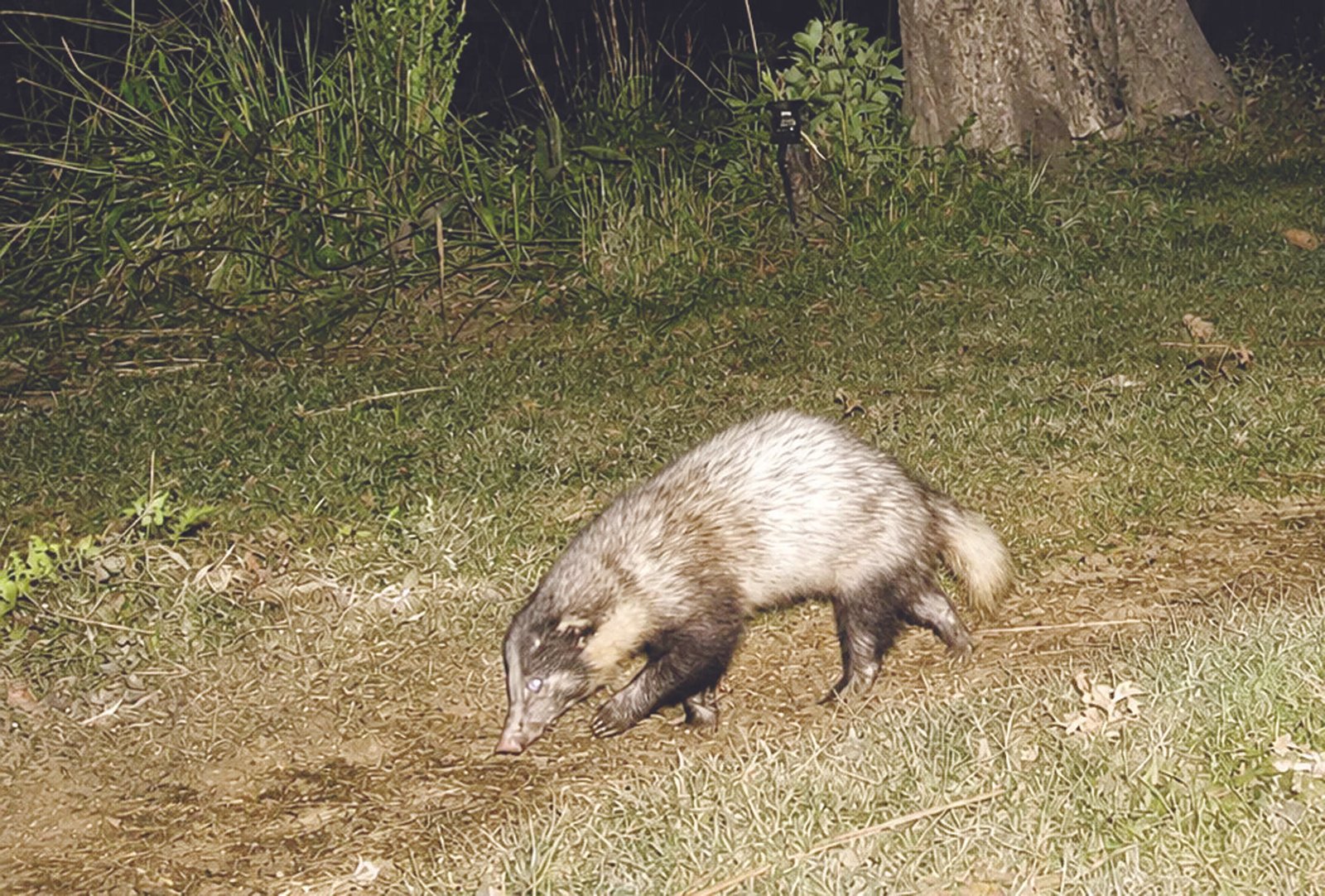
GUWAHATI, June 13: At least 55 greater hog badgers are estimated to be present in Assam’s Kaziranga National Park and Tiger Reserve (KNPTR), indicating a healthy and potentially viable population of the globally vulnerable species across the protected landscape, park officials said on Saturday.
The first scientific assessment of the greater hog badger, a nocturnal burrowing mammal called ‘Mati Gahori’ in Assamese, has confirmed that the species, protected under Schedule I of the Wildlife (Protection) Act, 1972, is thriving in Kaziranga’s diverse habitats, they said.
The study was conducted recently by Kaziranga’s Tiger Cell in collaboration with the Wildlife Conservation Trust and Tiasa Adhya of The Fishing Cat Project. The objective was to estimate the density and habitat occupancy of greater hog badgers within the tiger reserve.
Related Posts:



Assam Forest and Environment Minister Jayanta Malla Baruah, in a social media post, said, ‘‘Exciting news from @kaziranga_ ! The Great Hog Badger is doing well… The first scientific assessment using camera-trap bycatch data has recorded over 60 Greater Hog Badgers in the Park. The healthy presence of this elusive, nocturnal burrower across diverse habitats reflects the strength of Kaziranga’s ecosystems.”
Every species, big or small, plays a vital role in maintaining ecological balance and biodiversity, he added.
Globally, there are three extant species of hog badgers — the greater hog badger, northern hog badger and Sumatran hog badger — of which the first two are found in India.
The species is distributed across parts of South, Central and Southeast Asia. Its range extends from Bangladesh and northeastern India eastwards through Myanmar, Thailand, Laos and Vietnam, and southwards to Cambodia and peninsular Thailand.
According to the International Union for Conservation of Nature (IUCN), while an exact global population estimate is unavailable, the population trend is declining due to habitat loss and intense poaching pressure. The species is therefore classified as ‘Vulnerable’ on the IUCN Red List.
Officials said the greater hog badger is an ecologically important mesocarnivore whose conservation has implications beyond the survival of a single species.
As an omnivorous and highly fossorial mammal, it contributes to ecosystem functioning through soil disturbance, nutrient redistribution and the turnover of leaf litter during foraging activities.
The species is particularly sensitive to hunting and has suffered sharp declines across much of its Southeast Asian range. India and Thailand are believed to harbour the healthiest remaining populations, making conservation efforts in Assam and the Northeast especially important, officials said. (PTI)