


By: Dr. Gouri Sankar Nag
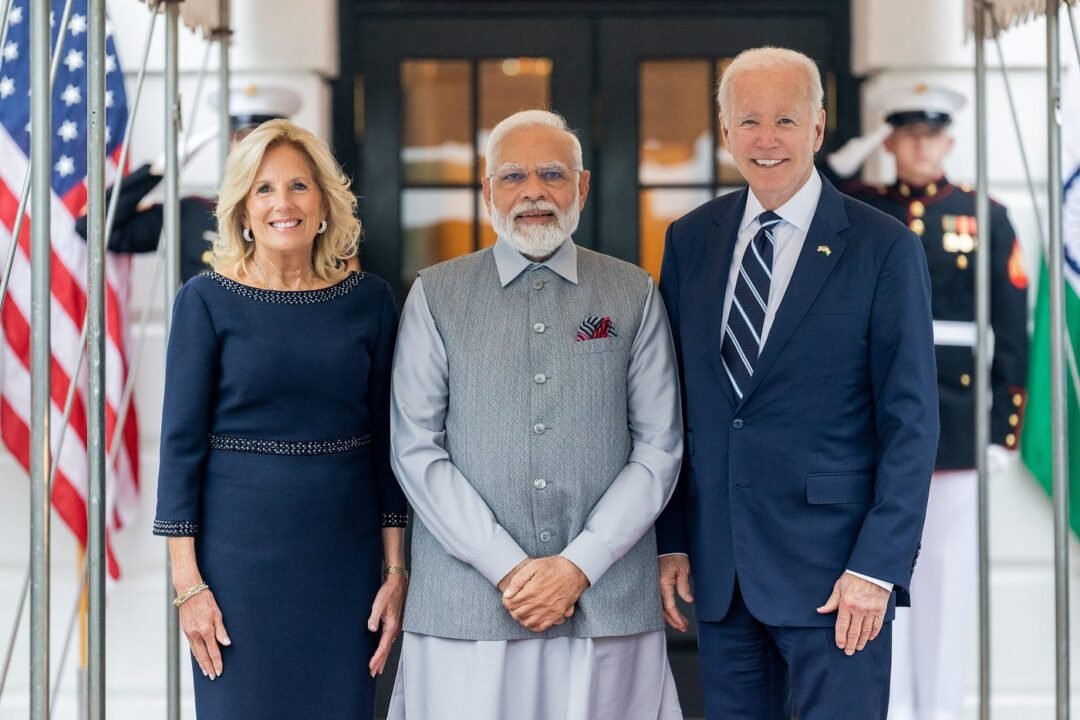
At first glance we call it history repeats itself though with a startle. Way back in 2005 the US denied diplomatic visa to Modi. Today walking 180° on the reverse, Modi is invited to address the joint sitting of both Houses of the US Congress, a historic moment of euphoria, pride and celebration. No doubt it’s an acknowledgement of India’s rise to power and in global influence. The US is not the nation of shopkeepers but as eagle hovers on sky to see changes to pry, so it understands the importance of getting the trust of India at a time when western hegemony or specifically US supremacy is confronting toughest challenges ever. The world politics today is not only loaded with acrimonious struggle for power, but more importantly the rise of revisionists Russia and China along with Asian giants like India and Japan could well destabilize hitherto structure and West-dominated institutional fabric of governance order. In the circumstances, for the status quo powers like the US, it is natural to try to woo the most aspiring and benign of the middle powers like India before much damage is done with sweeping alterations in the existing system.
The question might arise why this tilt towards India even when it could bode ill especially for India’s relations with both China and Russia. Here argument can be offered in terms of two factors, one symbolic and another peculiar to leadership in both India and America. The former is more important because it exhibits that underlying agreement between the oldest and the largest democracies remains intact and the talk of shifting kaleidoscope of new order is but an utter nonsense, a chimera. This is very crucial at the current moment because Ukraine war is going on and it’s being dragged beyond a short and swift phase that we glibly and naively anticipated at the outset. But the irksome fact that war in Europe is lingering itself is a clear indication that Western military dominance is not going to work against Russia that stealthily draws on succour and support from China and other rogue countries. This objectively encourages anti-American camp or more broadly speaking those who are opposed to the liberal world order.
Related Posts:


Similarly Putin must be frantic to maintain his control over the situation that gets slackened and more complicated by the recent abortive revolt of the Wagner group. So, before the virus of volcanic chaos get unplugged, a grand show of benign tryst is important to send out a signal which is couched with wise and responsible gesture, especially to get over current dilemma in world politics. That is to say, as it is important for Putin to escape defeat, so the Western camp won’t be easily willing to pass the reign of control to Russia. In the circumstances, when Europe is crisis-ridden and when Japan and South Korea have their own geopolitical constraints, India can be a genuine partner on the American side and moreover, India’s speciality lies in her foreign policy legacy of maintaining an independent and balanced posture. Hence, the current Indo-US understanding won’t be a narrow engagement but a broad consensus-driven long-term bonhomie ready to work together to offer constructive, collective leadership in the cooperative creation of future world order. Here to reiterate India’s distinction is more remarkable because India in following the doctrine of strategic autonomy (the debate over India’s strategic culture is an obvious referent here) has always been to keep the US at arm’s distance without opting for a bandwagon strategy.
Hence apparently the critics went by the optics to mis-perceive Modi’s visit as if it amounted to a gross deviation from the worldview hitherto adhered to by India – that India’s pro-US stance since 2004-05 is now over-developed to undermine the sense of balance and candidness in Indian foreign policy. No doubt, America has to decide how it can devise a comprehensive response to tame the grumblings of worldwide volatile environment. But following the insights of Schaffers we can put aside any clear correlation that New Delhi’s increasing hobnobbing with Washington can affect former’s sobering posture. “As India has become more powerful, its interests on the global scene have become more complex.” So in the world of complex pulls and pressures, Modi and his team is merely doing their best in the trade-offs between competing interests and this adjustments are not permanent in view of the changing currents of the international arena.
Now we come to the personality factor that might accelerate their mutual engagement and cement the bond to more intensive equation. There is an animating debate on Indian foreign policy under Modi. While there are experts who are critical on current government’s management of national security, others like Professor Chintamani Mahapatra of JNU in their writings tend to project the view that despite irritations India-US strategic partnership remain sound and durable. Prof Ian Hall also speaks of “energetic personal diplomacy”, hospitality and warmth that Modi displayed to Obama in 2015 which was a clear sign that “the Indian Prime Minister was content to let bygones be bygones, and that his administration was committed to the strategic partnership, unlike its predecessor…” This time we saw a green lab-grown diamond (LGD) gift Modi handed over to the First lady Jill Biden that immediately grabbed media attention with lines outpouring on India’s excellent craftsmanship as well as Modi’s taste for exquisite home-grown product. So, personality of Modi sets the ball rolling for his country with soft power to win badges of accolades, prestige and trust in the eyes of America and international community at large.
This 21-24th June 2023 visit of Modi to the US is also crucial because sense of achievement for Biden despite latter’s proficiency in foreign affairs appears nowadays little less-impressive. Like Modi, though with a difference, Biden’s life has been through stages of suffering, learning and rising to the top political ranks marked by rivalry and race. So Biden is a story of a diligent student’s career in quest of a Dream for the nation at its most dire hour. To be more precise, Biden represents a swing towards experience and sagacity, rather than apparent shine and glitter associated with Trump’s arrogant ‘America First policy’. Yet, there is no gainsaying the fact that America is experiencing setbacks in international affairs one after another while lying spread-eagled at domestic front too due to rising inflation, shortage of food supply that causes simmering public discontent.
Similarly its foreign policy stress could be attributed to the increasing assertive role of Sino-Russian alliance, inability to get desirable breakthrough in the Ukraine war despite NATO’s assistance, its withdrawal from Afghanistan and futile but long involvement in Iraq and Syrian theatre of conflict, its futile maximum pressure campaign against Iran, to speak of a few. In the circumstances, in the editorial published in the Science Survey it has been observed that “now more than ever, America must return to its roots of collaborating with foreign nations.” So, in the age of Asian century or ‘Asianization’ in contrast to ‘Europeanization’ of 19th century or Americanization of the 20th century (Debate between Joseph Nye and Parag Khanna) what else but India could be America’s first choice to reopen negotiation and further deepen benevolent collaboration. Hence our hopes of major takeaways of this visit make us even more optimistic because impact of success in Indo-US bilateral is bound to add to the credibility of India’s role as president at the multilateral forum of G20. (The author is a Professor in the Dept. of Political Science, Sidho-Kanho-Birsha University, West Bengal)