

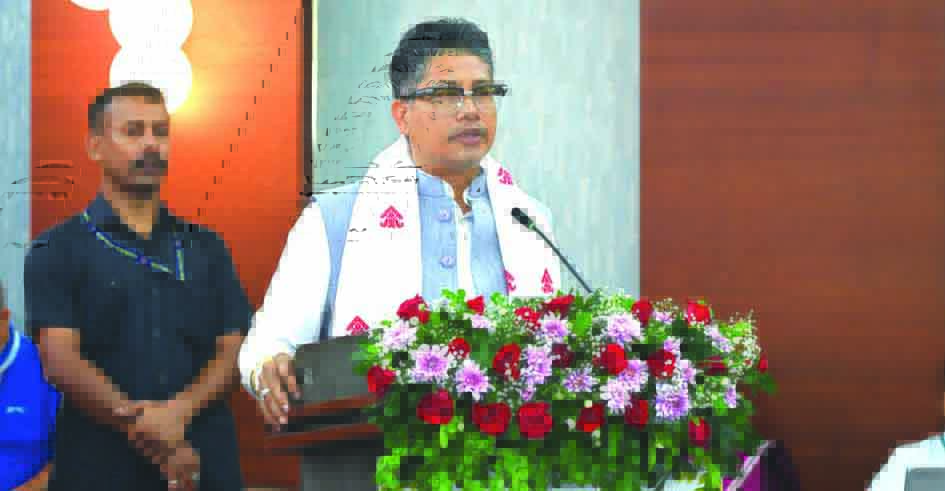
GUWAHATI, June 25: Assam Agriculture Minister Pijush Hazarika on Thursday advocated a shift from traditional paddy cultivation toward high-value horticulture.
Hazarika chaired a meeting organised by Assam Agricultural University (AAU) and the Department of Agriculture here on a roadmap for rural economic growth, according to an official release.
The multi-stakeholder conclave brought together academicians, agriculture scientists, Krishi Vigyan Kendras (KVKs), financial institutions and key allied departments like Fisheries, Irrigation, Veterinary, Animal Husbandry, Horticulture and Sericulture to forge a collaborative approach to modernise the state’s farm sector.
Related Posts:



Addressing the gathering, the minister noted that while India exports billions of dollars in agricultural products like tea, meat, fish, fruits and vegetables, Assam’s contribution remains minimal and must be urgently rectified.
He highlighted the national economic drain caused by importing pulses and edible oils, emphasising that Assam must scale up production to achieve complete self-sufficiency in eggs, fish, poultry and pork, thereby eliminating reliance on other states.
With nearly 75 lakh people in Assam dependent on farming, Hazarika stressed the critical need to expand the state’s current irrigation coverage, which stands at just 24 per cent of agricultural land.
He advocated for a massive, strategic shift from traditional paddy cultivation — which offers low profit margins — toward high-value horticulture, urging a concentrated focus on lucrative cash crops like Areca nut, litchi and black pepper to exponentially drive up rural incomes.
Directing his mandate to the academic community, the minister called upon the experts and researchers of AAU to utilise this collaborative platform to guide the department in selecting region-specific crops and developing climate-resilient seeds and saplings.
He stated that this interface must serve as a dynamic bridge connecting scientific research directly to the fields, transforming Assam’s agricultural landscape from basic subsistence to a highly profitable commercial enterprise, the release said. (PTI)