


HT Correspondent
KOKRAJHAR, Nov 3: Nurses and staff working under the National Health Mission (NHM) across Assam have launched a statewide sit-in demonstration that began on Monday.
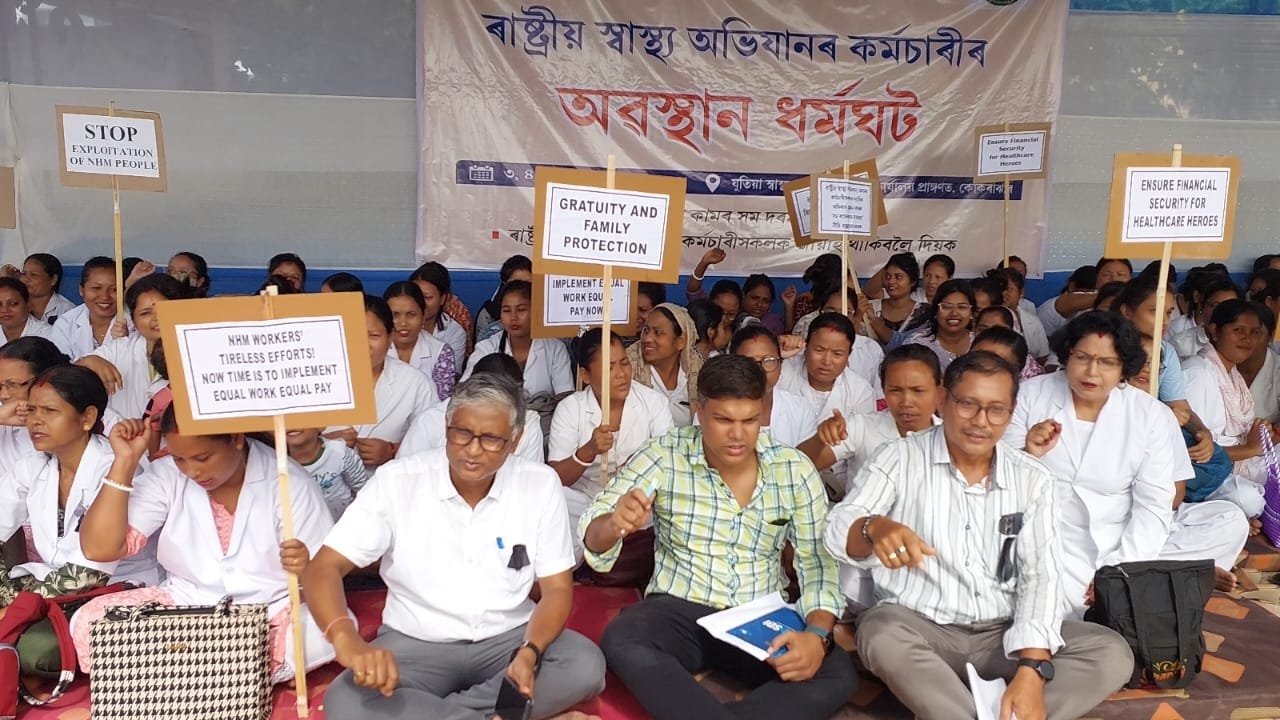
In Kokrajhar, NHM employees and workers carried out the protest demanding equal pay for equal work and other pending grievances. The strike aims to pressurise the authorities to address a five-point charter of demands, including implementation of pay scale benefits, equal rights as per the Supreme Court’s order and related welfare measures.
Related Posts:




Due to the strike, health services in government hospitals across the state, including Kokrajhar district have been severely affected. Only emergency medical services are continuing in the affected hospitals.
The All Assam Health and Technical Welfare Association, the NHM Employees Association and the National Health Mission Workers Union have jointly organised the three-day sit-in strike in Kokrajhar. The protest is being held in the premises of the Joint Director of Health Services Office at Habrubari, Kokrajhar where NHM workers displayed placards with slogans such as “We demand justice,” “Ensure equal pay for equal work,” “Implement pay scale system for NHM staff,” “Adopt EPF/CPF facilities” and “Appoint NHM staff directly to vacant posts in the Health Department.”
Kajol Nandi, president of the NHM Workers’ Association, Kokrajhar district, said that employees had earlier staged a protest at Chachal on October 29, urging the government to meet their five-point demands. However, the government has yet to respond, he alleged.
He added that NHM employees across the state have been compelled to wear black badges and continue their three-day protest in all district headquarters.
Nandi demanded that the Assam government immediately grant equal pay for equal work to around 20,000 NHM employees working across the state and regularise their jobs, as has been done in states like Delhi, Haryana, Odisha, Manipur, Bihar, Madhya Pradesh, Jharkhand and Maharashtra.
He further warned that if the government fails to act promptly, the employees would be forced to intensify their agitation and the administration would be responsible for any situation arising from the protest.