

HT Correspondent
MARGHERITA, June 14: Residents of Mungkaam, a remote Tangsa-inhabited village located along the Assam–Arunachal Pradesh border, have renewed their demand for a permanent bridge over the Tirap River, alleging decades of neglect and recurring hardship during the monsoon season.
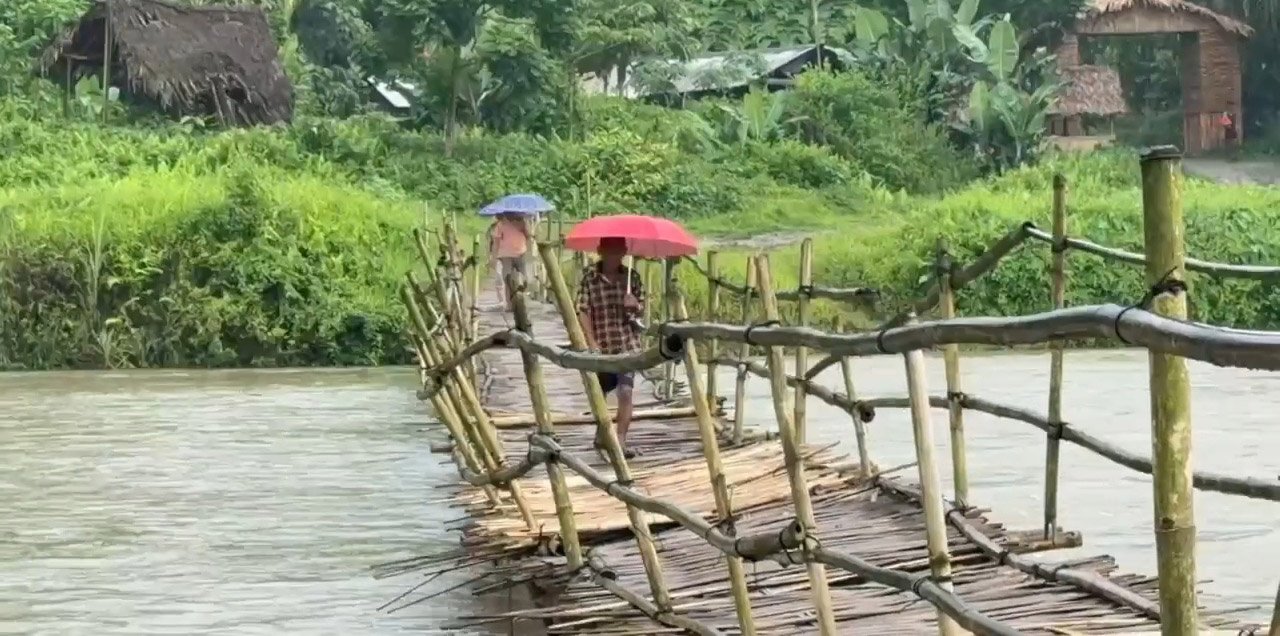
Situated about 30 kilometres from Margherita in Tinsukia district, the village depends on a temporary bamboo bridge as its sole means of communication with the outside world.
Related Posts:



However, the makeshift structure is regularly damaged or washed away during heavy rains, leaving villagers completely cut off from nearby towns and essential services.
With the onset of the monsoon, the swollen Tirap River often turns into a raging torrent, rendering the fragile bamboo crossing unusable and effectively isolating more than 50 Tangsa families residing in the village.
Residents say the annual disruption severely affects access to healthcare, education, markets and emergency services.
During periods of flooding, villagers are forced to remain confined within the area, with movement becoming nearly impossible.
Nayung Mossang, president of the central executive committee of the All Assam Tangsa Students’ Union, said the village has existed for generations but continues to lack basic infrastructure despite the country’s decades-long development journey.
He alleged that the temporary bamboo bridge has become a major safety concern, claiming that several people have lost their lives after falling from the structure over the years.
Mossang said the Tangsa community primarily depends on agriculture, poultry farming and green tea leaf cultivation for livelihood.
Despite a relatively high literacy rate, he noted that employment opportunities remain limited, forcing many educated youths to rely on farming and allied activities for income.
Appealing to the government, Mossang urged Prime Minister Narendra Modi and Chief Minister Himanta Biswa Sarma to intervene and sanction the construction of a permanent concrete bridge over the Tirap River.
He said such a project would not only ensure year-round connectivity for Mungkaam but also improve access to healthcare, education and economic opportunities for residents living in the border region.
Villagers expressed hope that the long-standing demand would finally receive attention, arguing that reliable infrastructure is essential for the development and welfare of indigenous communities living in remote areas.