


HT Bureau
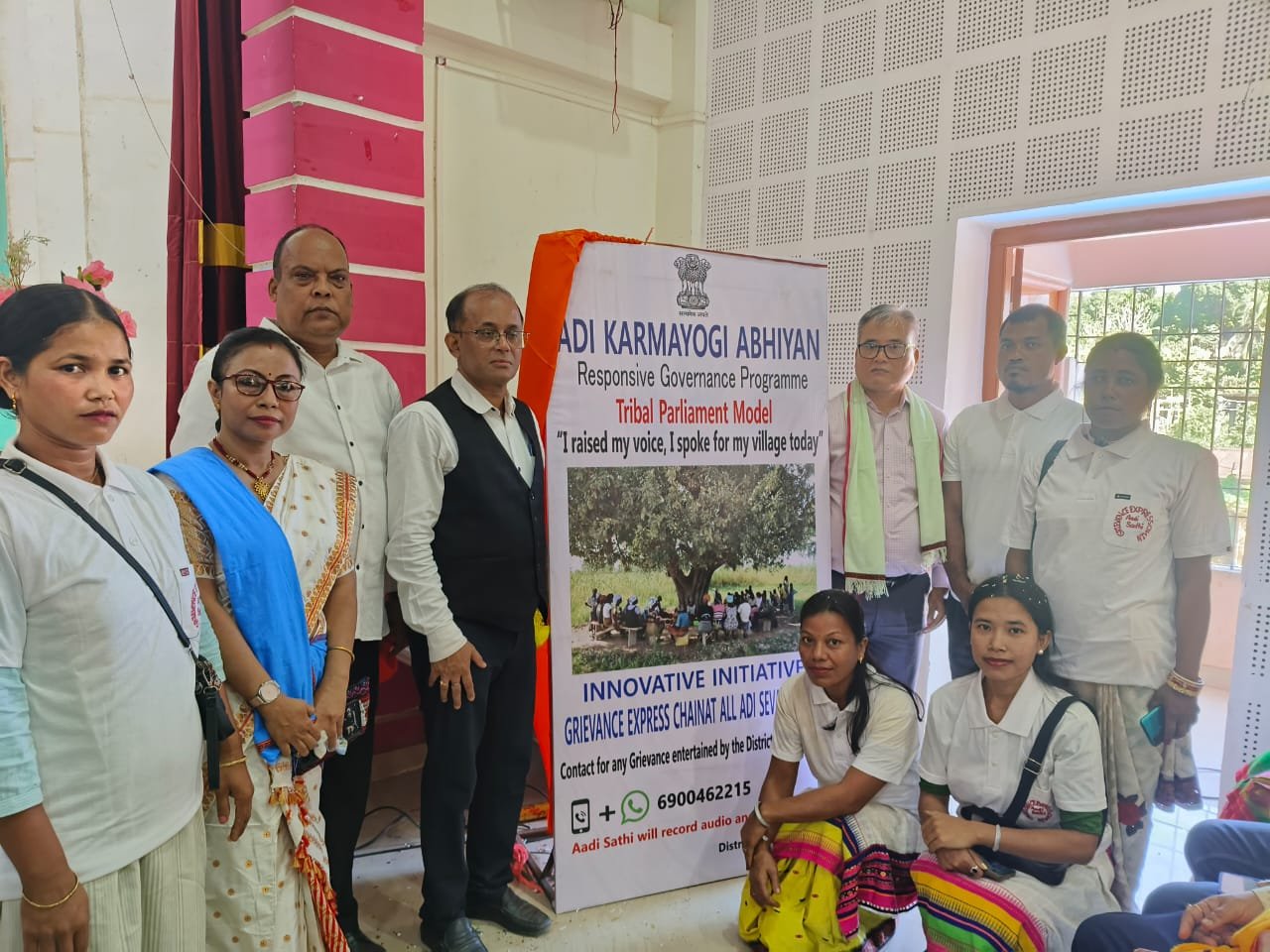
GUWAHATI, Nov 15 “True governance begins when the last person in the village finds a seat at the decision-making table,” said Minister for Food, Public Distribution, Consumer Affairs, Mines and Minerals & Barak Valley Development, Kaushik Rai, as the Cachar District Administration formally launched the ‘Tribal Parliament Model’, an innovative platform aimed at grassroots grievance redressal.
The initiative, introduced by the District Commissioner of Cachar, adopts a village parliament-style Jan Sunwaai, drawing inspiration from traditional tribal community councils such as the Chaupal, Morung, and Village Council. The model encourages open-air, circle-style meetings where tribal elders, women, youth and government officials sit on equal footing, fostering transparency, accessibility and dignity for every participant.
Related Posts:




During these sessions, grievances are discussed collectively with solutions drafted publicly, reflecting a spirit of consensus and community ownership. Minister Rai lauded the initiative, stating that it revives tribal wisdom and transforms it into a modern tool for administrative accountability.
A key feature of the model is the involvement of Adi Sathis, who travel to remote villages to facilitate Jan Sunwaais. They document the proceedings through audio and video recordings, capturing grievances, community stories and suggestions. This ensures that even the most remote concerns are formally brought to the attention of the authorities.
Citizens can also register grievances through a dedicated Call & WhatsApp helpline: 6900462215, broadening access for those unable to attend in person.
All grievances collected during the Jan Sunwaai are forwarded to the relevant departments for timely resolution. Once decisions or solutions are finalised, they are prominently displayed at the respective Block Development Offices, reinforcing transparency and public trust.
Through this initiative, the Cachar District Administration reiterates its commitment to inclusive, people-centric governance, ensuring that tribal communities not only raise their voices but also witness tangible outcomes from their participation.