
HT Bureau
GUWAHATI, Dec 4: Guwahati is undergoing a transformational expansion as Northeast India’s leading commercial hub, driven by major infrastructure investments that are set to reshape the region’s real estate landscape through 2028, according to JLL’s latest report, ‘Beyond the Metros: Insights into India’s Emerging Real Estate Stars’.
The city’s strategic role as the gateway to eight northeastern states, along with the presence of top educational institutions and a growing business ecosystem, is drawing unprecedented investor interest across office, retail and logistics segments.
Related Posts:


Surekha Bihani, Senior Managing Director – East and Emerging Markets, India, JLL, said Guwahati currently represents one of the most compelling real estate investment destinations in the country, combining location advantages with transformational infrastructure growth and strong market fundamentals.
She said the convergence of 80% office stock growth, a steady decline in retail vacancy and limited industrial availability, supported by large-scale infrastructure investments, positions Guwahati as the gateway for the region’s economic expansion, offering investors a significant opportunity at a critical inflection point.
The office market is on a strong upward trajectory, with stock expected to rise by 80% from 2 million sq ft in 2024 to 3.6 million sq ft by 2027.
Rental rates of ₹40–80 per sq ft remain competitive against Tier 1 markets and are expected to remain stable.
The Secondary Business District along NH-27 commands premium rents of ₹45–55 per sq ft with 13% vacancy, while the Peripheral Business District around Airport Road offers attractive entry rents of ₹40–45 per sq ft.
Retail real estate is witnessing steady growth with mall stock increasing from 2.3 million sq ft in 2024 to 3.5 million sq ft by 2027, while vacancy has dropped from 4.5% due to strong absorption and rising retailer confidence.
The Central Business District along GS Road and Zoo Road continues to command premium rents of ₹200–250 per sq ft with only 5% vacancy, underscoring its established commercial dominance.
The logistics and industrial segment remains exceptionally tight, with vacancy as low as 0.5% in 2024 and expected to fall further by 2027.
The current 8 million sq ft of industrial stock is expanding rapidly on the back of demand from FMCG, e-commerce and third-party logistics operators.
Competitive rental rates of ₹19–25 per sq ft make Guwahati an attractive distribution hub for the entire Northeast.
Several landmark infrastructure projects are accelerating this growth.
The 93-km Guwahati Ring Road, slated for completion in 2026, will ease congestion and open new development zones in Azara, Baihata and Narengi.
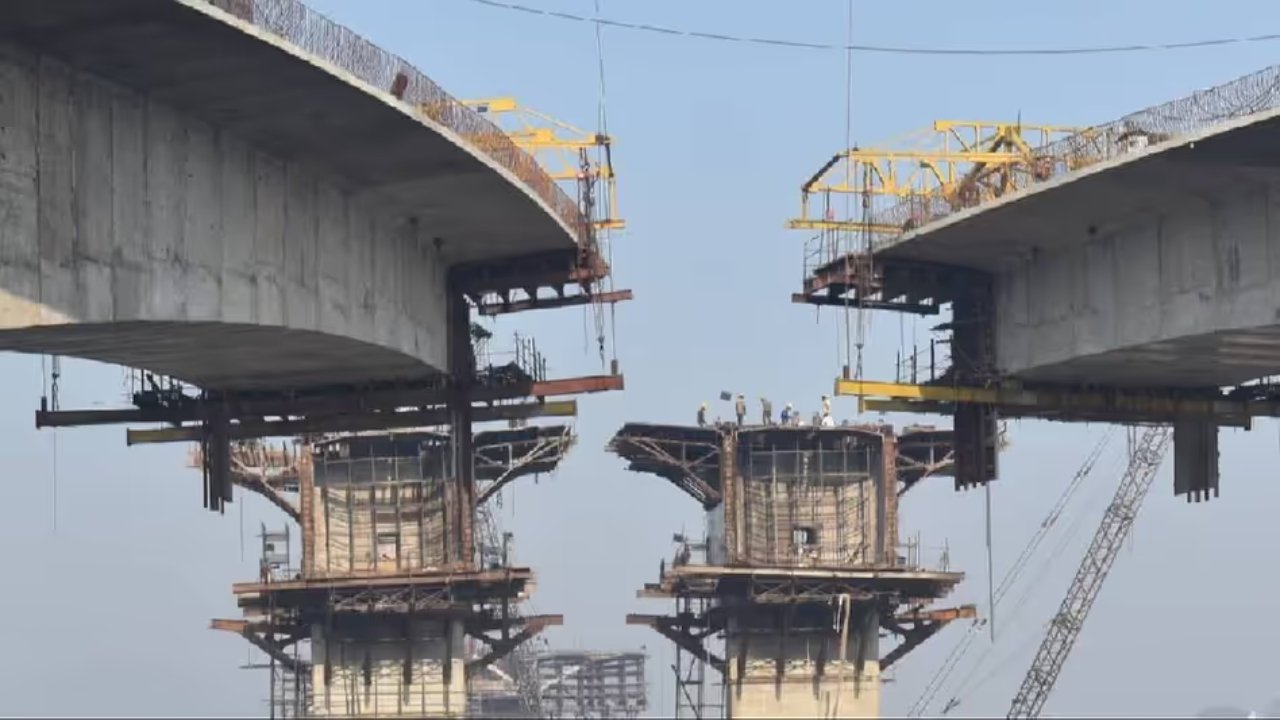
The upcoming six-lane Guwahati–North Guwahati Bridge will reduce travel time across the Brahmaputra from an hour to 15 minutes, catalysing growth on the north bank.
The LGBI Airport expansion, raising capacity to 10 million passengers by April 2025, and the 5.44-km Dighalipukhuri Flyover, the longest in Assam, are further strengthening intra-city and regional connectivity.
Guwahati’s economic base remains strong, anchored by the Guwahati Stock Exchange and the country’s largest tea auction centre.
Institutions such as IIT Guwahati, the Guwahati College of Architecture and Planning, and AIIMS continue to supply high-quality technical and medical talent, supporting the city’s emergence as a BPM and startup destination.
Co-working spaces are expanding along with demand from food tech, fintech and software enterprises.
The city also offers a favourable quality-of-life edge due to significantly lower living costs compared to Tier 1 metros, better air quality, political stability and expanding healthcare and education infrastructure.
Major urban mobility initiatives, including the proposed 61.4-km Guwahati Metro network with 54 stations, are expected to unlock further development potential.
Market indicators reflect strong institutional interest across segments.
The office sector is benefiting from expanding BPM operations and a growing startup ecosystem supported by STPI and multiple incubators.
Retail growth is accelerating around transit-oriented developments, particularly near the new ISBT, with rising demand for integrated mixed-use spaces. Logistics expansion continues to ride on the city’s role as the Northeast’s primary distribution gateway, strengthened by upcoming projects like the Bharalumukh–Amingaon Bridge and inland waterway development under Sagarmala.