


By: Shashanka Das
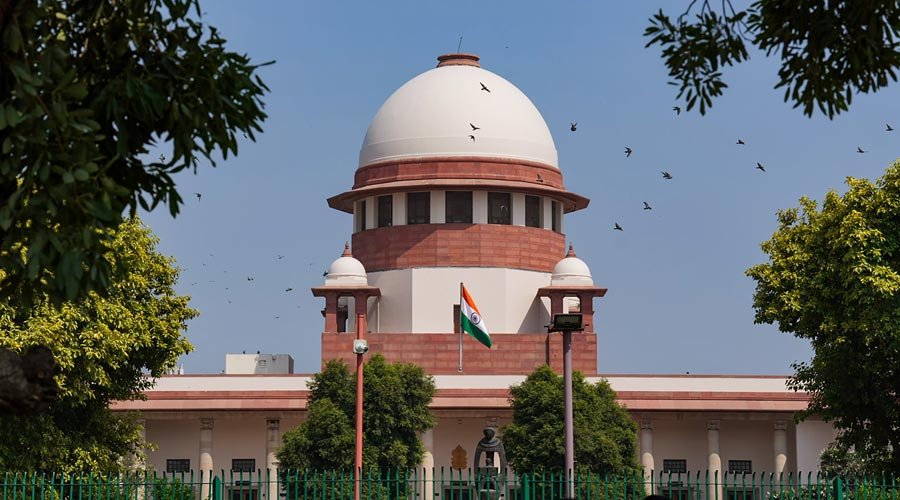
The Supreme Court announced on Monday (06th November 2023), that it will hear pleas challenging the constitutional validity of Section 6A of the Citizenship Act, which was inserted through an amendment in 1985 as part of the Assam Accord. The hearing, originally scheduled for Tuesday (07th November 2023), was deferred after the Solicitor General of India and senior counsels representing the petitioners’ side requested an adjournment due to the last working week before Diwali. In response, the apex court fixed the matter for hearing on December 5, to be presided over by a five-judge Constitution bench consisting of Chief Justice DY Chandrachud and Justices AS Bopanna, MM Sundresh, JB Pardiwala, and Manoj Misra.
Background:
Related Posts:



In 1985, the Rajiv Gandhi government signed an accord with Assam student leaders, addressing the prolonged agitation against illegal Bangladeshi immigrants in the state. This accord led to the amendment of Section 6 of the Citizenship Act. The amended Section 6A serves as a significant provision within the Assam Accord, establishing a unique cut-off date for the detection and deletion of “foreigners.” Currently, the constitutional validity of Section 6A is under scrutiny, with a plea challenging the 1971 cut-off date and advocating for the use of the 1951 cut-off date instead.
The Assam Accord’s Clause 5 designates January 1, 1966, as the base cut-off date for identifying and removing “foreigners.” However, the accord also allows for the regularization of individuals who arrived in Assam after that date but prior to March 24, 1971. Consequently, March 24, 1971, has become the cut-off date for entry into the state, thus categorizing those who came after that date as “illegal immigrants.”
Assam’s unique cut-off date:
It is important to note that Assam is the only state in India that has such a specific cut-off date for citizenship. This uniqueness is attributed to the historical context and regional concerns regarding immigration from neighbouring Bangladesh. While the intention of the accord was to resolve the issue of illegal immigration and safeguard the rights of indigenous Assamese people, the constitutional validity of Section 6A has come under question.
Challenging Section 6A:
The current challenge to Section 6A questions the appropriateness of the 1971 cut-off date and suggests reverting to the 1951 cut-off date instead. The plea argues that a revised cut-off date would ensure a more comprehensive and accurate inclusion in the National Register of Citizens (NRC).
Evaluation of arguments:
Those in favour of the 1971 cut-off date contend that it aligns with the basic principle of the Assam Accord and takes into account the years of prolonged agitation against illegal immigrants. Supporters assert that reverting to the 1951 cut-off date would undermine the purpose and ethos of the accord, as it fails to account for the substantial influx of illegal immigrants during the intervening years.
On the other hand, those challenging Section 6A argue that the 1971 cut-off date is arbitrary and outdated. They suggest that a broader scope, including the 1951 cut-off date, would serve as a more accurate representation of the native population, as it predates the significant influx of immigrants from across the border.
The constitutional validity of Section 6A in Assam’s Citizenship Act is of utmost significance. The ongoing evaluation by the bench will determine whether the 1971 cut-off date remains valid or if the 1951 cut-off date ought to be reinstated. The decision will have far-reaching implications, shaping the future direction of Assam’s immigration policies and the inclusion of individuals in the National Register of Citizens. As the nation awaits the verdict, it is crucial to balance the concerns of regional security, indigenous rights, and the principles of equality and inclusive citizenship. (The author can be reached at shashankadas0007@gmail.com or 9706619975)