



By: Pritom Sarma
Assam has elected a new government under the leadership of Dr. Himanta Biswa Sarma. Among the several promises assured by him was giving one lakh employment to the youths of the state. It has relevance as one of the reasons for his ascendance is his popularity and support among the youths. And unlike his predecessors, his promises have a universal appeal among the masses of the state. But seeing the various factors of employment generation in both public and private sectors in Assam, it is common to have dilemmas and confusion in this regard. That too with the recent revelation of discrepancies in the selection mechanism of the premier institution of the state, APSC.
Assam Public Service Commission (APSC) is entrusted with recruiting the highest office bearers at the state level. The enthusiasm among the youths has also changed regarding the chances of getting selected in the exam in recent years. In Assam, the percentage of students who appear in the combined competitive examination (CCE) conducted by APSC is much lower as compared to other exams conducted by the various departments of the state. There are various reasons for the same like the right environment, availability of resources, studying pattern, etc. It is where a vast difference is visible among the students of Guwahati and other districts of Assam. Issues like theoretical framework in the schools with little room for practical knowledge keep away a large number of meritorious students from the most difficult examination in the state.
Related Posts:
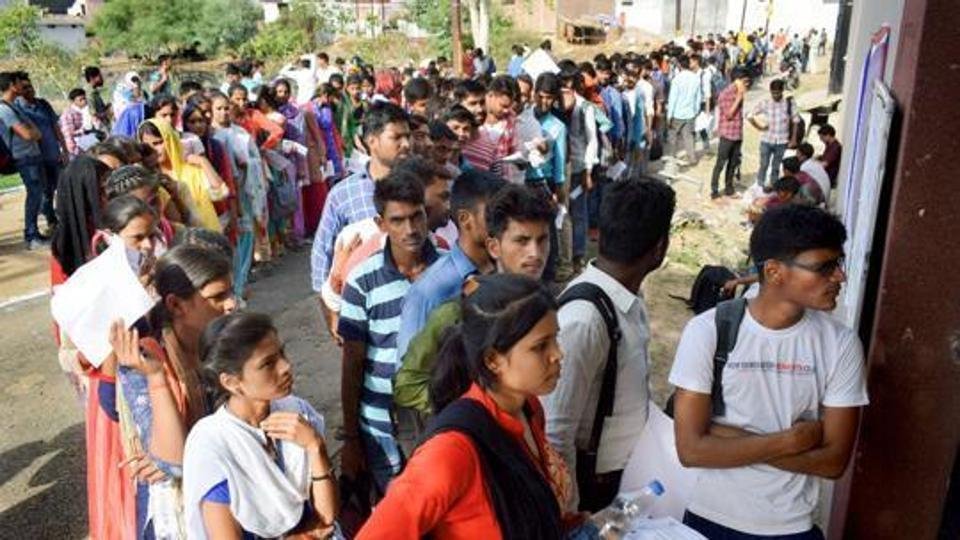


If we will compare Assam with other states, it depicts some different stories. In Bihar Public Service Commission (BPSC) and Uttar Pradesh Public Service Commission (UPPCS), the registration and competency among the youths don’t vary much with the examination conducted by Union Public Service Commission (UPSC), Staff Selection Commission (SSC) and other Exams. For example, many youths couldn’t qualify in UPSC but emerged successful in other exams like Assistant Commandant and EPFO exams conducted by UPSC. If we will see the selection ratio of students in BPSC and UPPCS, they have also done a remarkable job in recruiting the best talent in the states. Issues like regular conduct of examination, availability of materials, and the common spirit of the youths for the government jobs have contributed to bringing reforms in the system.
After Bharatiya Janata Party (BJP) came to power in the state in 2016, there were high hopes that they will do a complete overhaul of the system. Identification of candidates who made into the merit list through fraudulent means and the arrest of the former chairman of the commission Rakesh Pal showed a crystal clear overview of the malpractices in the recruitment process. Although it was considered a positive development, in terms of transparency it is still far from reaching the final objective. As in the first term of BJP, it has completed only two CCE examinations with the latest results just before the election came in two years. This is far below if we compare it with UPSC, UPPSC, and BPSC which have conducted examinations regularly. An analysis of other examinations in recent is visible through the racket busted in the recruitment of Sub Inspectors in the state. Where a former Superintendent of Police, a former member of the ruling party, and an ex-DGP were found to be involved. Looking it from the purview of just one examination is easy, but what about the aspiring students who left no stone unturned in burning the midnight oil for clearing such exams.
There is no doubt, that a lot of improvements have happened in the selection process of APSC, re-conducting SI exam for the second time, vast recruitment drive of teachers through Teacher Eligibility Test (TET) etc. But a transparent procedure in terms of timely conduct of exams and proper evaluation is necessary for overall improvement in the system. Moreover, although a sizeable number of teachers were given employment, it is something which is reserved for B.ED students. Similarly, there is a huge workforce of Ph.D. holders, MBA, MCA, Hotel Management, Mass Communication, MSW, Aviation courses, etc who desires to get them involved in the concerned industry. But, statistics say that there is a whopping 19 lakh unemployed in the state. Thus, we cannot expect to fill such a figure only through public employment. The role of overall development and private participation is a requirement in this area. The manufacturing base in the state gives a dismal figure and whatever service sector is there is limited to Guwahati and other prominent cities. The initiatives like Advantage Assam could not garner the much-required private investment in the state. The recent incident of scrapping industries like the paper mills in Panchgram and Jagirod will add to the deplorable manufacturing base in the state. And if there will be continued policy paralysis in this area, it is almost impossible to solve the unemployment woes of our state.
The 15th Chief Minister of Assam, Dr. Himanta Biswa Sarma has a dream of uplifting the state among the top five states of India. And the initiatives like investigation of drug cartels in the state, willingness to pursue the peace process with ULFA, formation of a committee to oversee the employment needs of the state are positive steps in the right direction. Without peace and amity, it is difficult to persuade private investment. But there is a huge gap between intention and implementation and that too with a state with a myriad of problems. If we see the top five states in terms of state gross domestic product (SGDP), Maharashtra (28.18 lakh crores), Tamil Nadu (19.43 crores), Uttar Pradesh (17.05 lakh crores), Karnataka (16.65 lakh crores) and Gujarat (16.49 lakh crores) occupies the table. And compared to them, Assam has a state SGDP of 3.50 lakh crores with a position of seventeen among the states. Thus, we can analyse the challenges that the new government has to overcome in the coming years. We cannot forget that only fourteen percent of the state’s population lives in urban areas with the rest (86%) still residing in the rural hinterland. Thus inclusive development is only possible through proper urban-rural parity in the day-to-day governance of the state.