

HT Bureau
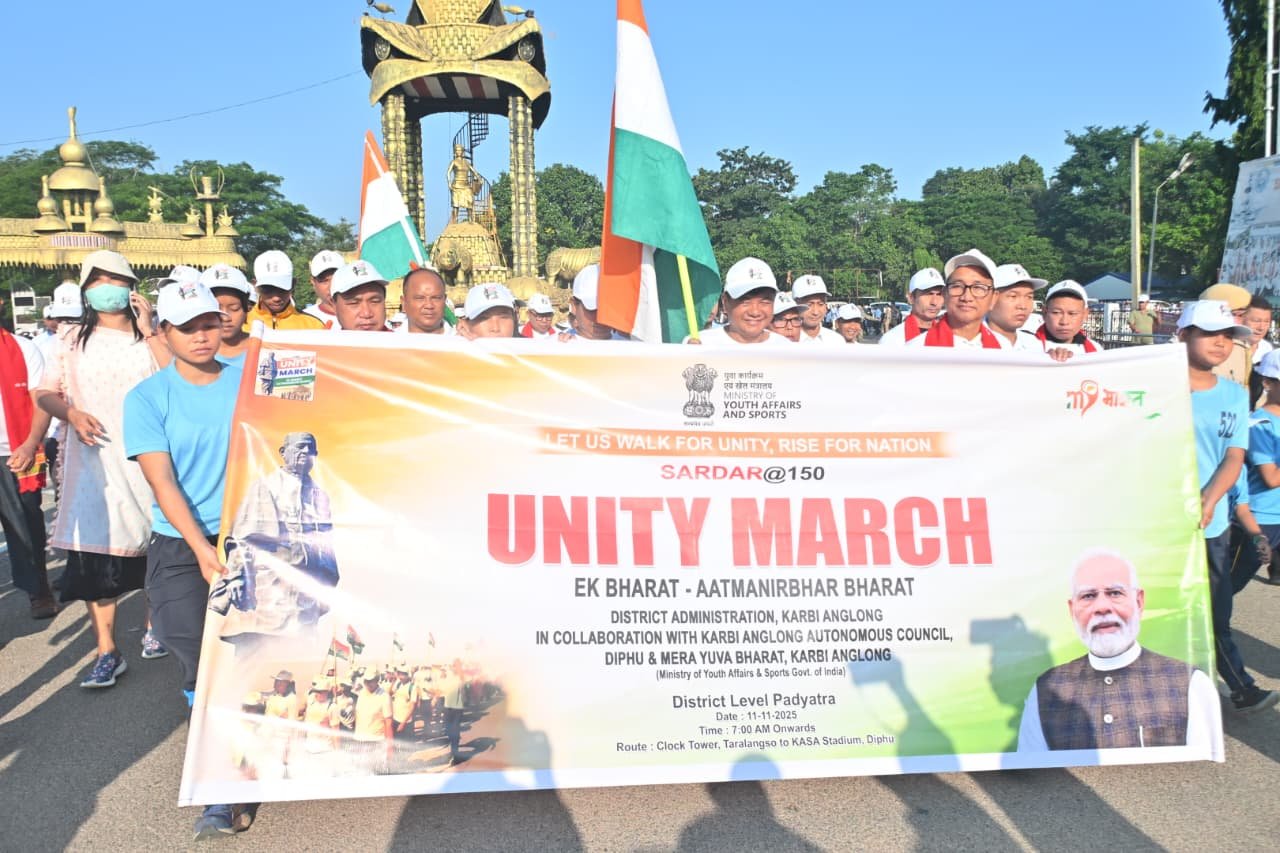
DIPHU, Nov 11: Joining the nation in celebrating the 150th birth anniversary of Sardar Vallabhbhai Patel, the Iron Man of India, the district-level padyatra – ‘Sardar @150 Unity March’ was held from Taralangso Clock Tower to Karbi Anglong Sports Association (KASA) stadium on Tuesday. The march saw participation from school and college students, ex-servicemen, various social organisations and political party members. The nationwide programme “Sardar @150 Unity March” was launched by the Ministry of Youth Affairs & Sports and coincides with Ekta Diwas (National Unity Day).
The District Administration of Karbi Anglong in collaboration with the Karbi Anglong Autonomous Council (KAAC) and Mera Yuva Bharat, organised the event. Chief Executive Member (CEM) KAAC, Dr Tuliram Ronghang, flagged off the march in the presence of KAAC Chairman Raju Tisso, MP Amarsing Tisso, MLA Darsing Ronghang, EMs and MACs, District Commissioner Nirola Phangchopi, ACS Jiten Bey, and State vice president, BJYM, Assam Pradesh.
Related Posts:

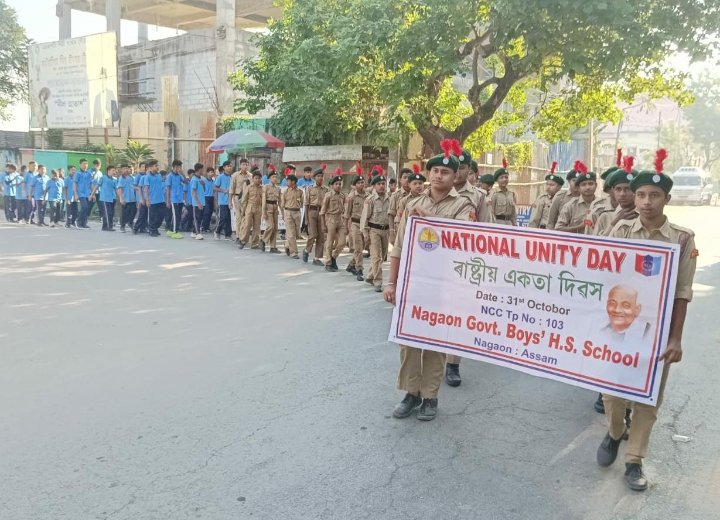

Before the flag-off, Karbi cultural troupe performed the Hacha Kekan (post-harvesting dance) and an Assamese troupe presented a Bihu dance. Hundreds of students from schools including Don Bosco Higher Secondary School, JNV, Chandrasing High School, Binapani High School, New Hope English High School, Covenant High School and Don Bosco Junior College joined the march, which covered a 5 km route through Taralangso Clock Tower, in front of DIG Bungalow, Rongkhelan Market and Rongnihang Forest Office Tiniali, culminating at KASA stadium.
At a stoppage in front of Don Bosco Higher Secondary School, students performed patriotic dances while members of the Karbi Film Society staged a street play on national unity. At KASA stadium, the CEM and other dignitaries paid floral tributes to Sardar Vallabhbhai Patel’s portrait, accompanied by cultural demonstrations from various troupes.
Speaking on the occasion, the CEM said the march was organised to commemorate Patel’s 150th birth anniversary and to promote unity and national integrity. He highlighted Patel’s role as a strong leader in India’s freedom movement, India’s first Deputy Prime Minister and Home Minister (1947–1950) and his efforts in integrating princely states into the Indian Union, including preventing the partition of Gujarat and Maharashtra.
The padyatra, featuring large participation from students, social organisations and party members, aimed to send a strong message of unity and patriotism across India.