

HT Correspondent
KOKRAJHAR, June 14: Bodoland University successfully hosted the Regional Conference on Current Trends in Science (CTS-2026) at its Kokrajhar campus on Sunday, bringing together eminent scientists, academicians, researchers, scholars and students for discussions on emerging scientific developments, innovation and sustainable growth.
Jointly organised by the Faculty of Science and Technology of Bodoland University and the Bodoland Science Congress, the conference served as a platform for scientific exchange and interdisciplinary collaboration.
Related Posts:

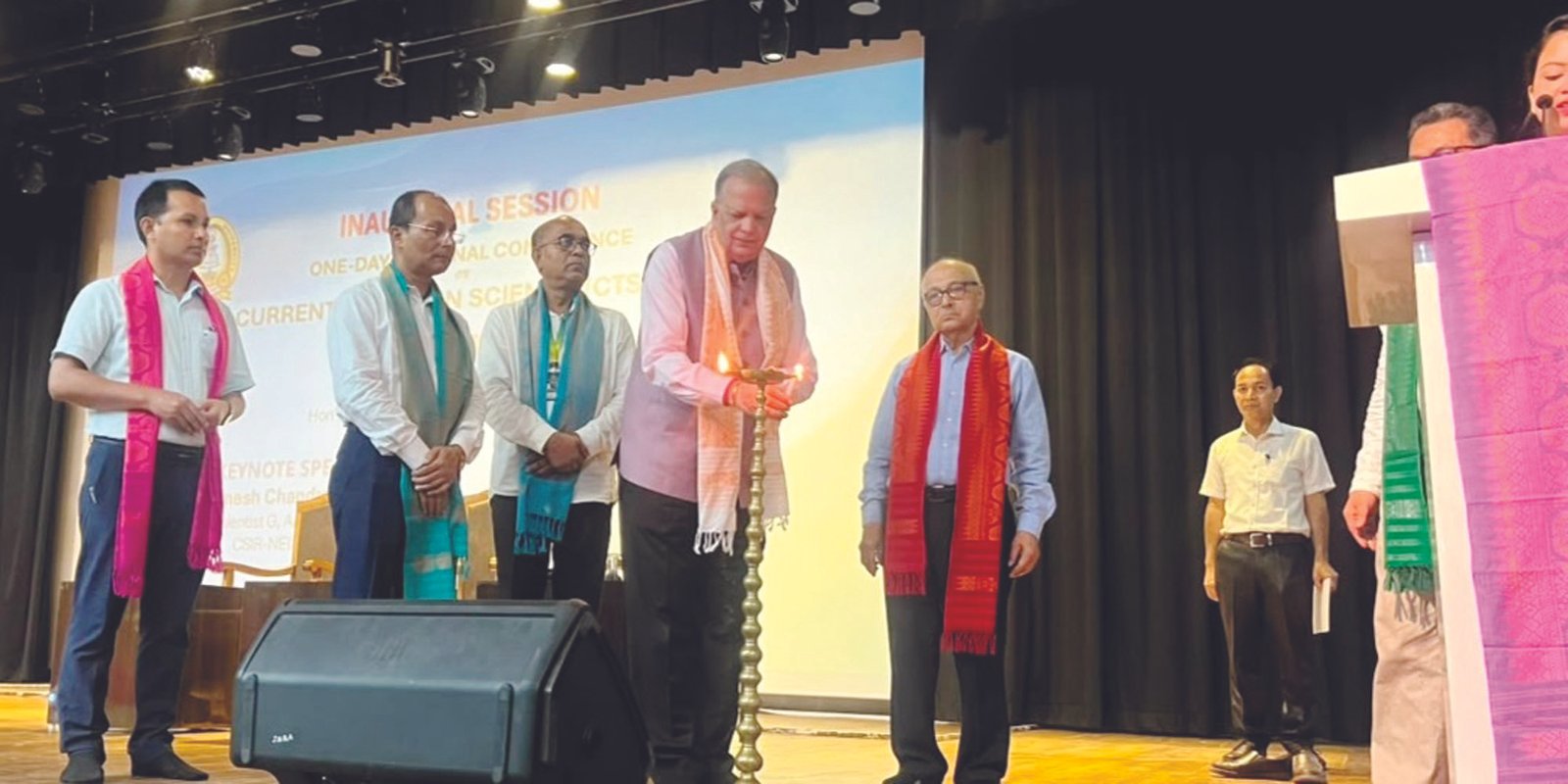
The programme began with the ceremonial lighting of the lamp by Vice-Chancellor Prof BL Ahuja and other dignitaries.
Welcoming the participants, Dean of the Faculty of Science and Technology and Chairperson of the Organising Committee, Prof Hilloljyoti Singha, highlighted the importance of integrating Indian Knowledge Systems with contemporary scientific research and called for innovation-driven solutions to emerging societal challenges.
In his inaugural address, Prof Ahuja emphasised the transformative role of science and technology in addressing global challenges.
He highlighted the growing significance of interdisciplinary fields such as bioinformatics, computer science and biophysics and discussed the applications of Artificial Intelligence and Machine Learning in forestry, wildlife conservation, environmental monitoring and forensic science.
A major highlight of the inaugural session was the release of the Conference Abstract Book by Prof Ahuja, former Scientist-G and Adviser to the Director of CSIR-NEIST, Jorhat; Dr Dinesh Chandra Goswami, and Prof Sumit Chakravarty, Head of the Department of Forestry at Uttar Banga Krishi Vishwavidyalaya, West Bengal.
Addressing the gathering, Rector Prof Jatin Sarma stressed the importance of research, innovation and evidence-based policymaking in achieving sustainable development and national progress.
Delivering the keynote address on “Progress of Science, Emerging Areas of Science and Development of Scientific Temper,” Dr Goswami traced the evolution of scientific knowledge from early communication systems to modern computing technologies.
He highlighted the contributions of pioneering scientists including Galileo Galilei, Nicolaus Copernicus and Max Planck and underlined the importance of rational thinking and scientific temper in combating superstition and misinformation.
The plenary lecture was delivered by Prof Chakravarty on “Deforestation: Causes, Effects and Mitigation,” where he discussed the ecological and socio-economic consequences of deforestation and advocated sustainable forest management, biodiversity conservation and community participation in environmental protection.
The conference witnessed extensive academic participation with 216 research contributions, including 71 oral presentations and 145 poster presentations.
Research papers covered diverse themes such as Advanced Materials and Physical Sciences, Green Chemistry and Catalytic Materials, Artificial Intelligence and Machine Learning, Life Sciences and Biodiversity, Environment and Wildlife Conservation, and Medicinal Plants and Natural Products.
During the valedictory session, certificates and awards were presented to outstanding participants. Priyanka Patgiri (Physics), Lankeswar Kumar (Chemistry), Beauty Narzary (Zoology), Subesri Dutta (Zoology), Bitumani Chaudhury (Zoology) and Twinkle Basumatary (Botany) were recognised as the best oral and poster presenters in their respective thematic categories.
Prof Ahuja lauded the enthusiastic participation of scientists, academicians, researchers and students and described the conference as a significant step towards strengthening scientific culture and innovation in the region.
The conference concluded with a vote of thanks by Prof. Sanjay Basumatary, who acknowledged the contributions of organisers, speakers, evaluators, volunteers and participants in ensuring the success of CTS-2026.
The event reaffirmed Bodoland University’s commitment to fostering scientific excellence, interdisciplinary research, innovation and sustainable development while inspiring young researchers to address contemporary challenges through knowledge-based solutions.