

HT Correspondent
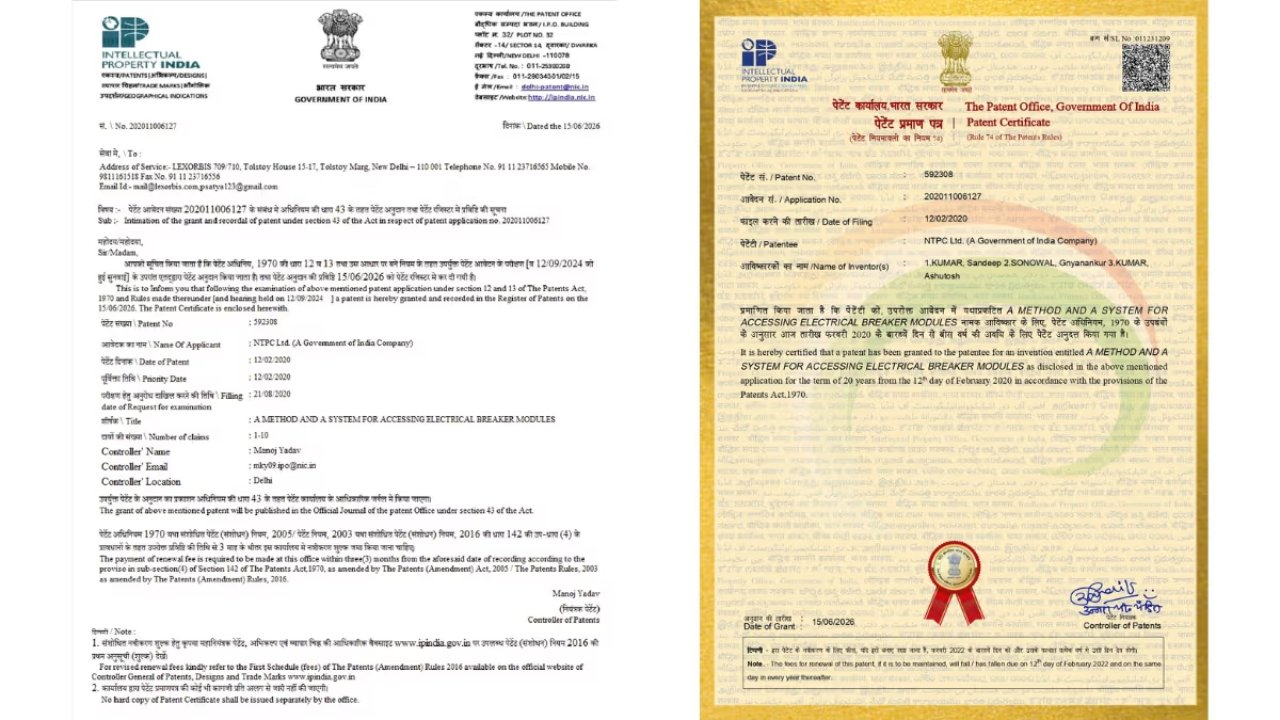
KOKRAJHAR, June 17: NTPC Limited has been granted a patent by the Government of India for an innovative technology aimed at enhancing safety in electrical switchgear operations and maintenance.
The patent, titled “A Method and a System for Accessing Electrical Breaker Modules,” was granted on June 15 under Patent No. 592308.
Related Posts:



The invention introduces a smart access control system for electrical breakers that integrates with SAP and Permit-to-Work (PTW) systems to strengthen safety protocols during maintenance activities.
According to NTPC, the technology was developed by engineers Sandeep Kumar, Deputy General Manager, CC (Solar); Gnyanankur Sonowal, Deputy General Manager (EMD), NTPC Bongaigaon; and Ashutosh Kumar, Senior Manager (Operation), NTPC Farakka.
The system incorporates multi-factor authentication and digital interlocking mechanisms to ensure that only authorised personnel can access designated breaker modules.
It is designed to prevent operational errors, avoid duplication of maintenance activities and ensure adherence to protection interlocks during electrical work.
Officials said the technology helps minimise the risk of inadvertently isolating the wrong equipment during maintenance operations, thereby improving workplace safety and reducing the possibility of human error.
By combining digital controls with data-driven monitoring, the system is expected to enhance compliance with established maintenance procedures while improving operational reliability and efficiency.
NTPC stated that the successful development and patenting of the technology reflects the organisation’s emphasis on indigenous innovation, digital transformation and continuous improvement in workplace safety standards.
The company noted that innovations of this nature contribute to safer and more reliable power plant operations while supporting its broader objective of achieving operational excellence. As India’s largest integrated power utility, NTPC continues to invest in technological advancement and innovation aimed at improving efficiency, sustainability, reliability and safety across its operations.