


By: Dipak Kurmi
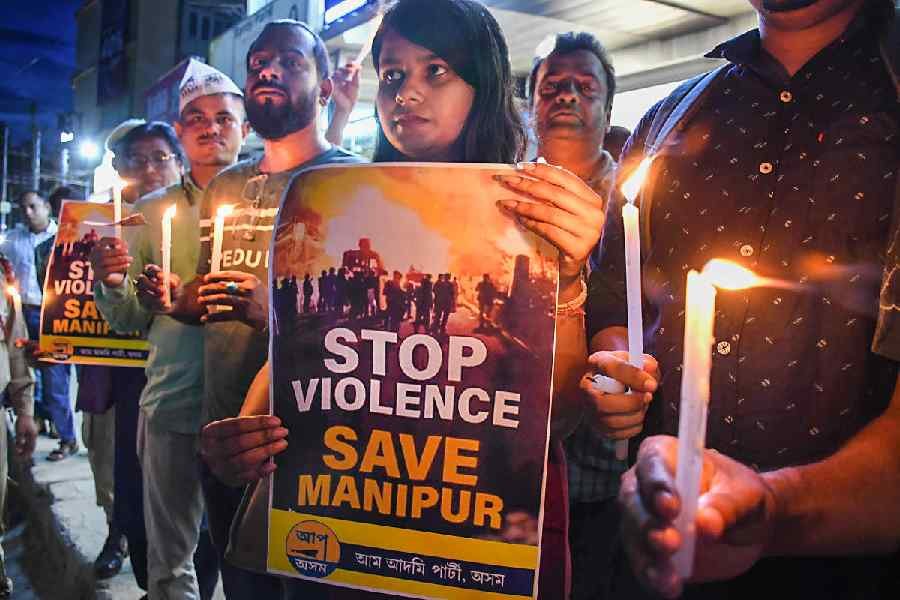
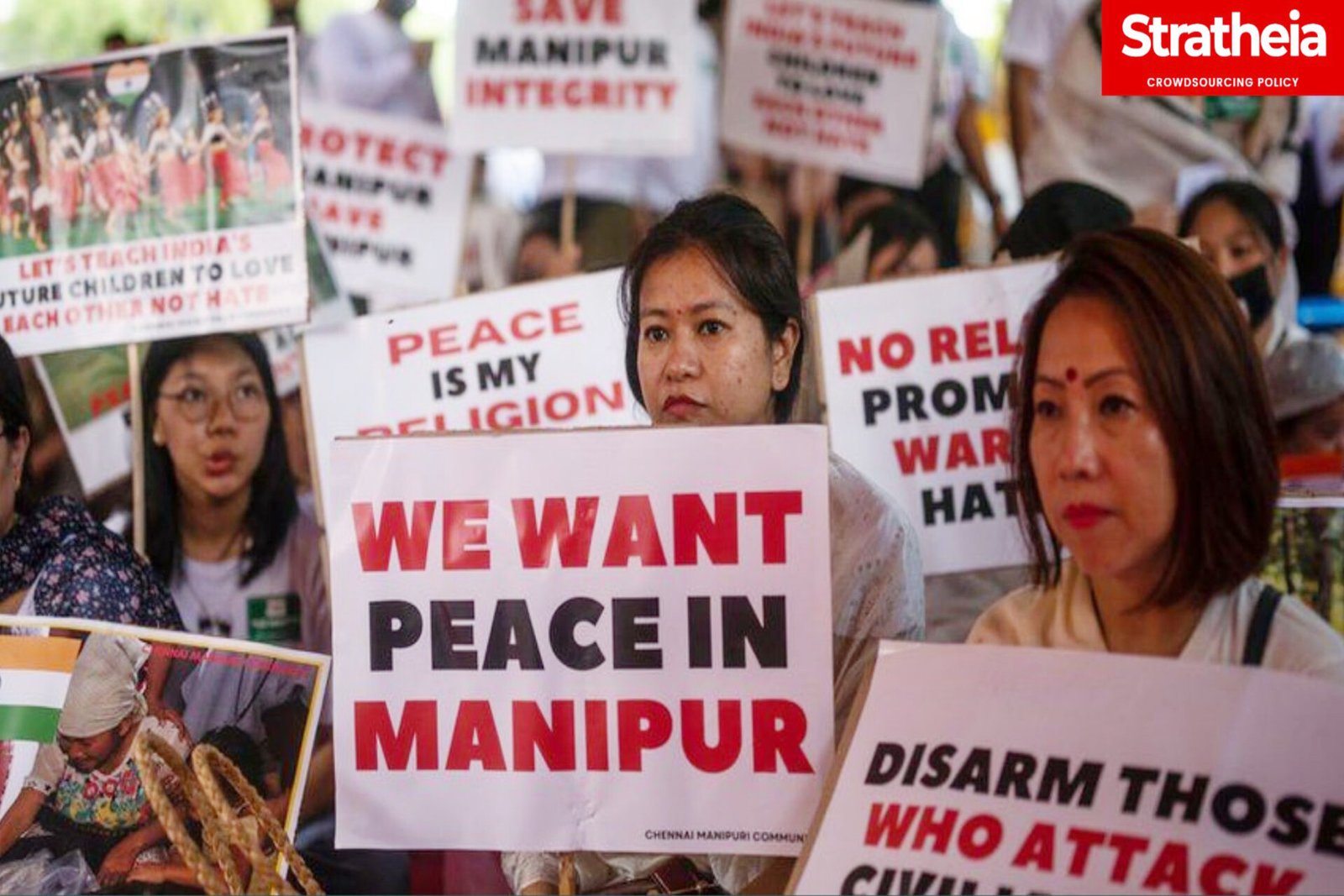
Over the last nine months, Manipur has witnessed a distressing miscarriage of justice. Communities have been displaced, numerous lives have been extinguished, and several women have endured unspeakable acts of sexual violence. One can envision the poignant image of the sangai, the renowned dancing deer of Kangleipak (ancient Manipur), and shedding tears in response to these harrowing events.
The attempt to restore normalcy in the state appears perplexing due to its ad hoc nature. Amidst the widening ethnic divide, the most disconcerting aspect is the state’s acquiescence to the unchecked influence of the Arambai Tenggol, a radical outfit. These modern-day ‘dart-wielding horsemen’ have taken it upon themselves to be the guardians of Meitei supremacy, adding an unsettling layer to the unfolding situation.
Related Posts:


The state’s endeavor to reinstate normalcy unfolds in a bewildering, ad hoc manner. Amidst the deepening ethnic divide, a disconcerting development emerges as the state permits the unhindered influence of the Arambai Tenggol, a radical faction. These contemporary ‘dart-wielding horsemen’ from ancient times have self-proclaimed as the defenders of Meitei supremacy, introducing a troubling dynamic to the ongoing situation.
On the 24th of January, the leader of the group, Korounganba Khuman, convened 37 legislators and two Members of Parliament from the Imphal valley. Under duress, he compelled them to swear an oath in the presence of Manipur’s ancient deity, Pakhangba, pledging to ‘safeguard Manipur.’
Though not an entirely unprecedented occurrence in the North-East, reminiscent of the vigilantism displayed by the All Assam Students’ Union and the United Liberation Front of Asom in their prime, the current wave of reprimand witnessed in the valley is undeniably disconcerting.
Certain demands imposed on elected representatives to convey to New Delhi hold merit, such as the implementation of the National Register of Citizens (NRC) in Manipur and the fortification of the border with Myanmar. The latter proposition, although requiring a reevaluation of the Free Movement Regime, stands as a valid consideration.
Yet, requests like the removal of the Assam Rifles, annulment of the Suspension of Operations (SoO) pact with Kuki militants, and the exclusion of ‘alleged’ Kuki immigrants from the Scheduled Tribe list are laden with peril.
The occurrence of the Kangla Fort incident in such close proximity to a visit by a three-member Union Government team to Imphal adds an extra layer of disquiet. Some well-informed individuals are raising questions about whether the events at Kangla had the tacit approval of the Centre, given its conspicuous silence both in the lead-up to the incident and in the aftermath.
Though initially a localized arrangement, the Suspension of Operations (SoO) agreement with Kuki militants was officially established on August 22, 2008, following due procedures by the Ministry of Home Affairs. The clashes between the Meiteis and Kukis on May 3, 2023, were triggered by these events. The SoO mechanism faces criticism for various reasons, including the allowance for the retention of arms, which are now being wielded against the Meitei community and security forces. The Union Government must be held accountable for this unacceptable oversight. The historical pattern of ceasefire agreements with militant groups in the North-East reveals a recurring issue where illegal arms are permitted to be retained. This leniency was also extended to the former Bodo Liberation Tigers in Assam, highlighting a pattern of questionable concessions.
On the flip side, it’s undeniable that while the Kukis were permitted to keep their arms, post the events of May 3, organizations like Arambai Tenggol and various Meitei groups unabashedly plundered police armories. These very weapons, obtained without restraint, are now wielded to intimidate, injure, and even take the lives of Kukis.
Engaging in a dialogue process, if it contributes to even a modest reduction in violence, is a commendable objective. Consequently, New Delhi should firmly reject any consideration of nullifying an arrangement that has endured for a substantial 15 years.
Considerable negotiations, extensive efforts, and diligent bridge-building have been invested in solidifying such agreements. Discretion and adherence to the rule of law should steer any necessary adjustments. Priority should be given to a rearguard action, emphasizing the rigorous enforcement of the Suspension of Operations (SoO) ground rules.
Similarly, the matter of ‘illegal’ migrants within the Kuki population demands careful consideration. While there may be ‘new Kukis,’ such as Thadous in Manipur, it’s important to recognize that there are also Meiteis who practice Christianity. Hence, it would be erroneous to adopt a simplistic perspective on these issues. In any case, if an National Register of Citizens (NRC) exercise with 1951 as the cut-off year is initiated, as proposed by Arambai Tenggol, the issue of illegal migration would naturally be addressed.
The insistence on removing the Assam Rifles from the valley is an absurd demand. If Arambai Tenggol perceives the Assam Rifles as being biased and hence advocates for their expulsion from Manipur, it is likely due to the resolute actions taken by the personnel against insurgent groups based in the valley, such as the United Liberation Front (Koirang), People’s Liberation Army (Manipur), and the People’s Revolutionary Party of Kangleipak. This collective, known as the Group of Five, primarily comprises individuals from the Meitei community.
Furthermore, it is an established fact that the Assam Rifles has taken decisive actions against Kuki militants. Disparaging remarks about a force that originated as the ‘Cachar Levy’ in 1835, and has earned the title of the ‘Sentinels of the North-East,’ are unjustified.
It’s disheartening to see a segment of the citizenry clamoring for the removal of a force that has made significant sacrifices for Manipur, especially as the republic marks its 75th year. This sentiment reflects poorly on the nation’s commitment to unity and collective well-being.
The radicalization embodied by Arambai Tenggol must be curtailed at its inception. The Indian republic cannot afford to be a passive spectator to such a blatant disregard for authority. (The writer can be reached at dipaknewslive@gmail.com)