

HT Bureau
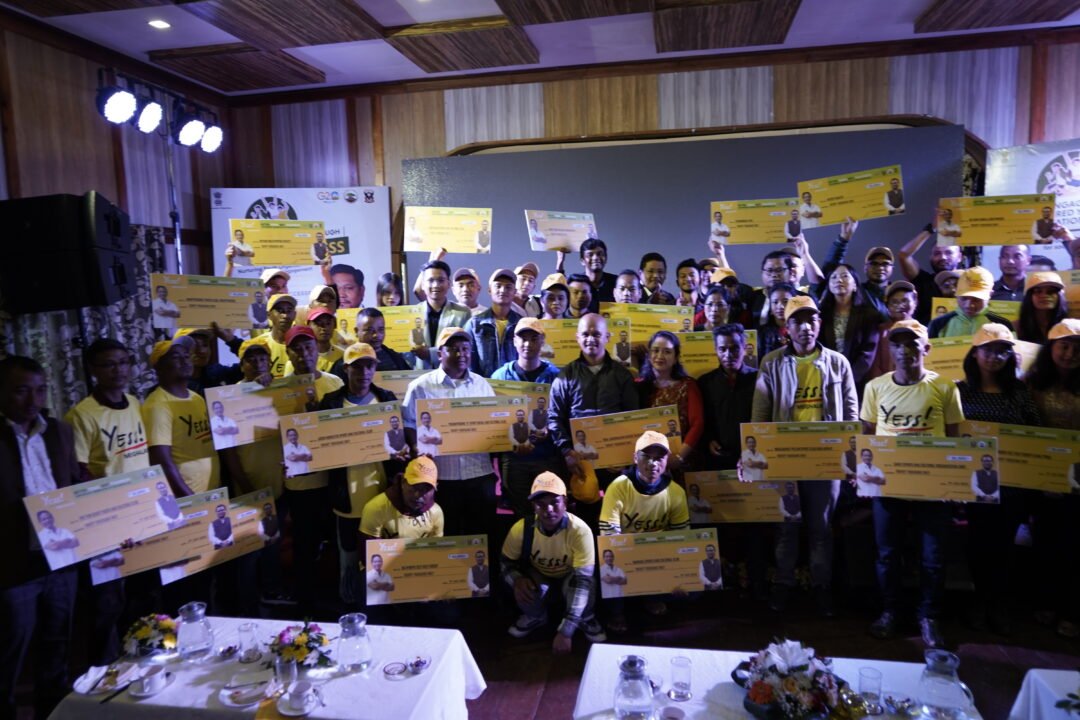
GUWAHATI, Sept 21: Meghalaya witnessed a significant moment in its history as chief minister Conrad
K. Sangma officially inaugurated the CM-ELEVATE program at Vivanta, Shillong. This flagship initiative
aims to empower, employ, and promote economic development among the state’s youth.
The launch ceremony was graced by distinguished personalities, including chief guest Conrad K. Sangma,
chief minister of Meghalaya, special guest Dr Mazel Ampareen Lyngdoh, minister of agriculture and
farmers’ welfare, government of Meghalaya, and special guests Bah Paul Lyngdoh, minister of tourism,
government of Meghalaya, and Alexander Laloo Hek, minister of animal husbandry and veterinary,
government of Meghalaya, among others.
Conrad K. Sangma outlined the program’s goal of engaging, employing, and empowering over 20,000
individuals across various sectors in the next three years, with an investment of approximately Rs 300
crore. He emphasised the government’s collaborations with public and private sector banks to facilitate
easy access to credit for aspiring entrepreneurs. Financial support ranging from 35 to 75 percent of the
project cost is offered to mitigate credit risks. The program provides term loans covering up to 95% of
the project cost, with varying loan terms and moratorium periods, coupled with variable interest rates
across different schemes. The chief minister stressed the government’s role in formulating policies,
creating a conducive ecosystem, and providing essential facilities to support entrepreneurs.
Bah Paul Lyngdoh, minister of tourism, government of Meghalaya, highlighted the CM-ELEVATE
program’s commitment to the betterment of Meghalaya’s youth and future. It is expected to create
around 700 direct employment opportunities and numerous indirect job opportunities, benefiting the
youth. Notable schemes under the Tourism Department, such as Green Villa Scheme, Homestay
Scheme, Motorhome Meghalaya Scheme, and Prime Tourism Vehicle Scheme, were mentioned.
Dr Mazel Ampareen Lyngdoh emphasized the program’s significance for agriculture. By providing 50%
financial aid for the establishment of polyhouses, the program promotes the cultivation of high-value
vegetables and floriculture crops. In its initial phase, the program aims to subsidize the setup of 1,000
polyhouses, fostering agricultural development.
Dr Vijay Kumar D, IAS, highlighted that the program creates an entrepreneurship ecosystem and
introduces 15 different schemes. The goal is to support up to 20,000 businesses in the next five years,
with the government providing subsidies ranging from 35% to 75% to support these endeavors. The
program also features a user-friendly single-window portal for applications, ensuring a seamless
experience for aspiring entrepreneurs.