

HT Correspondent
KOKRAJHAR, Oct 25: A suspected militant believed to be the prime accused in Thursday’s IED blast on the railway track between Kokrajhar and Salakati was killed in a police encounter in the Nadangiri Hills area on Saturday morning.
The blast, which took place in the early hours of Thursday near Singimari gate, had damaged a section of the track and disrupted train movement under the Northeast Frontier Railway.
Related Posts:


“We had credible inputs about the involvement of certain extremist elements in the blast. Based on further intelligence, we launched an operation in the Nadangiri Hills today morning,” Kokrajhar Superintendent of Police Pushpraj Singh said.
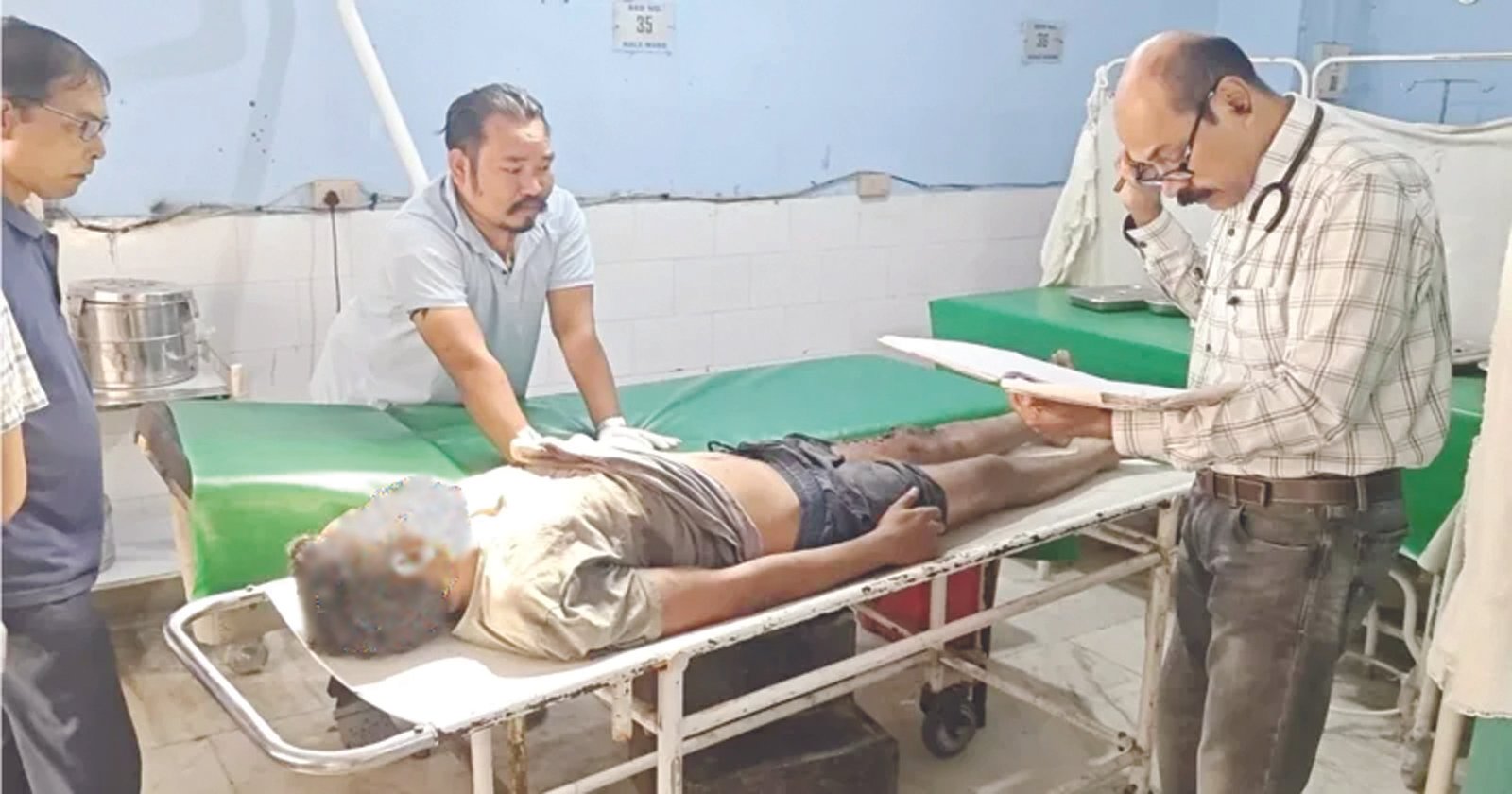
According to police, a search team moved into the area around 6 am. As the security forces approached, the suspected militants allegedly opened fire. “Our team was fired upon. In retaliatory fire, one militant was injured. He was shifted to the hospital where he was declared dead,” Singh added.
The deceased has been identified as Ipril (Apil) Murmu alias Rohit Murmu, aged around 40, originally from the Kachugaon area. Police said Murmu was a former cadre of the NSLA and had later developed links with Maoist groups.
“He was one of the key suspects in the IED blast in Kokrajhar. We also have information about his involvement in a similar rail blast incident in Jharkhand last year,” the SP said. Officials confirmed that a team of Jharkhand Police was already in Kokrajhar assisting in tracking him.
From the encounter site, police recovered one pistol, two grenades, identity documents and other materials, which have been seized for forensic examination.
Around ten suspected militants were believed to have been present during the exchange of fire. “Several others managed to escape taking advantage of the terrain. We have intensified operations to trace them,” Singh said.
He also confirmed that four police personnel sustained minor injuries during the encounter. “They are out of danger,” he added.
Security forces have since strengthened their presence in and around the Nadangiri Hills region. (With Inputs from PTI)